Camavor is the fallen eastern kingdom in League of Legends that connects Viego, Kalista, Hecarim, Gwen, Vladimir, Smolder, and the wider tragedy of the Ruination. It was once a brutal expansionist realm ruled by the Vol Kalah Heigaari royal line, remembered for the Argent Throne, knightly orders, dragon pacts, and the doomed obsession that led its last king across the sea to the Blessed Isles.
At its simplest, Camavor is the origin point of the Ruined King. At its most interesting, it is a lost political and mythic power whose collapse explains why so many modern Shadow Isles stories begin with grief, pride, betrayal, and one kingdom's refusal to accept death.
The short version is this: Camavor was an aggressive kingdom on the far eastern continent of Runeterra. Its last king, Viego, neglected rule after marrying Isolde, then dragged his realm into crisis after she was poisoned. Kalista searched for a cure, Hecarim betrayed her, and Viego's attempt to resurrect Isolde on the Blessed Isles unleashed the Ruination.
Camavor at a glance
- What Camavor is: a fallen expansionist kingdom on the eastern continent of Runeterra.
- What Camavor is known for: Viego, the Argent Throne, the royal sword Sanctity, knightly orders, dragon pacts, and the road to the Ruination.
- What drives Camavor lore: conquest, royal bloodlines, political decay, grief, betrayal, and the refusal to let death remain final.
- Why Camavor matters: it explains the human origin of the Black Mist and links the Ruined King to champions across Runeterra.

Camavor champions
The fastest way to understand Camavor is through its champions. Each one shows a different piece of the lost kingdom, from royal obsession and knightly violence to blood magic, dragon survival, and the last light left after the Ruination. For official champion pages and bios, the League of Legends site is the best place to start.
| Champion | Role in Camavor | Why the champion matters |
|---|---|---|
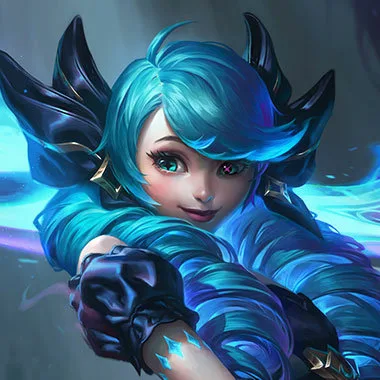 Gwen | Hallowed creation tied to Isolde | Gwen is the most hopeful Camavor champion, carrying Isolde's gentleness forward after Viego turned love into catastrophe. |
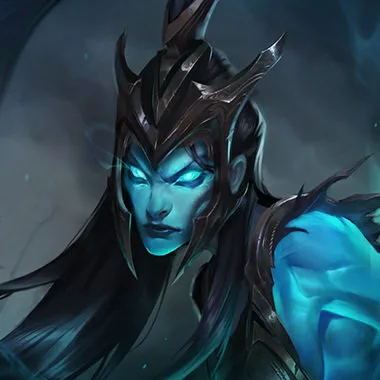 Kalista | General, royal niece, and betrayed oathkeeper | Kalista is the moral center of Camavor lore because she tries to serve the kingdom without surrendering her conscience. |
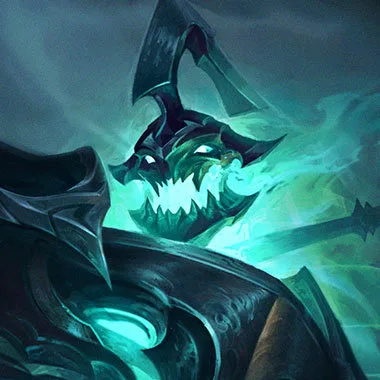 Hecarim | Knight-Commander of the Iron Order | Hecarim represents Camavor at its most brutal, a warrior who uses loyalty as cover for ambition and bloodshed. |
 Smolder | Young Camavoran dragon | Smolder keeps Camavor from being only a ruin, showing that some parts of the old eastern continent are still alive. |
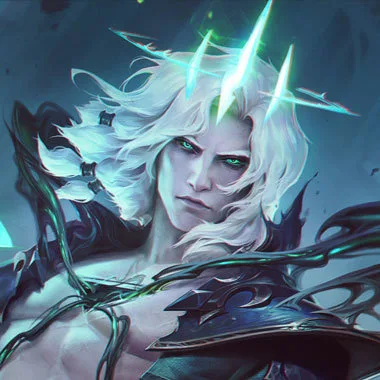 Viego | Last king of Camavor and the Ruined King | Viego is the reason Camavor still matters, since his grief transformed a royal tragedy into a world-spanning curse. |
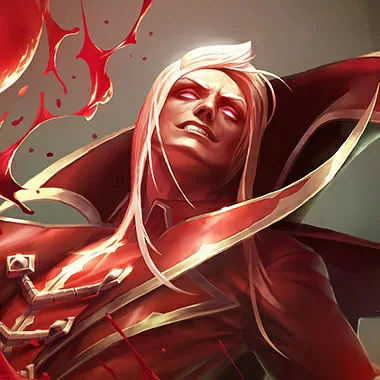 Vladimir | Camavoran prince changed by Darkin blood magic | Vladimir gives Camavor a much older wound, linking its royal politics to the Darkin War and the origins of hemomancy. |
Other characters related to Camavor
Camavor champions carry the main playable connections, but several non-champion figures are just as important to the kingdom's fall. Without them, Camavor lore loses much of its emotional and political weight.
| Character | Connection to Camavor | Why they matter |
|---|---|---|
| Isolde | Queen of Camavor and Viego's wife | Her death, attempted resurrection, and rejection of Viego are the emotional core of the Ruination. |
| Ledros | Camavoran commander and Kalista's devoted companion | Ledros shows that loyalty in Camavor could still be honorable, even when the kingdom around him was collapsing. |
| Necrit | Last royal advisor of Camavor | Necrit connects the old court to later Ruined King stories and helps frame the tragedy with historical memory. |
| Camor | Founder of Camavor | Camor's bargain with Grandmother Viper established the royal dragon pact that shaped the kingdom's identity. |
| Avora | Co-founder of Camavor | Avora helped secure Camavor's early royal legacy and preserved Camor through the power of Mikael's Chalice. |
| Grandmother Viper | Dragon matriarch bound to Camavor's royal line | Her oath with Camor explains why dragons are central to Camavor's older mythic power. |
Camavor lore, the Argent Throne, and a kingdom built on conquest
Camavor lore begins with power before it becomes tragedy. The kingdom was not a quiet homeland or a spiritual refuge. It was an expansionist realm with a proud royal line, ornate military orders, and a culture that treated conquest as destiny. That is why Camavor feels different from Noxus. Noxus absorbs and tests people into its empire, while Camavor's old model was more aristocratic, more dynastic, and more possessive.
The founders, Camor and Avora, sit at the start of that identity. Camor was a warlord who expanded the kingdom, then bound his royal house to Grandmother Viper and her dragons through the oath of Vol Visperi-Desinvein. In exchange for dragon strength, the royal line owed riches, offerings, and respect. Camavor was not just a human kingdom with monsters in the hills. Its rulers made dragons part of the political order.
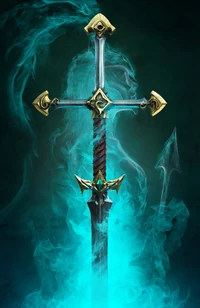
The royal sword Sanctity, later corrupted into the Blade of the Ruined King, was another pillar of Camavoran rule. It was more than a weapon. It was a symbol of legitimacy, succession, and the right to sit the Argent Throne. A ruler who could bind their soul to the blade proved they belonged to the line of kings.
That is one reason Viego's story lands so sharply. He did not simply fail as a grieving husband. He failed as a king in a system where the ruler was supposed to embody Camavor's strength, history, and divine-looking authority. When he abandoned governance for obsession, the kingdom's old machinery kept moving, but in worse hands.
Camavor history, from Darkin wounds to the Ruination
Camavor's history is scattered because the kingdom fell long ago and much of its record was lost. What remains is enough to show a pattern: the realm survived through bloodline, violence, and bargains with forces that were never fully safe. That pattern starts before Viego, especially through Vladimir.
During the age of the Darkin, a Camavoran prince was traded away as a hostage to protect the kingdom. That prince became Vladimir. His father broke the bargain, and Vladimir was turned against his own blood. From there, Camavor connects directly to the older horrors of the Void-touched age, the Darkin legacy, and the kind of ancient catastrophe also felt in places like Icathia and Shurima.
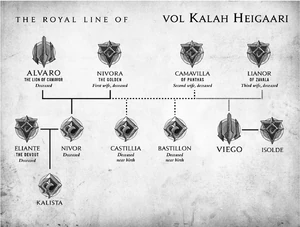
Viego's era came much later. He was not meant to be the perfect king. He was young, self-absorbed, and poorly suited to the discipline Camavor needed. When he married Isolde, the kingdom became secondary to his love. When an assassin's poisoned blade meant for Viego struck Isolde instead, the court's problem became the world's problem.
Kalista searched for a cure and eventually found the hidden Blessed Isles. She was told that Isolde could be healed if brought there alive, but by the time she returned, the queen had died and Viego had fallen into madness. Hecarim saw opportunity in that grief. He pushed the king toward conquest, vengeance, and the secret Kalista had sworn to protect.
The voyage to the Blessed Isles is where Camavor lore becomes inseparable from the Shadow Isles. Kalista refused to slaughter the guardians of Helia. Hecarim betrayed her. Viego reached the Waters of Life. Isolde returned as a wraith, stabbed him with his own blade, and the Ruination tore through the isles. The Black Mist began with Camavoran grief, but it did not stay in Camavoran hands.
The lost kingdom becomes easier to picture when its memory is treated as more than a footnote to Viego. The roads, banners, royal houses, and old wounds of Camavor all help explain why the Ruined King was never just a wandering ghost. He was the last heir of a realm that had already taught him ownership, conquest, and entitlement.
That wider view matters because Camavor is not only where Viego came from. It is the political and emotional structure that made his worst choices believable.
Major places in Camavor
Camavor is not currently shown on the main map in the same way as major regions like Demacia, Ionia, or Freljord, but its known locations still reveal a lot. The kingdom was large enough to include royal seats, estates, fortresses, rebellious regions, and conquered or allied city-states.
| Place | What it is | Why it matters |
|---|---|---|
| Alovédra | Historical capital of Camavor | The seat of the Argent Throne and the center of royal authority. |
| Iron Keep | Fortress of the Iron Order | Hecarim's base of power and one of the clearest symbols of Camavor's knightly violence. |
| Panthas | Southern estate known for vineyards | Ledros was appointed baronet there, giving the kingdom a rare story of lowborn elevation. |
| Santoras | Formerly independent city-state | Its subjugation shows how Viego's rule could turn political grievance into war. |
| Port Takan | Independent port tied to Camavoran politics | Viego suspected it after the assassination attempt and sent Hecarim to punish it. |
| Taskaros | Eastern region of the kingdom | Its secession shows that Camavor was already fracturing before Viego sailed west. |
| Burning Valley | Vast steppe within Camavor Proper | It adds scale to the kingdom and keeps Camavor from feeling like only a court story. |
| Zavala | Western coastal city | The birthplace of Viego's mother, Lady Lianor, and a reminder of the royal family's wider roots. |
The most important location for understanding Camavor's military culture is the Iron Keep. It belonged to the Iron Order, the elite knightly force sworn to protect the king. Under Hecarim, that purpose became twisted. The order did not save Camavor from Viego's spiral. It carried his spiral across the sea.
Alovédra matters in a different way. As the capital and seat of the Argent Throne, it represents what Camavor lost when Viego abandoned rule. The kingdom did not collapse only because magic went wrong in Helia. It was already politically sick before the Ruination ever began.
Camavor culture, dragons, and the Iron Order
Camavor's culture was built around rank, conquest, bloodline, and display. Its knightly orders wore ornate armor with feathery and draconic accents, and their questing culture rewarded plunder as much as honor. That makes Camavor feel older and more ceremonial than many regions, but not kinder. Its beauty and brutality belong together.
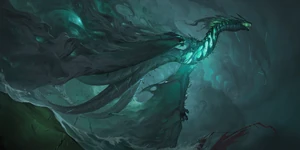
The dragon pact is one of the kingdom's most distinct features. Camavoran dragons are described as long, viper-like creatures, and their bond to the royal line gave the throne a mythic edge. Smolder and his mother are especially important because they suggest the Camavoran dragon legacy did not vanish with the monarchy.
The Iron Order shows the darker side of that same culture. In theory, it existed to protect the king. In practice, Hecarim used it as a blade for repression, foreign violence, and personal ambition. When Camavor needed restraint, the Iron Order offered escalation.
That is why Kalista and Hecarim are such strong opposites. Both serve Camavor. Both are warriors. But Kalista treats duty as something that must answer to conscience, while Hecarim treats duty as permission to destroy. Their conflict is Camavor's moral collapse in human form.
How Camavor connects to the rest of Runeterra
Camavor sits far away from most familiar regions, but its influence reaches across Runeterra. The kingdom's collapse created consequences that spread through the Blessed Isles, the Black Mist, the Sentinels of Light, and the stories of champions who never set foot in Alovédra.
| Region | Camavor's connection | Why it matters in lore |
|---|---|---|
| Shadow Isles | Direct result of Viego's doomed quest | The Ruination of Helia is the single most important consequence of Camavoran royal grief. |
| Bilgewater | Major target of Harrowings and Ruined King events | Bilgewater shows how Camavor's tragedy keeps attacking coastal life centuries later. |
| Bandle City | Connected through Vex's role in Viego's return | A yordle helping Viego shows how the Ruination can pull even distant magical cultures into Camavor's aftermath. |
| Targon | Connected through the Sentinels and Ruination crisis | Viego's return pulled celestial-adjacent champions and wider sacred powers into the fight. |
| Piltover | Part of the wider world affected by Ruination-era movement and trade | Piltover's global reach makes it a useful contrast to Camavor, one city looks forward while the other is trapped by the past. |
| Zaun | Indirect contrast in corruption and survival | Zaun is shaped by industry and pollution, while Camavor's legacy is aristocratic, magical, and undead. |
| Ixtal | Ancient trade and westward migration context | Camavor's eastern continent once mattered to old routes and civilizations beyond the familiar map. |
The contrast with other regions also helps define Camavor. Demacia builds identity around law and protection. Noxus builds it around strength and assimilation. Ionia centers balance and spirit. Camavor, by comparison, feels like a kingdom that treated rule as inheritance, conquest as culture, and love as possession once Viego took the throne.
Its distance from the main western map also matters. Camavor is separated by the Eternal Ocean, which helps explain why its fall became half-history, half-myth to many people elsewhere. Unlike Freljord conflicts, Shurima empires, or Targon legends, Camavor is a memory that returned to the world only when Viego's curse did.
Where to start with Camavor lore
A strong Camavor reading path starts with Viego, Kalista, Hecarim, Gwen, Vladimir, and the Shadow Isles. That order gives you the royal tragedy first, then the betrayal, then the aftermath. After that, move into broader Ruination stories, Sentinels of Light material, and connected champion bios.
For first-party lore browsing, use the Universe lore archive. Then use RiftDaily's guides and wider lore hub to connect Camavor to the rest of the setting, especially the Ruination, the Black Mist, and the regions still dealing with Viego's legacy.
Camavor is also worth reading alongside older world-ending threats. The kingdom's connection to Vladimir touches Darkin history, while the broader ancient timeline overlaps with disasters and lost knowledge tied to the Void and Icathia. That does not make Camavor the center of every catastrophe, but it does place the kingdom inside Runeterra's long pattern of power being misunderstood until it is too late.
Frequently asked questions about Camavor
What is Camavor in League of Legends?
Camavor is a fallen kingdom from the eastern continent of Runeterra. It is best known as the homeland of Viego, Kalista, Hecarim, Gwen, Vladimir, and Smolder, and as the political origin behind the Ruination.
Who are the main Camavor champions?
The main Camavor champions are Viego, Kalista, Hecarim, Gwen, Vladimir, and Smolder. Viego, Kalista, and Hecarim are central to the kingdom's fall, while Gwen, Vladimir, and Smolder show different parts of its legacy.
Why did Camavor fall?
Camavor fell because its last king, Viego, neglected rule after Isolde's death and pursued resurrection at any cost. His obsession weakened the kingdom, empowered Hecarim's brutality, and ultimately led to the Ruination of the Blessed Isles.
How is Camavor connected to the Shadow Isles?
Camavor is connected to the Shadow Isles through Viego's journey to the Blessed Isles. His attempt to revive Isolde corrupted the Waters of Life, unleashed the Black Mist, and transformed the Blessed Isles into the Shadow Isles.
What is the Argent Throne?
The Argent Throne was the royal seat of Camavor. It represents the authority of the Vol Kalah Heigaari royal line and the old kingdom's obsession with dynasty, legitimacy, and conquest.
What is Sanctity in Camavor lore?
Sanctity was the royal sword of Camavor and a symbol of rightful rule. After Viego's failed resurrection ritual, its magic was corrupted, and it became tied to the Blade of the Ruined King.
Where can I check official support information related to League content?
For account help, event questions, and live game support, use the official Riot support site. Lore reading and support issues are best kept separate.
Why Camavor still matters
Camavor matters because it gives the Ruination a human origin. The Black Mist is terrifying, but the story becomes stronger when you understand the kingdom behind it: a realm of royal pride, dragon oaths, knightly violence, failed duty, and one king who mistook love for ownership.
The best way to read Camavor is not as a simple lost kingdom. Read it as the place where several Runeterra themes collide: dynasty, conquest, grief, corruption, and the cost of refusing to let go. That is what makes Camavor lore and Camavor champions worth revisiting, whether you continue through RiftDaily's guides or dig deeper into the site's wider lore coverage.