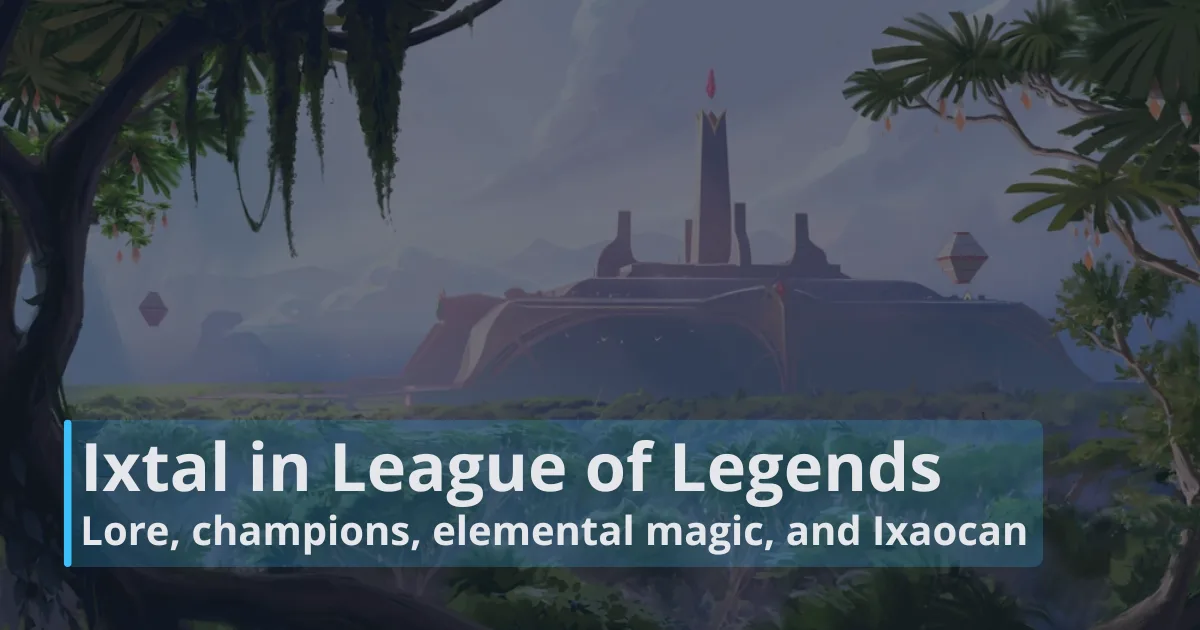
Ixtal is the hidden jungle nation of League of Legends, a region defined by elemental magic, isolation, ancient knowledge, and the secret arcology-city of Ixaocan. It is not just a rainforest backdrop for a few champions. Ixtal is one of Runeterra's oldest surviving civilizations, and its story explains why some cultures chose secrecy over empire.
At its best, Ixtal represents mastery, preservation, discipline, and the belief that knowledge should be protected from reckless outsiders. At its worst, it becomes arrogant, closed, fearful, and willing to erase anything that threatens its carefully controlled worldview. That tension is what makes Ixtal lore so different from the more open political conflicts of Demacia, Noxus, or Shurima.
If you want the short version, Ixtal is a secluded elemental civilization hidden in the eastern jungles of Shurima. Its people survived the Void, the Darkin, and the Rune Wars by withdrawing from the world and using the jungle itself as a shield. That one choice explains most of modern Ixtal, from Qiyana's ambition to Skarner's paranoia, Milio's exile, and the danger outsiders face when they enter the jungle.
Ixtal at a glance
- What Ixtal is: a hidden jungle civilization centered on Ixaocan and the mastery of elemental magic.
- What Ixtal is known for: arcologies, axioms, elemental mages, the Yun Tal, jungle barriers, Skarner, Qiyana, and ancient ties to Shurima.
- What drives Ixtal lore: the struggle between preservation and isolation after ancient disasters convinced Ixtal that the outside world could not be trusted.
- Why Ixtal matters: it connects elemental magic, the Ascended, the Void War, the Shuriman jungle, and one of Runeterra's most secretive surviving cultures.

Ixtal champions
The fastest way to understand Ixtal is through its champions. They show the region as a place of discipline, pride, survival, wild magic, hidden history, and tension between the capital and the wider jungle. For official champion pages and bios, the League of Legends site is the cleanest place to start.
| Champion | Role in Ixtal | Why the champion matters |
|---|---|---|
 Malphite | Living shard of the Monolith | Malphite connects Ixtal to the Void War, Ne'Zuk, and the ancient magical superweapon that shattered near Icathia. |
 Milio | Warm-hearted elemental prodigy | Milio shows Ixtal from outside the elite center, where family exile, gentle fire magic, and hope matter more than status. |
 Neeko | Oovi-Kat vastaya tied to jungle magic | Neeko brings Ixtal into vastayan memory, transformation, emotion, and the living wilds beyond Ixaocan. |
 Nidalee | Feral huntress of the Shuriman jungle | Nidalee represents the untamed side of Ixtal, where survival, instinct, and shapeshifting matter more than arcology rules. |
 Qiyana | Princess and elemental prodigy of Ixaocan | Qiyana is central to Ixtal lore because she challenges the Yun Tal order from inside the royal system and wants the world to know her power. |
 Rengar | Kiilash hunter from the jungle | Rengar gives Ixtal its predator culture, showing how pride, hunting, exile, and the wild borderlands shape life beyond Ixaocan. |
 Skarner | Brackern founder and hidden protector | Skarner explains Ixtal's deepest fear, because he helped build Ixaocan and now believes only isolation can keep the nation alive. |
 Zyra | Carnivorous magic of the deep jungle | Zyra shows that Ixtal's wilderness is not passive scenery. The jungle itself can hunger, adapt, and kill. |
Other champions related to Ixtal
Not every important Ixtal connection comes from official regional placement. Some champions crossed the jungle, studied under Ixtali masters, hunted there, or became connected through the Shuriman jungle's wider history.
| Champion | Connection to Ixtal |
|---|---|
| Ezreal | Traveled to Paretha in search of the Elixir of Uloa, tying Ixtal to relic hunting and Piltover exploration. |
| Kha'Zix | Roams the jungle and gives Rengar's hunt a direct link to the Void. |
| Lucian | Traveled near the Serpentine Delta while investigating traces of Black Mist and Harrowings from the Shadow Isles. |
| Shyvana | Her dragon mother, Yvva, comes from the Shuriman jungle, linking Ixtal's borderlands to Demacia through Shyvana's later story. |
| Twisted Fate | Was born in the Serpentine Delta before his life moved toward cards, crime, and Bilgewater. |
| Yuumi | Traveled through the jungles searching for Norra, giving Bandle City a whimsical connection to Ixtal's dangerous wilderness. |
| Zilean | Studied elemental magic under the great Yun of Ixtal before his story became tied to Icathia and time itself. |
Ixtal lore and why isolation defines the region
Ixtal lore begins with a civilization older than many players expect. The Ixtali were part of a great westward diaspora that also helped shape cultures connected to the Buhru, Helia, and Targon. Long before modern borders, they were already developing a precise way to understand the world through elemental principles.
That precision became the basis of Ixtal's identity. Its mages do not treat elemental magic as wild instinct. They organize it through axioms, disciplines, arcologies, and ranks of mastery. To an Ixtali mage, fire, stone, air, water, ice, steam, magnetism, and growth are not random forces. They are systems to be studied, shaped, and controlled.
Ixtal's isolation came later, after catastrophe proved that the outside world could destroy itself and drag others down with it. The fall of Icathia opened the way for the Void. The Darkin War showed what broken god-warriors could become. The Rune Wars confirmed that nations beyond the jungle would misuse power again and again.
So Ixtal withdrew. Its leaders hid the nation behind manipulated weather, shifting paths, choking vegetation, dense mist, and lethal jungle defenses. The outside world became the Nasiana, outsiders who were not trusted to understand, respect, or even survive what Ixtal had protected.

This is the key to Ixtal. The region is not isolated because it is primitive. It is isolated because it believes it is more advanced, more disciplined, and more qualified to survive than the rest of Runeterra. That makes Ixtal fascinating, but also dangerous. A culture built around preservation can become a culture that refuses to learn.
A broader lore recap can help place Ixtal beside Shurima, the Void, and the newer champion stories that made the region easier to understand.
After that foundation, the region becomes easier to read as more than Qiyana's homeland. Ixtal is a locked archive, a living fortress, and a political pressure cooker waiting for one ambitious voice to open the door.
Ixtal history, from Skarner to the Void War
The oldest modern explanation of Ixtal's rise is tied to Skarner. When early settlers reached the jungle, Skarner watched them from hiding. After he saved them from a disaster, the Ixtali revered him as a protector. In time, his geomancy and ancient perspective helped them build Ixaocan, and he became one of the founding members of the Yun Tal.
That origin makes Skarner more than a monster under the city. He is part founder, part guardian, and part living warning. He helped Ixtal flourish, but he also learned to distrust the decisions of the very people he protected.
The next major turning point was Shurima. Ixtal joined the Shuriman empire early, and its elemental mages likely played a role in the creation of the first Ascended. That makes Ixtal one of the hidden roots beneath Shurima's golden age. The empire's divine power was not only Shuriman. It drew from older knowledge across Runeterra, including Ixtal and Targon.
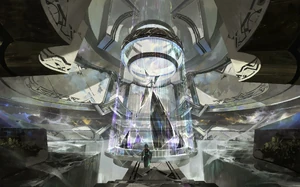
Then came Icathia. When the Void erupted, Ixtal faced a disaster that even ancient empires could not easily control. Ne'Zuk, an Ixtali Ascended and elemental mage, created the Monolith, a vast floating fortress of living stone, to fight the Void at its source. The attack failed, the Monolith shattered, and one surviving shard eventually became Malphite.
That story is one of the best examples of how Ixtal lore connects personal champions to world-scale history. Malphite is not just a rock creature. He is a remnant of an ancient anti-Void weapon, still carrying purpose after the civilization that made him broke apart.
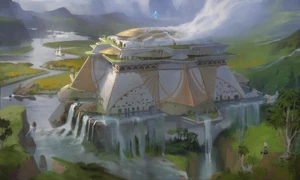
After the Void War and the later Rune Wars, Skarner pushed Ixtal toward deeper isolation. The jungle was drawn around the nation as a magical defense. The Yun Tal kept the story of the outside world tightly controlled, and Ixaocan survived by making itself nearly impossible to find.
Modern pressure now comes from two directions. Outsiders like Noxian expeditions and Piltovan explorers keep testing the border. Inside Ixtal, Qiyana wants recognition, Milio wants to restore his family, and Skarner fears that any opening will invite disaster. Ixtal has survived by closing itself off, but that survival strategy is becoming harder to maintain.
Major locations in Ixtal
Ixtal is usually described through Ixaocan, but the region is larger than the capital. It includes arcologies, border villages, semi-independent settlements, jungle paths, river regions, and places where the line between Ixtal and the Shuriman jungle becomes hard to define.
Ixaocan and the arcologies
Ixaocan is the center of Ixtal, a system of arcologies connected by lines of power. The Cardinal Arcology is the heart of government, magic, and social control. It is the seat of the Yun Tal, and it has stood since before the ancient Shurimans raised their first Sun Disc.
The arcologies are not just buildings. They are homes, schools, magical engines, and symbols of Ixtali order. Each one reflects a discipline of elemental mastery. The Magma Arcology focuses on fire, rock, and magnetism. The Water Arcology focuses on water, ice, and steam. The further from the center, the more specialized and prestigious these disciplines can become.

Villages, borders, and the living jungle
Outside the main arcologies are villages like Milio's home, Kiilash settlements tied to Rengar, Paretha, Semchul, Taarqen, Tikras, and other outlying communities. These places matter because they show that Ixtal is not one uniform city. It has local disputes, prefects, border duties, families in exile, and communities that experience isolation differently than the elite center.
The border is one of the most important parts of Ixtal's identity. The jungle barrier does more than hide roads. It creates storms, fog, shifting terrain, oppressive plant growth, and the feeling of being watched. Outsiders can vanish because the land is hostile, because defenders intervene, or because the jungle itself is lethal enough without help.
Ixtali culture, axioms, and government
Ixtali culture is built around mastery. Elemental magic is not treated like a personal trick or loose spiritual gift. It is taught through axioms, measured through discipline, and woven into clothing, architecture, social rank, and civic identity. To the Ixtali, mastery proves worth.
The Yun Tal sit at the top of this structure. They are the ruling caste, the guardians of Ixtal's official history, and the people most responsible for preserving the nation's isolation. Qiyana's story matters because she is not attacking Ixtal from outside. She is challenging the order from within the same elite system that created her.
| Ixtali concept | What it means | Why it matters in lore |
|---|---|---|
| Ixaocan | The hidden arcology-city at the center of Ixtal | It is the heart of Ixtali government, elemental learning, and controlled isolation. |
| Yun Tal | The ruling caste and elite masters of Ixtal | They preserve knowledge, enforce hierarchy, and shape how much truth the public receives. |
| Axioms | Numbered principles governing elemental magic | They show that Ixtal treats magic as a structured science and sacred discipline. |
| Vidalion | An artifact that weaves magic into material form | It confirms status and turns mastery into visible political identity. |
| Jungle barrier | Magical and natural defenses around the nation | It explains why outsiders rarely reach Ixtal and why the region remained hidden so long. |
| Nasiana | The Ixtali term for outsiders | It reveals how sharply Ixtal divides itself from the rest of Runeterra. |
Ixtali clothing also reflects this worldview. Garments are suited to the tropical environment, but status can be shaped through elemental magic. For elite initiates, the Vidalion can weave magic around the body, creating clothing that responds to the wearer's needs and confirms mastery in public.
This culture can look beautiful, sophisticated, and stable. It can also look rigid. Milio's family history shows how quickly status can collapse when someone is seen as disloyal. Qiyana shows how talent can become resentment when the system refuses to move. Skarner shows how protection can become control when fear lasts long enough.
Ixtal's relations with other regions
Ixtal makes more sense when compared with other regions. It is not simply hidden because it is remote. It is hidden because its leaders believe history has already proved outsiders too dangerous to trust.
| Region | Ixtal's relationship | Why it matters in lore |
|---|---|---|
| Shurima | Ancient imperial ally and historical pressure | Ixtal joined the Shuriman empire early, helped shape ancient magical history, then withdrew after Icathia, the Darkin, and the Rune Wars. |
| Void | Ancient existential threat | The Void War pushed Ixtal toward fear, secrecy, and the creation of the Monolith, which later led to Malphite. |
| Noxus | Hostile outsider expansion force | Noxian expeditions into the jungle show why Ixtal still believes outsiders arrive with greed before understanding. |
| Piltover | Explorer-driven threat | Piltovan treasure hunters and miners treat Ixtal as a frontier, which creates direct conflict with Ixtali secrecy. |
| Targon | Ancient magical connection | Ixtal's likely role in the first Ascended ties the region to celestial magic and Targon's oldest interventions. |
| Bilgewater | Pirate and adventurer pressure | Bilgewater's fortune seekers are exactly the kind of outsiders Ixtal's border is designed to swallow. |
| Zaun | Distant technological contrast | Zaun manipulates chemistry and industry, while Ixtal manipulates elemental forces through formal magical discipline. |
| Ionia | Spiritual and magical contrast | Ionia treats magic as a living balance, while Ixtal treats it as a system to master and contain. |
| Freljord | Environmental contrast in survival | The Freljord survives through cold, tribe, and endurance, while Ixtal survives through jungle concealment and controlled knowledge. |
| Runeterra | The world Ixtal refuses to trust | Ixtal's central problem is whether it can remain apart from Runeterra when Runeterra keeps finding its borders. |
| Black Rose | Useful comparison in secrecy | The Black Rose hides through manipulation, while Ixtal hides through geography, magic, and official isolation. |
| Camavor | Distant example of outside catastrophe | Camavor's legacy through Viego reinforces Ixtal's fear that foreign kingdoms can unleash disasters beyond their borders. |
Ixtal also has quieter thematic contrasts with Demacia, which fears magic and tries to suppress it, while Ixtal reveres magic but restricts who may master it. Both regions believe control creates safety. They simply choose different tools.
Where to start with Ixtal lore
A strong reading path starts with the region page, then moves to Qiyana, Skarner, Milio, Malphite, Neeko, Nidalee, Rengar, and Zyra. That order gives you the capital, the ruling system, family exile, ancient history, the wild jungle, predator culture, and the dangerous life beyond Ixaocan.
For first-party reading, start with the official Ixtal region page. Then use RiftDaily's guides and wider lore hub to connect Ixtal to the rest of the setting. For account help, event questions, or live game support, use the official League of Legends support site instead of lore pages.
Frequently asked questions about Ixtal
What is Ixtal in League of Legends?
Ixtal is a hidden jungle nation in eastern Shurima, known for elemental magic, Ixaocan, the Yun Tal, and its long isolation from the rest of Runeterra. It is one of the oldest surviving civilizations in League of Legends lore.
Who are the main Ixtal champions?
The main Ixtal champions are Malphite, Milio, Neeko, Nidalee, Qiyana, Rengar, Skarner, and Zyra. Qiyana, Skarner, Milio, and Malphite are especially useful starting points for understanding Ixtal lore.
What is Ixaocan?
Ixaocan is the hidden arcology-city at the center of Ixtal. It is the seat of the Yun Tal, the home of major elemental disciplines, and the clearest symbol of Ixtal's controlled approach to magic and society.
What are the Yun Tal?
The Yun Tal are Ixtal's ruling caste. They preserve the nation's knowledge, control its official worldview, guard its isolation, and decide who rises within Ixtali society.
Why is Ixtal hidden from the rest of Runeterra?
Ixtal hides because its leaders believe ancient disasters proved the outside world cannot be trusted. The Void War, the Darkin, and the Rune Wars convinced Ixtal to survive by withdrawing behind jungle and elemental barriers.
How is Ixtal connected to Shurima?
Ixtal was one of the first independent nations to join the Shuriman empire. It also likely helped shape the ancient knowledge behind Ascension, which ties Ixtal to the Sun Disc, the Ascended, and the wider history of Shurima.
How is Ixtal connected to the Void?
Ixtal is connected to the Void through the fall of Icathia and the Void War. Ne'Zuk created the Monolith to fight the Void, and a surviving shard of that living stone later became Malphite.
Is Ixtal good or bad?
Ixtal is not purely good or bad. It preserves knowledge, protects its people, and masters elemental magic with incredible discipline. It also hides truth, rejects outsiders, and can punish internal dissent harshly.
Why Ixtal should not stay hidden
Ixtal lasts in the imagination because it feels both ancient and underused. It has elemental science, living jungles, brackern history, royal ambition, hidden cities, and one of the strongest questions in Runeterra: when does protection become imprisonment?
The best way to read Ixtal is not as a small side region. Read it as a surviving civilization that locked itself away after seeing too much of history. That makes Ixtal lore and Ixtal champions worth revisiting, whether you continue through RiftDaily's guides or explore the site's wider lore coverage.