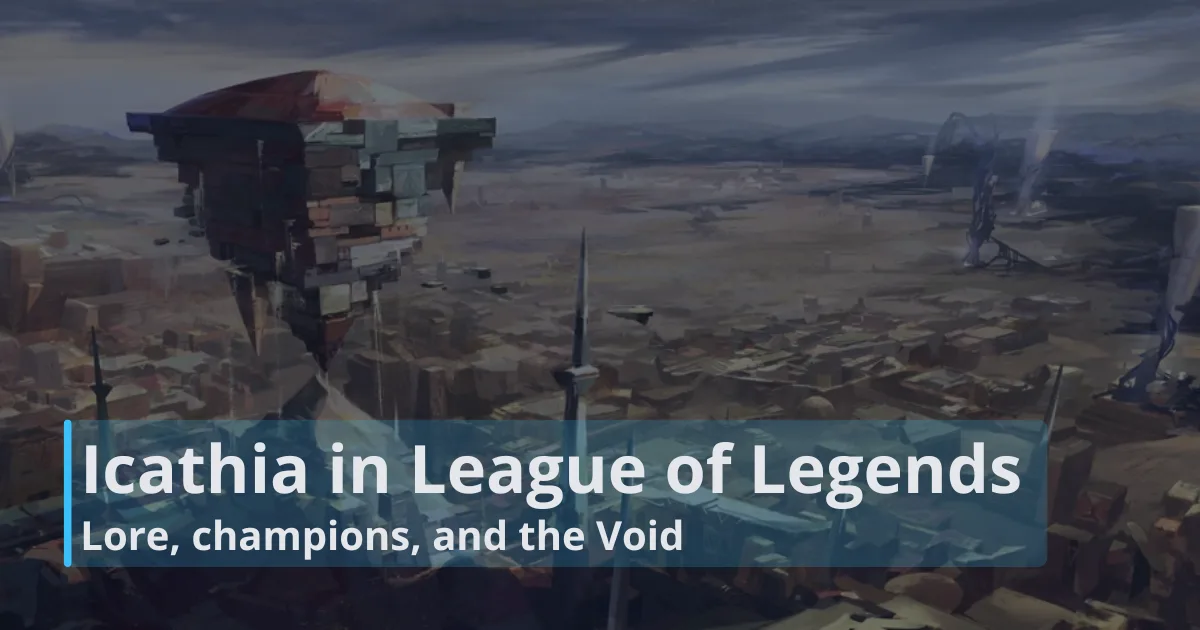
Icathia is the ruined League of Legends city-state that rebelled against ancient Shurima, unleashed the Void, and became one of Runeterra's most dangerous lost places. It matters because Icathia lore connects Jax, Zilean, the Ascended, the Darkin, the Voidborn, and the long fear that something beneath the world is still waiting to break through again.
At its simplest, Icathia is a warning about desperation. Its people were conquered, humiliated, and pushed toward rebellion. Their last weapon was not freedom, but a rupture into something alien, hungry, and impossible to control.
The short version is this: Icathia was once an independent mage kingdom on the southern continent. After Shurima conquered it, Icathians endured centuries of subjugation before rising up. To defeat the Ascended Host, Icathian mages opened a terrible power beneath the earth. The Void answered, and Icathia was destroyed by the very force it tried to use.
Icathia at a glance
- What Icathia is: a fallen city-state and wasteland in southeastern Shurima, now tied directly to the Void.
- What Icathia is known for: Jax, Zilean, the Kohari, the Mage-Kings, the Fall of Icathia, the Rupture, and the Void War.
- What drives Icathia lore: rebellion, cultural erasure, magical hubris, Shuriman imperial power, and the cost of using unknowable forces.
- Why Icathia matters: it explains why the Void is not just a monster faction, but a wound in Runeterra's history.
Icathia champions
The fastest way to understand Icathia is through its champions. There are only two core Icathia champions, but both carry enormous weight. Jax preserves the martial memory of the lost city, while Zilean preserves its impossible relationship with time. For official champion pages and bios, the League of Legends site is the best place to start.
| Champion | Role in Icathia | Why the champion matters |
|---|---|---|
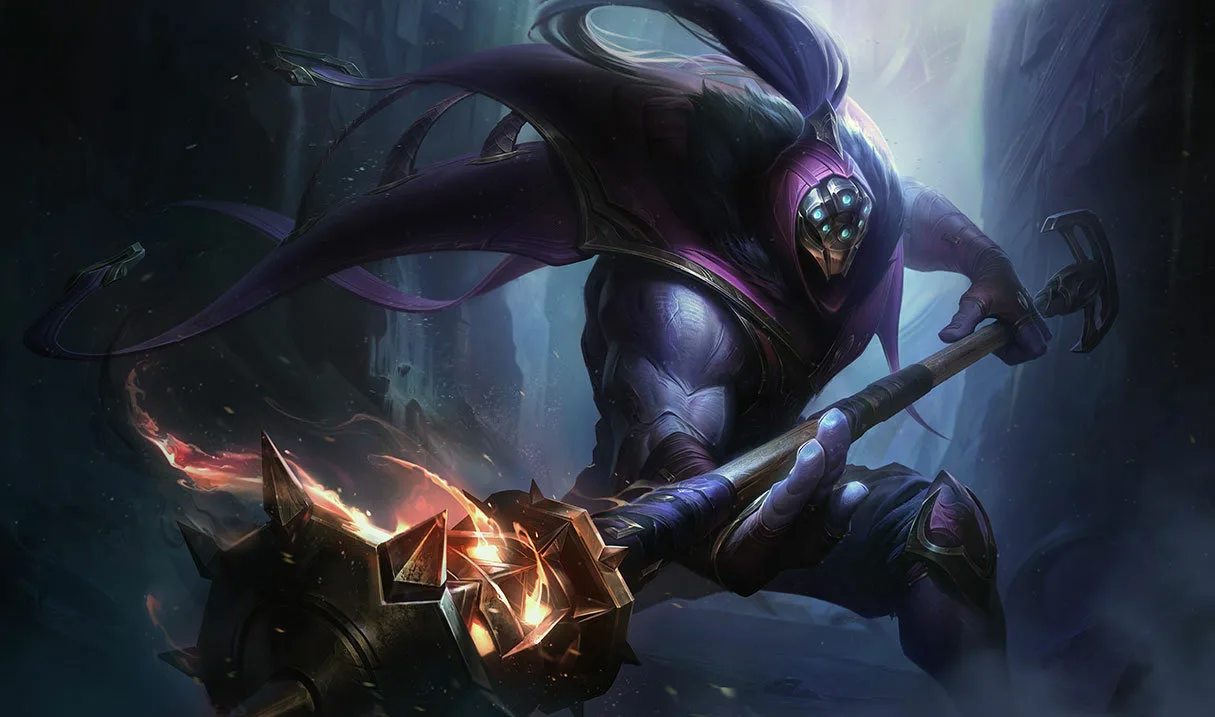 Jax | Last known survivor of the Kohari | Jax is the living warrior-memory of Icathia, carrying the last light of his homeland while searching for fighters strong enough to face the Void. |
 Zilean | Icathian chronomancer displaced in time | Zilean shows the intellectual and magical side of Icathia, forever trapped between saving his people and watching their disaster echo across ages. |
Other champions related to Icathia
Not every major Icathian connection comes from citizenship. Many champions are tied to the city through the Void War, the Rupture, Shuriman campaigns, later expeditions, or the long consequences of the disaster.
| Champion | Connection to Icathia |
|---|---|
| Aatrox | Fought against Icathia as one of Shurima's Ascended, then carried the trauma of the Void War into the later Darkin story. |
| Cho'Gath | Is strongly associated with Void emergence, making Icathia one of the most likely points of entry for horrors like him. |
| Kai'Sa | Emerged from the Void-touched lands near Icathia, turning the region's old wound into a modern survival story. |
| Kassadin | Ventured through Icathia's Void rift and became one of the few living people connected directly to its depths. |
| Kha'Zix | Represents the adaptive hunger of the Void, the same force first unleashed through Icathia. |
| Kog'Maw | Another Voidborn whose arrival is often discussed through the same rupture that doomed Icathia. |
| Malphite | Was created from the Monolith, a weapon built to fight Void corruption after Icathia's fall. |
| Malzahar | Traveled toward Icathia and found the visions and power that transformed him into the Prophet of the Void. |
| Nasus | Fought Voidborn near Icathia and ties the disaster to the burden carried by Shurima's surviving Ascended. |
| Rek'Sai | Embodies the subterranean terror of Void-touched Shuriman lands, the kind of threat Icathia awakened. |
| Renekton | Fought Voidborn in ancient Shuriman campaigns, linking his trauma to the wider aftermath of Icathia. |
| Ryze | Fought his master in Icathia to prevent the use of World Runes, showing how dangerous the ruins remained after the original disaster. |
| Taliyah | Comes from a tribe whose history is tied to the lands near Icathia's Void rift. |
| Varus | Fought Voidborn near Icathia before the Ascended trauma helped lead toward the Darkin age. |
| Vel'Koz | Represents the analytical, world-consuming intelligence of the Void, the force Icathia failed to understand. |
| Yuumi | Traveled to Icathia while searching for Norra, giving the lost city a strange connection to Bandle City. |
Icathia lore and the rebellion against Shurima
Icathia lore starts with a city that was not always a ruin. Long before the Void defined it, Icathia was a mage kingdom with its own rulers, naming customs, military traditions, and identity. It sat near the southeastern edge of Shurima, close enough to be conquered by the empire and far enough away to become a place Shurima could treat as lesser, foreign, and useful.
The last Mage-King, Axamuk, fell when Shurima brought its armies and god-warriors to Icathia. After that defeat, the city became a vassal-state. Shurima did not simply take land. It tried to erase Icathian identity through law, punishment, and cultural pressure. That part matters because the Fall of Icathia was not random arrogance. It came from generations of anger.
The Kohari were central to the old kingdom's identity. Originally, they were life-wards sworn to protect the Mage-Kings. After Shurima broke Icathian independence, the old order was destroyed. In the final rebellion, Icathians revived the Kohari name as a symbol of defiance, duty, and the dream of restoring their nation.
That makes Jax more than a strong fighter with a lamp. He is the last visible remnant of a warrior order that tried to defend a people already pushed beyond endurance. When he searches for allies, he is not chasing glory. He is trying to make sure Icathia's mistake is not repeated alone.
The Fall of Icathia and the Rupture
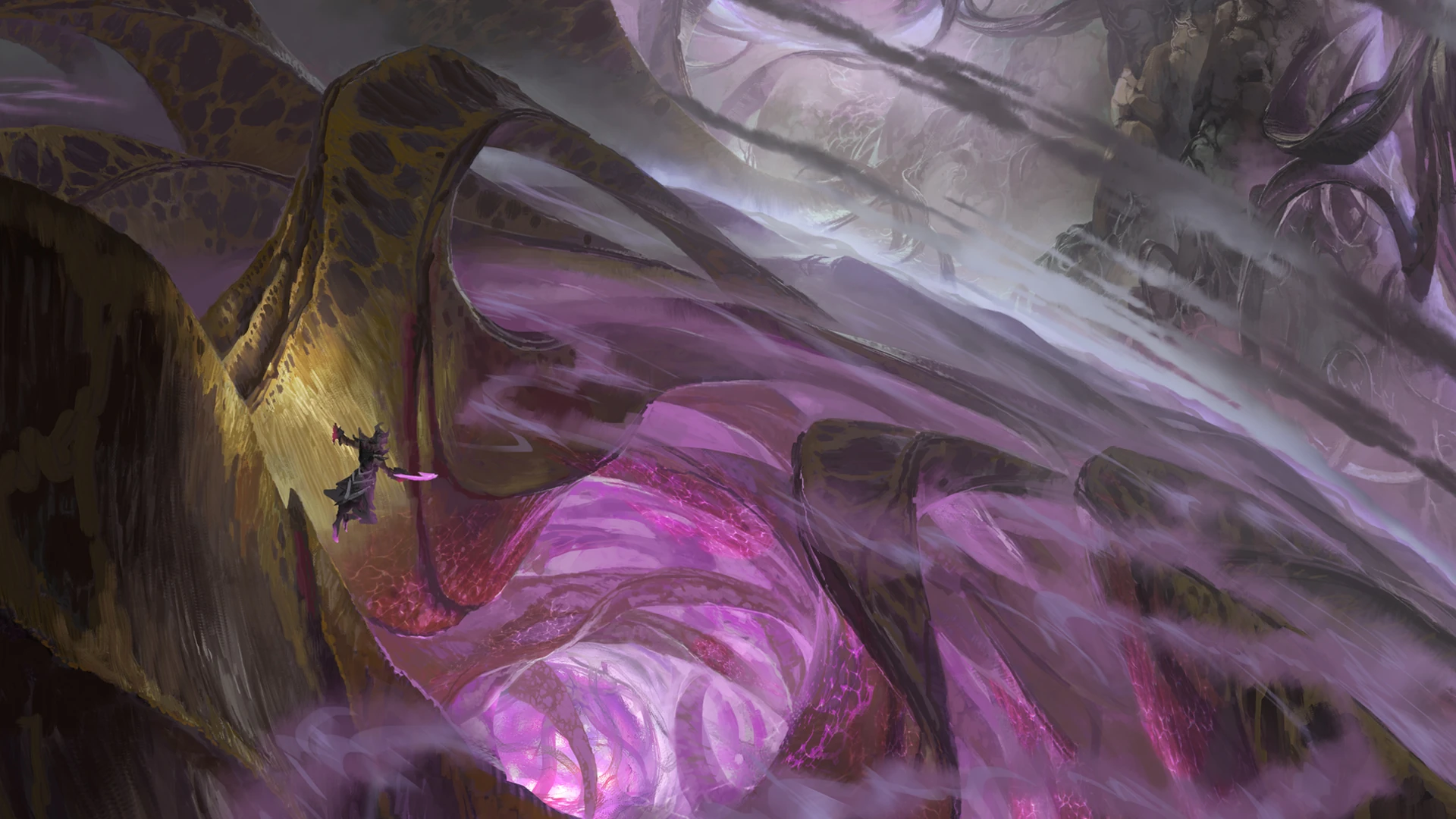
The Fall of Icathia began as a war for independence. Icathian rebels killed Shuriman officials, tore down imperial symbols, rebuilt the city's broken defenses, and prepared for the Sun Emperor's response. Shurima came with armies, war machines, priests, and Ascended god-warriors. On paper, Icathia should have been crushed.
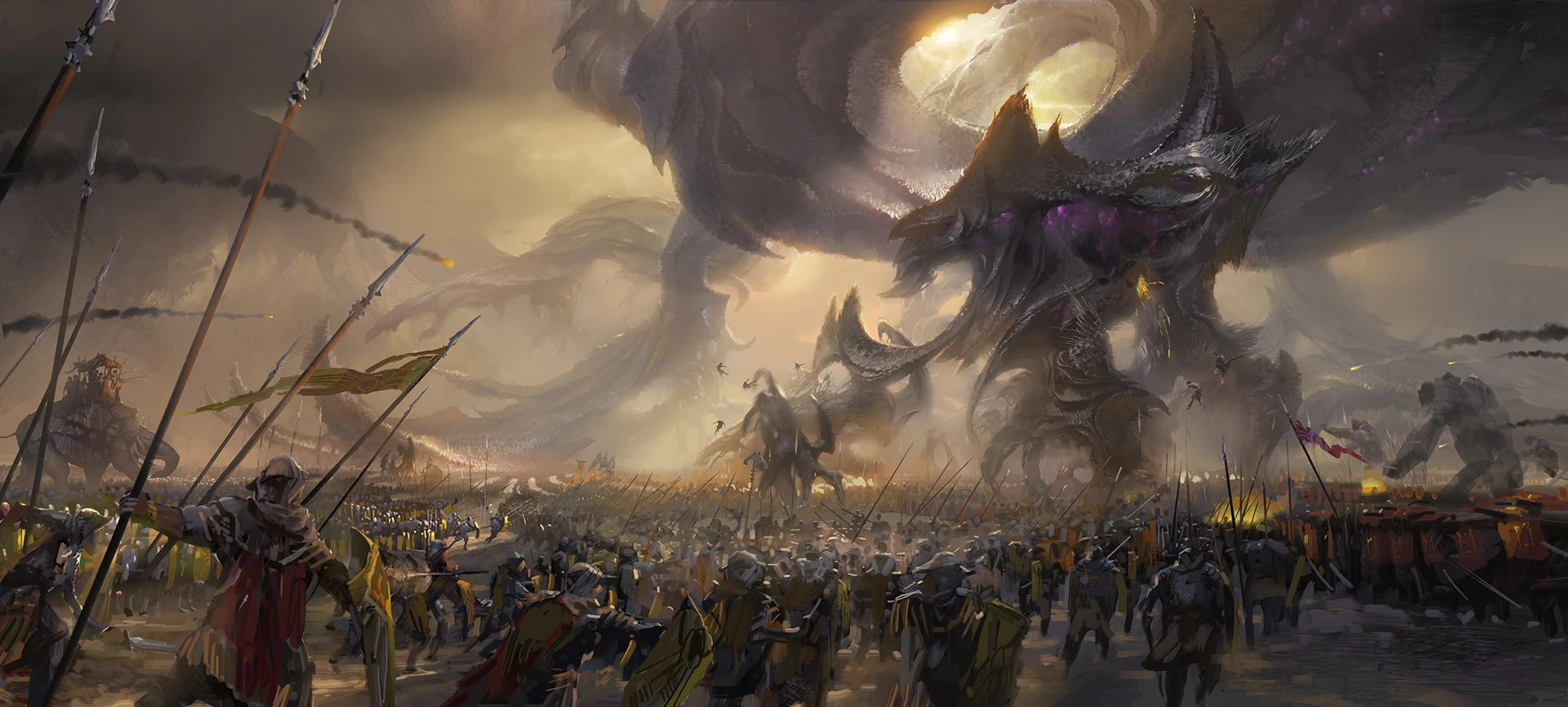
Instead, Icathian thaumaturges revealed the weapon they had excavated beneath the earth. They believed it could turn the battle. It did, but not in the way they hoped. The power opened into the Void, and the battlefield became something no army truly controlled. Icathians, Shurimans, mortals, and Ascended alike were dragged into a war against an alien force that did not care who had summoned it.
The disaster reshaped more than one city. Icathia became a wasteland. Shurima tried to erase it from maps and memory. Survivors like Jax and Zilean became living contradictions, proof that the place existed, and proof that remembering it is dangerous. The Ascended who fought there were also changed, carrying horrors that helped push some of them toward the long descent into the Darkin age.
Riot's story Where Icathia Once Stood is the key first-party read for this tragedy because it frames the rebellion from inside an Icathian perspective, not as a distant history note.
Jax's survival gives the fall its most personal shape. Through him, Icathia is not only a battlefield, a ruin, or a Void scar. It is a home that failed, a people who vanished, and a duty that never ended.
Seen through Jax, the Fall of Icathia becomes less abstract. The Void is still cosmic horror, but the emotional hook is simple: one survivor still believes the coming darkness can be met if enough worthy champions stand together.
Major locations in Icathia
Modern Icathia is not a functioning region like Demacia, Noxus, or Ionia. It is a cursed ruin, a wasteland, and a memory that most maps would rather ignore. Still, its known places are important because each one explains a different layer of the catastrophe.
| Place | What it is | Why it matters |
|---|---|---|
| Icathia City | The former capital of Icathia | The last battle before its walls turned the city into a symbol of rebellion, erasure, and Void corruption. |
| The Rupture | The Void wound near Icathia | The clearest physical reminder that the Void did not stay contained after the rebellion. |
| Zilean's tower | A structure displaced in time | Shows how far Icathian magic went, and how Zilean's survival is tied to time breaking around the disaster. |
| The southeastern peninsula | The wider wasteland around Icathia | Explains why explorers, prophets, and Void-touched survivors keep circling back to the region. |
Icathia City is the heart of the story. Before the fall, it had walls, clans, soldiers, mages, and civic memory. After the fall, even naming the city became uncomfortable for empires and explorers. The ruins are not just empty stone. They are evidence of a truth Shurima tried to bury.
The Rupture is more frightening because it is not merely historical. It suggests the wound is still active, or at least not fully understood. That is why Icathia remains important to champions like Kassadin, Malzahar, Kai'Sa, and the Voidborn. The city fell long ago, but the danger beneath it never became ordinary.
Icathian culture, names, and government
Icathia's culture survives mostly in fragments. That makes the details we do have more valuable. Naming, clan identity, mage rule, and the Kohari all suggest a society with deep structure before Shurima turned it into a vassal-state.
Icathian names could contain several parts, including a birth name, the names of the person's mother and father, social role or occupation, and clan name. Jax's full Icathian name, Saijax Cail-Rynx Kohari Icath'un, matters because it preserves who he was before he became the wandering weapons master most players know.
Before conquest, Icathia was ruled by Mage-Kings. After Shuriman control, its government shifted toward a managed satrapy and council structure. That political shift helps explain why the rebellion was so explosive. Icathians were not just resisting taxes or soldiers. They were fighting the slow replacement of their own way of life.
This is also where Icathia differs from regions like Piltover, Zaun, and Bilgewater. Those places are chaotic, commercial, or industrial in their own ways, but they are alive. Icathia is a culture reconstructed from names, survivors, ruins, and a disaster so severe that later generations barely agree on what remains.
How Icathia connects to the rest of Runeterra
Icathia may be a dead city, but its influence reaches across Runeterra. It touches Shuriman empire history, the Void, the Darkin, Ixtali magic, and the survival stories of champions who inherited its consequences rather than its citizenship.
| Region | Icathia's relationship | Why it matters in lore |
|---|---|---|
| Shurima | Former imperial ruler and main oppressor | Icathia's rebellion only makes sense after centuries of Shuriman conquest, cultural pressure, and Ascended dominance. |
| The Void | The force Icathia unleashed | The Void turned Icathia's final weapon into a catastrophe that threatened both rebels and empire. |
| Ixtal | Ancient magical connection | Icathian mages studied elemental power in Ixtali cities, and Ne'Zuk's Monolith later became part of the anti-Void response. |
| Targon | Distant celestial contrast | Targon helps frame the scale of the Void threat, since Icathia's disaster touches the same world of cosmic forces and Ascended power. |
| Freljord | Parallel ancient horror | The Watchers and the Void make Icathia feel connected to older northern fears, even when the cultures are far apart. |
| Shadow Isles | Shared identity as a ruined warning | Both regions show what happens when people reach beyond natural limits and leave a cursed landscape behind. |
| Camavor | Another fallen kingdom with world-changing consequences | Camavor's Ruination and Icathia's Void disaster are different tragedies, but both prove that one realm's failure can endanger everyone. |
Other links are looser but still useful. The Black Rose is not an Icathian faction, yet its obsession with old power makes it easy to compare with the kind of forbidden knowledge that doomed Icathia. Regions like Targon, Ixtal, and Shurima also show that Runeterra's greatest threats often begin when advanced societies believe they can master forces older than themselves.
Where to start with Icathia lore
A strong reading path starts with Jax, Zilean, Where Icathia Once Stood, the Void region material, and then Shurima's Ascended and Darkin stories. That order gives you the rebellion first, then the survivors, then the world-scale consequences.
After that, branch into Kassadin, Kai'Sa, Malzahar, Malphite, Nasus, Renekton, Aatrox, Varus, and Ryze. These champions help connect Icathia lore to modern Void survival, ancient Shuriman memory, and the long aftershock of the Ascended being broken by what they saw.
For official support issues related to accounts, events, or live game access, use the League of Legends support site. For lore reading, continue through RiftDaily's guides and wider lore hub so Icathia sits beside the rest of the regional timeline instead of feeling like an isolated Void footnote.
Frequently asked questions about Icathia
What is Icathia in League of Legends?
Icathia is a ruined city-state in southeastern Shurima. It was once an independent mage kingdom, then a Shuriman vassal, and finally a wasteland after its rebellion opened a rupture into the Void.
Who are the main Icathia champions?
The main Icathia champions are Jax and Zilean. Jax is the last known survivor of the Kohari, while Zilean is an Icathian chronomancer whose magic left him displaced in time.
What caused the Fall of Icathia?
The Fall of Icathia was caused by a rebellion against Shurima and the Icathian decision to use a buried power they could not control. That power opened into the Void, destroying Icathia and corrupting the surrounding lands.
What is the Rupture in Icathia?
The Rupture is the Void wound associated with Icathia. It marks the place where Void power burst into Runeterra and remains one of the most dangerous remnants of the city's fall.
How is Jax connected to Icathia?
Jax was once Saijax Cail-Rynx Kohari Icath'un, a warrior of Icathia and the last known survivor of the Kohari. He now travels the world seeking champions strong enough to fight the Void.
How is Zilean connected to Icathia?
Zilean is an Icathian mage who attempted to use time magic around the catastrophe. His tower and his own existence became displaced in time, making him both survivor and witness.
Is Icathia the same as the Void?
No. Icathia was a mortal city-state, while the Void is an alien, destructive force beyond ordinary Runeterra. Icathia became tied to the Void because its mages opened a rupture during the rebellion against Shurima.
Why Icathia still haunts Runeterra
Icathia remains powerful because it is not only about monsters. It is about a conquered people pushed into rage, a desperate weapon used without understanding, and survivors who still live with the result. The Void is terrifying, but Icathia makes that terror historical, political, and personal.
The best way to read Icathia is as both tragedy and warning. It shows why freedom matters, why empire creates resentment, and why forbidden power usually demands a price larger than anyone expects. That is what makes Icathia lore and Icathia champions worth revisiting, whether you continue through RiftDaily's guides or dig deeper into the site's wider lore coverage.