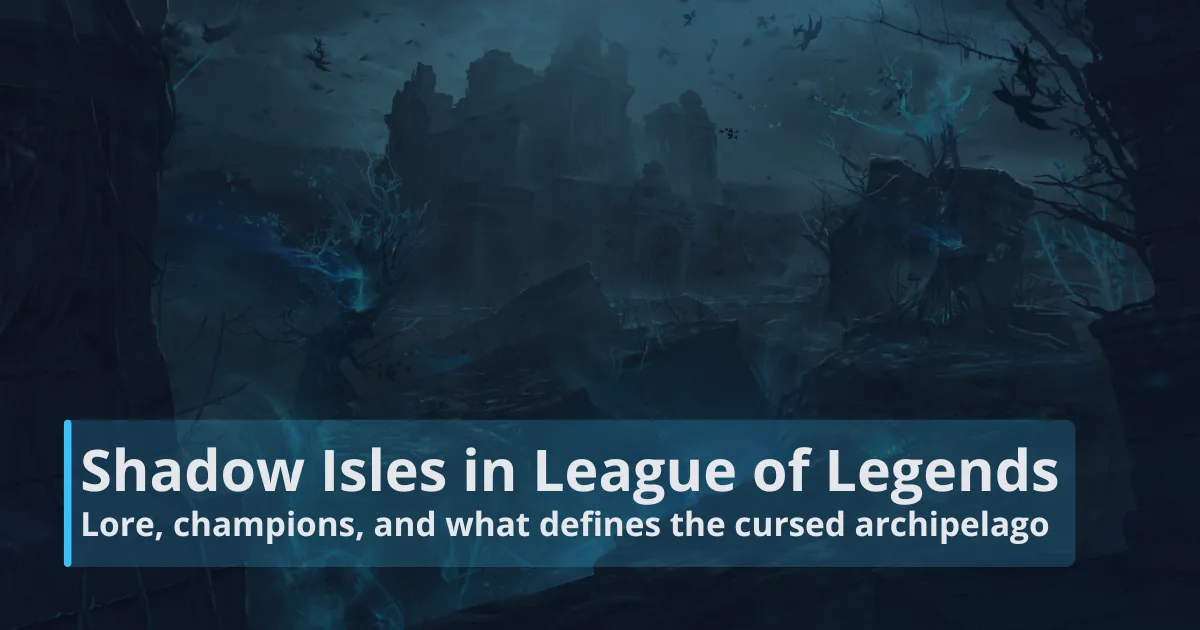
Shadow Isles is the cursed archipelago of League of Legends, a place where death never settled properly and the land itself became part of the punishment. It looks like a classic undead region at first glance, but Shadow Isles becomes much richer once you understand that it was once one of the most enlightened places in the world.
At its best, the region was the Blessed Isles, a sanctuary of knowledge, philosophy, and sacred magic. At its worst, it became a prison of grief, obsession, and undeath, where the Black Mist traps souls and turns memory into torment. That contrast is what makes Shadow Isles lore some of the darkest and most compelling material in Runeterra.
If you want the short version, Shadow Isles was born when a beautiful civilization was shattered by the Ruination, and almost every major story in the region still flows from that disaster. That one catastrophe connects Viego, Kalista, Hecarim, Thresh, Yorick, Maokai, Senna, Gwen, and the Harrowings that keep spreading far beyond the isles themselves.
Shadow Isles at a glance
- What Shadow Isles is: a cursed archipelago created when the Blessed Isles were destroyed by the Ruination.
- What Shadow Isles is known for: the Black Mist, Harrowings, undead spirits, Helia, the Ruined King, and some of the bleakest stories in League lore.
- What drives Shadow Isles lore: the collision of grief, forbidden resurrection, corrupted sacred magic, and souls trapped after death.
- Why Shadow Isles matters: it turns one magical catastrophe into a region that keeps threatening the rest of Runeterra long after the original tragedy ended.
Shadow Isles champions
The fastest way to understand Shadow Isles is through its champions. Together they show the region as ruin, vengeance, devotion, obsession, survival, and lingering sacred hope. For official champion profiles and bios, the League of Legends site is the cleanest place to start.
| Champion | Role in Shadow Isles | Why the champion matters |
|---|---|---|
 Gwen | Hallowed seamstress and living fragment of Isolde's love | Gwen gives Shadow Isles something rare, a character born from the same tragedy as Viego, but moving toward repair instead of possession. |
 Hecarim | Fallen commander of the Iron Order | Hecarim embodies the violent side of the Ruination, where ambition and slaughter were rewarded even before undeath amplified them. |
 Kalista | Spectral avenger born from betrayal | Kalista keeps the personal tragedy of the Ruination alive, because Shadow Isles began not only with disaster, but with treachery inside one family and one court. |
 Karthus | Deathsinger who embraced the isles willingly | Karthus matters because he treats Shadow Isles not as a curse to escape, but as a revelation, which adds a cultlike spiritual dimension to the region. |
 Maokai | Twisted treant carrying the last real hope of restoration | Maokai is essential because he links the Shadow Isles to the life-giving magic that existed before the curse and still has not been fully extinguished. |
 Senna | Sentinel touched by the Mist yet not consumed by it | Senna expands Shadow Isles lore beyond the archipelago itself, showing how the curse can follow people long after they leave its shores. |
 Thresh | Sadistic warden and one of the isles' most dangerous spirits | Thresh is the region at its cruelest, because he was already drawn to suffering before the Ruination gave him endless room to enjoy it. |
 Vex | Gloomist whose despair amplified the Ruined King's reach | Vex shows that Shadow Isles can attract outsiders who are not merely corrupted by the curse, but emotionally aligned with its bleakness. |
 Viego | Ruined King whose grief destroyed the Blessed Isles | Viego is the central figure of modern Shadow Isles history, because the curse exists at its current scale because he refused to let death remain final. |
 Yorick | Last monk carrying holy water and the burden of the dead | Yorick matters because he preserves the region's funeral duty, memory, and stubborn resistance against the Mist more clearly than anyone else. |
Other champions related to Shadow Isles
Not every major Shadow Isles connection comes from living on the cursed archipelago. Some champions fought the Black Mist, some were ruined by it, and some became important because the isles reached into their regions and changed their stories.
| Champion | Connection to Shadow Isles |
|---|---|
| Akshan | Joined the Sentinels of Light and played a decisive role in ending Viego's final attempt to restore Isolde. |
| Diana | Joined the Sentinels during the global Harrowing, linking Shadow Isles to celestial-aligned resistance. |
| Draven | Was corrupted by Viego, showing how the Ruined King's influence could hijack even famous living champions. |
| Gangplank | Defended Bilgewater against the Black Mist and later became entangled in Viego's return. |
| Graves | Joined the Sentinels of Light against Viego during the global Harrowing. |
| Illaoi | Defended Bilgewater against the Harrowing and represents one of the few powers that can truly oppose the Black Mist's hold on souls. |
| Irelia | Joined the Sentinels to resist Viego, expanding the Shadow Isles story into a wider Runeterran crisis. |
| Karma | Was corrupted by Viego, showing how even spiritually powerful figures were vulnerable during the Ruination event. |
| Kindred | Represents the natural end of life that the Shadow Isles continually defies and distorts. |
| LeBlanc | Uses Elise to gather magical artifacts from the isles, tying the region to long-term occult schemes beyond simple hauntings. |
| Lucian | His life and mission are inseparable from Shadow Isles because he and Senna are still trying to break the curse at its source. |
| Miss Fortune | Defended Bilgewater against the Harrowing before later aiding Viego under darker circumstances. |
| Olaf | Fought against the Black Mist and joined the Sentinels during the Ruination storyline. |
| Pantheon | Was resurrected to serve Viego, proving the Ruined King's reach could even invade mythic champions. |
| Pyke | Joined the Sentinels of Light, bringing Bilgewater's violence directly into the fight against the Mist. |
| Rengar | Also joined the Sentinels, reinforcing how widely the Shadow Isles crisis reached during Viego's return. |
| Riven | Joined the Sentinels of Light during the global Harrowing. |
| Shyvana | Was corrupted by Viego, linking the Shadow Isles to one of Demacia's most important champions. |
| Vladimir | Lived in the Blessed Isles before the Ruination and adds a bloodline link back to Viego and Kalista. |
What Shadow Isles is in lore
Shadow Isles is not just the undead corner of Runeterra. It is the wreckage of a civilization that once dedicated itself to knowledge, sacred stewardship, and the protection of dangerous magic. That older identity matters, because the horror of the region works best when you remember what was lost.
In practical terms, Shadow Isles lore revolves around six ideas: the Blessed Isles, the Waters of Life, the Ruination, the Black Mist, the Harrowing, and the few remaining forces trying to resist all of it. Once those pieces are clear, the whole region becomes much easier to follow.
| Term | What it means | Why it matters |
|---|---|---|
| Blessed Isles | The beautiful, scholarly civilization that existed before the curse. | It gives Shadow Isles its tragic foundation, because the region was not born evil. |
| Waters of Life | The sacred life-giving spring hidden beneath Helia. | These waters made healing possible, but they also became the center of the catastrophe. |
| Ruination | The magical disaster triggered when Viego tried to restore Isolde from death. | It transformed the Blessed Isles into the Shadow Isles and unleashed the Black Mist. |
| Black Mist | The curse that blankets the isles, drains life, and traps the dead. | It is the source of the region's power and the reason its spirits cannot fully rest. |
| Harrowing | The Black Mist surging beyond the isles to hunt the living elsewhere. | This is how Shadow Isles keeps threatening other regions, especially nearby coasts. |
| Hallowed Mist | The purer sacred force associated with Gwen and resistance to the curse. | It shows that not every mist-linked power in this storyline belongs to corruption alone. |
The region also works because its horror is layered. Some spirits are predatory and monstrous, others are broken and confused, and a few still carry traces of duty or grief. That mix keeps Shadow Isles from feeling flat. It is not only a land of villains. It is a land where countless souls were denied a proper ending.
That is why Maokai, Yorick, Senna, and Gwen matter so much. They give the region a tension between despair and restoration. Without them, Shadow Isles would be bleak. With them, it becomes tragic in a way that keeps readers coming back.
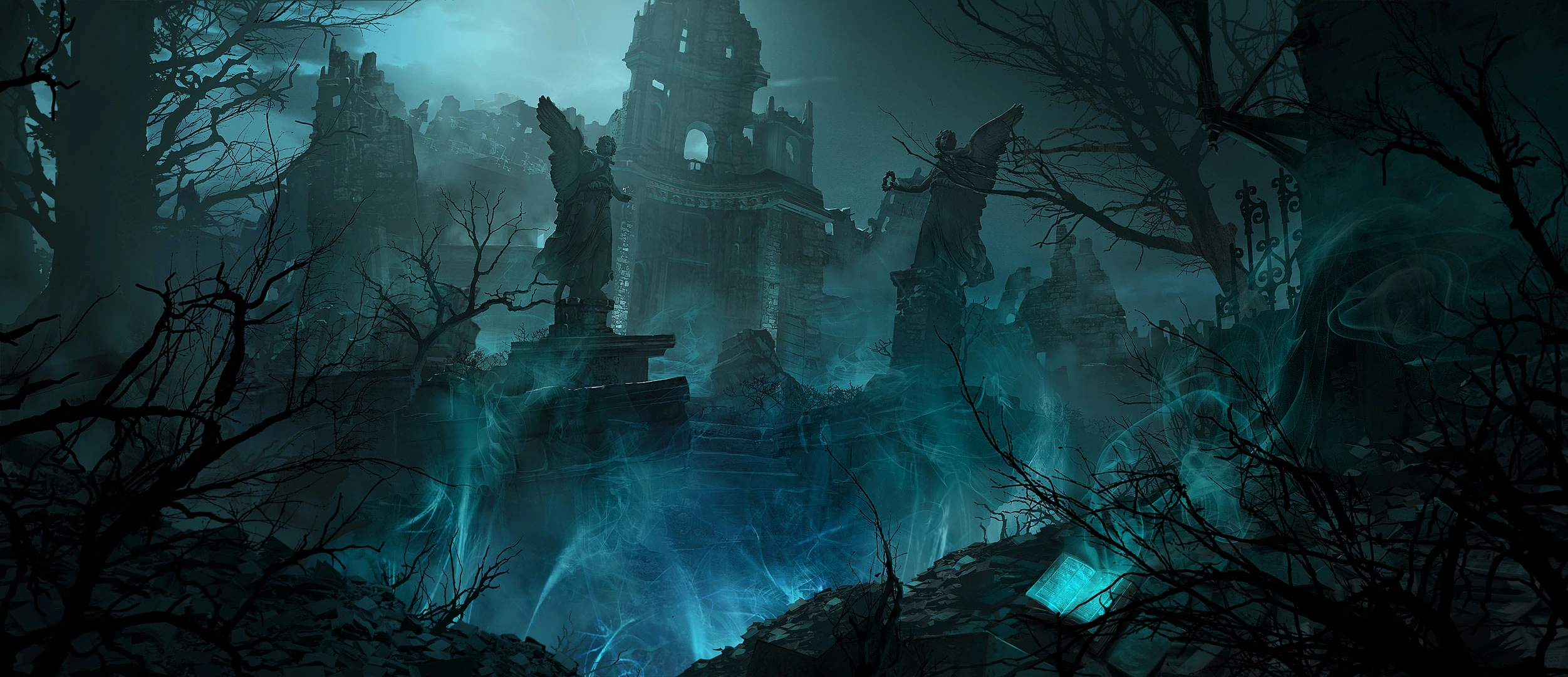
That atmosphere is exactly what “None Escape” captures, where the isles feel less like a battlefield and more like a place that patiently closes around the living.
That mood matters because Shadow Isles horror is rarely about sudden shock alone. It is about inevitability, the sense that once the Mist notices you, survival becomes a test of will, memory, and luck.
Shadow Isles history, from Blessed Isles to Ruination
The earliest history of Shadow Isles begins with the Blessed Isles, a hidden sanctuary that rose into prominence as a place of learning, philosophy, and magical stewardship. Scholars and travelers came from many lands, including Ionia, and the society that formed there was defined less by conquest than by preservation. It existed to study dangerous powers without letting them destroy the wider world.
That role matters in the larger setting, because the Blessed Isles stood as the opposite of catastrophic places like Icathia or world-breaking forces like the Void. It was one of the rare places where sacred knowledge and restraint still seemed able to coexist.
Then came Viego, the king of Camavor, whose wife Isolde died from poison meant for him. His niece Kalista found a possible cure in the Waters of Life beneath Helia, but that hope came with a strict warning: the waters could heal the living, not reverse death itself. Once Isolde died, Viego refused the lesson everyone else understood. He forced his way into Helia anyway, Hecarim betrayed Kalista, and the king dragged Isolde's body into the sacred waters.
That single act destroyed everything. The waters restored Isolde only long enough for her to awaken in pain and strike Viego with his own enchanted blade. The Waters of Life and the king's sword collided in a burst of impossible magic, and the Ruination spread across Helia and the surrounding isles. The dead were trapped, the living were twisted, and the Black Mist replaced the old sacred veil.
From there, the region split into the personal stories that still define it now. Hecarim became a mounted abomination of conquest. Kalista became vengeance stripped down to its oldest promise. Thresh delighted in torment and grew stronger from it. Maokai survived with a fragment of pure life still in his heartwood. Yorick endured because the last holy waters around his neck kept the Mist from fully claiming him.
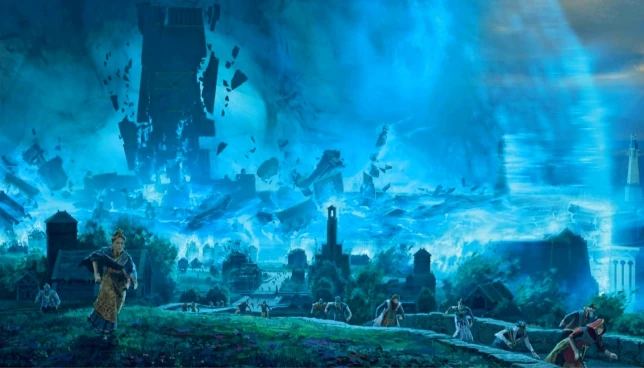
The Ruination cinematic is the clearest visual shorthand for the catastrophe at the center of Shadow Isles history, grief turned into magical disaster on a scale that destroyed an entire civilization.
Everything that comes later, the Black Mist, the Harrowings, Viego's obsession, and the curse on every survivor, makes more sense once you see the isles as the aftermath of one impossible refusal to accept death.
Modern Shadow Isles history pushes that tragedy outward. Viego's return turned the old regional curse into a worldwide crisis. He hunted fragments of Isolde across the map, spread Harrowings into Demacia, Noxus, and far beyond, and used Vex's despair-fueled magic to widen the reach of the Mist. That is when the Shadow Isles stopped being only a place and became an active threat to nearly everyone.
By the time the Sentinels strike back, Shadow Isles lore has become a story about whether the curse can be contained without pretending its damage never happened. “Before Dawn” captures that turn from survival to resistance.
It also helps explain why Lucian, Senna, Gwen, and Yorick matter so much in late Shadow Isles stories. They are not trying to outmatch the Mist with raw terror, but to break its hold on memory, souls, and history.
“Absolution” lands the other half of that arc, the point where Shadow Isles stops being only about vengeance and becomes a story about the limits of undoing what was broken.
That ending matters because the Shadow Isles storyline only works if resurrection remains costly, incomplete, and dangerous. If death could simply be corrected, the entire region would lose the tragic logic that defines it.
Black Mist, Harrowings, and what makes the isles dangerous
The Black Mist is the single most important force to understand after the Ruination itself. Before the catastrophe, the old white mists helped conceal and protect the Blessed Isles. After the catastrophe, that protective veil became a predatory curse. It drains the living, traps the dead, and makes the entire archipelago feel like one enormous wound that never closed.
The Harrowing is what happens when that wound reaches outward. On certain nights the Mist swells beyond the isles, carrying hungry spirits across the sea to attack the living. These Harrowings most often threaten Bilgewater, which is why Bilgewater stories and Shadow Isles stories keep colliding. The curse does not stay local, and that is why the region matters so much to worldbuilding.
The Black Mist is most legible when it leaves the archipelago and hits somewhere populated, which is why “The Harrowing: Tales of the Black Mist” works so well alongside nearby coastal stories.
It turns a distant curse into a practical threat, showing why the Shadow Isles matter even to regions that would never willingly set foot there. The Black Mist is terrifying precisely because it does not respect borders, walls, or the ordinary distance between one region and another.
Major locations in the Shadow Isles
The Shadow Isles are not just a vague haunted zone. The region has a real internal geography, even if the Mist blurs parts of it. Helia, the ruined capital of the Blessed Isles, remains the emotional center. The Black Mist itself functions almost like a moving location, because it shapes travel, survival, and the possibility of leaving. The Undead Wilds and places like the Twisted Treeline show what happened to landscapes that were once rich with life and sacred natural force.
Helia
Helia was once one of the greatest cities in the world, a center of scholars, vaults, and sacred knowledge. Now it stands as the clearest reminder that Shadow Isles was not always death-themed. It was once ordered, intellectual, and hopeful. That contrast gives Helia more weight than a generic ruined capital.
The Black Mist
The Black Mist is both curse and terrain. It surrounds the islands, saturates their soil, and acts as the prison wall for the dead. Stronger spirits can move through it almost like a road, while weaker ones rely on Harrowings to reach beyond the archipelago.
Undead Wilds and the Twisted Treeline
These spaces show how badly the land itself was altered. Forests, groves, and once-living ecosystems did not simply die. They were warped into grotesque versions of themselves. That is why Maokai's role feels so important. His fight is not only against spirits, but against a whole landscape that has been taught to reject life.
The result is a region that feels old, drowned, and unfinished. Shadow Isles locations are not memorable because there are many named cities. They are memorable because every surviving landmark carries the weight of what the region used to be.
Shadow Isles culture, death, and the Lost
Modern Shadow Isles has no real government in the ordinary sense, but it still has a culture of sorts, if culture is the memory of what people wanted, feared, or kept doing after death. The spirits known as the Lost are central to that idea. Many gradually forget themselves and become part of the curse. Others cling to a single need, vengeance, cruelty, duty, regret, obsession, hunger, and are reshaped by it.
That is why the strongest Shadow Isles champions feel so distinct from one another. Kalista is treachery remembered. Thresh is sadism unleashed. Karthus is devotional surrender to death. Yorick is duty made stubborn enough to outlast the end of the world. Maokai is restoration refusing to disappear. Even Vex, as a yordle tied to Bandle City, fits because she sees the region's despair as emotionally honest rather than monstrous.
The older Blessed Isles also left institutions behind. The ancient artifact-keeping order under Helia and the Brethren of the Dusk matter because they prove this region once had burial rites, sacred obligations, and moral structure. The modern Sentinels of Light are part of that legacy, even if their work now happens far from the ruined archipelago.
Shadow Isles relations with other regions
Shadow Isles makes more sense once you place it beside the rest of the world. Some regions are threatened directly by the Black Mist, some are linked through champions, and some matter because they help explain what the isles used to be before the curse consumed them.
| Region | Shadow Isles relationship | Why it matters in lore |
|---|---|---|
| Bilgewater | Nearest and most frequent victim of the Harrowing | Bilgewater is the region most regularly forced to treat the Black Mist as a practical survival problem, not a distant legend. |
| Demacia | Repeated target of later Harrowings | Demacia matters because it shows the Black Mist can threaten even heavily defended inland powers once the curse grows strong enough. |
| Noxus | Region touched by Viego's wider campaign | Noxus is important because the Ruination event made clear that Shadow Isles could interfere with empires as easily as pirate ports. |
| Ionia | Early scholarly link and later Ruination target | Ionian Vesani scholars once researched the old protective mist, giving Shadow Isles a deeper history than pure isolation. |
| Piltover | Technological contrast | Piltover helps define Shadow Isles by opposition, science and progress facing a curse that does not behave like an engineering problem. |
| Zaun | Another contrast in power and decay | Zaun shows one kind of corruption made by industry and experimentation, while Shadow Isles shows corruption made by grief and sacred magic gone wrong. |
| Targon | Mythic and celestial connection | Targon becomes relevant through Diana, Pantheon, and the larger question of whether cosmic power can resist or be bent by the Mist. |
| Shurima | Ancient civilizational comparison | Shurima helps frame the Blessed Isles as another lost high culture, one destroyed not by time alone but by magical catastrophe. |
| Freljord | Distant but revealing contrast | The Freljord also lives close to death and myth, but its spiritual systems still function in ways the Shadow Isles fatally broke. |
| Ixtal | Comparison in hidden magic | Ixtal guards magical knowledge through control and concealment, which highlights how differently the Blessed Isles once handled sacred power. |
| Void | Existential comparison | The Void and the Black Mist both threaten life on a massive scale, but the Void is alien annihilation while Shadow Isles is corrupted memory and death. |
| Black Rose | Occult interest in the isles | LeBlanc's use of Elise keeps Shadow Isles tied to hidden magical agendas far beyond Viego or the Harrowings. |
| Camavor | Source of Viego and the original royal tragedy | Camavor matters because the Ruination was not born on the isles alone, but imported there through one king's refusal to let grief end. |
| Icathia | Historical warning by comparison | Icathia helps show that Runeterra's worst disasters often begin when mortals decide sacred boundaries can be ignored safely. |
| Runeterra | Whole-world threat | The Shadow Isles are important because their curse keeps escaping the archipelago and pressuring the rest of the setting. |
A few relationships are looser, but still useful. Shadow Isles is rarely about diplomacy. It is about pressure, contamination, memory, and aftershocks. The region becomes clearer when you treat it not as a nation among nations, but as a curse that keeps forcing itself into other stories.
Where to start with Shadow Isles lore
A strong reading path starts with the region overview, then moves to Viego, Kalista, Hecarim, Thresh, Yorick, Maokai, Senna, and Gwen. That sequence gives you the fall of the Blessed Isles, the shape of the curse, the logic of the Black Mist, and the small pockets of resistance still left inside the region.
For first-party reading, start with the official Shadow Isles region page. Then use our guides and broader lore hub to connect the isles to the rest of the setting. The official bios are still the best place to anchor the details before you branch into videos, game events, or champion-specific side stories.
If you want a single refresher after the official region page, a broad explainer can help connect the Blessed Isles, the Ruination, the Harrowings, and the later Viego material into one timeline.
Used that way, it works best as a recap, while the official region and champion pages are still the better places to anchor the finer details of Shadow Isles lore.
Frequently asked questions about Shadow Isles
What is Shadow Isles in League of Legends?
Shadow Isles is a cursed archipelago that was once the Blessed Isles, a hidden civilization devoted to knowledge and sacred magic. After the Ruination, the land was consumed by the Black Mist and filled with trapped undead spirits.
What caused the Shadow Isles to become cursed?
The curse began when Viego tried to restore Isolde from death using the Waters of Life beneath Helia. The resulting magical collision caused the Ruination and transformed the Blessed Isles into the Shadow Isles.
Who are the main Shadow Isles champions?
Viego, Thresh, Kalista, Hecarim, Yorick, Maokai, Senna, Gwen, Vex, and Karthus are the best starting points. Together they cover the original tragedy, the Black Mist, the Harrowings, and the region's few surviving hopes of resistance.
What is the Black Mist?
The Black Mist is the cursed shroud that blankets the Shadow Isles after the Ruination. It drains life, traps souls, and allows undead spirits to spread beyond the archipelago during Harrowings.
What is the Harrowing?
The Harrowing is when the Black Mist surges out across the sea and carries the dead into other lands to hunt the living. It strikes Bilgewater most often, but it can threaten many regions.
Was Shadow Isles always evil?
No. The Shadow Isles were once the Blessed Isles, one of the most enlightened and sacred places in the world. That lost history is what makes the modern region tragic rather than merely monstrous.
Where can I check official support information related to League content?
For account help, event questions, and live game support, use the official Riot support site rather than lore pages or fan summaries.
Why the Shadow Isles never stop mattering
Shadow Isles stays powerful as a region because it combines pure atmosphere with real narrative weight. It gives you the Black Mist pressing into Bilgewater, the royal disaster of Camavor, and a curse that keeps forcing itself into the wider world instead of staying politely inside one haunted map.
The best way to read the Shadow Isles is not as a place that already finished falling. Read it as a place still fighting over what the fall means, with some figures deepening the curse and others trying to remember how life looked before it. That is what makes Shadow Isles champions and Shadow Isles lore worth revisiting, whether you continue through RiftDaily's guides or dig deeper into its wider lore coverage.