Targon is the celestial mountain region of League of Legends, a harsh and sacred place where mortals climb toward the heavens and sometimes return changed by powers far beyond human understanding. It is not just a tall mountain on the edge of Shurima, but a gateway into divine influence, cosmic conflict, religious division, and some of the most mysterious lore in Runeterra.
At its best, Targon represents aspiration, sacrifice, faith, protection, and the belief that suffering can lead to revelation. At its darkest, it shows what happens when gods treat mortals as vessels, when religion becomes persecution, and when cosmic power comes with a cost no climber fully understands.
If you want the short version, Targon is the mountain of Aspects, Solari, Lunari, Rakkor warriors, celestial beings, and impossible ascents. That one idea connects nearly everything important in Targon lore, from Leona and Diana to Pantheon, Taric, Aphelios, Soraka, Zoe, and Aurelion Sol.
Targon at a glance
- What Targon is: a remote mountain region on the western Shuriman continent, centered on Mount Targon and its link to the celestial realm.
- What Targon is known for: Aspects, Solari and Lunari faiths, the Rakkor, impossible pilgrimages, cosmic power, and the peak that opens toward Targon Prime.
- What drives Targon lore: the tension between mortal devotion and celestial manipulation.
- Why Targon matters: it connects Runeterra's local conflicts to stars, gods, the Void, Shurima, and ancient wars that reshaped the world.
Targon champions
The fastest way to understand Targon is through its champions. Each one shows a different relationship with the mountain, the heavens, or the faiths living beneath them. For official champion pages and profiles, the League of Legends site is the cleanest place to start.
| Champion | Role in Targon | Why the champion matters |
|---|---|---|
 Aphelios | Lunari assassin guided by Alune | Aphelios is central to modern Lunari survival, showing how faith, sacrifice, and hidden magic keep the moon's people alive. |
 Aurelion Sol | Star Forger bound by Targonian power | Aurelion Sol makes Targon feel cosmic rather than merely religious, since the Aspects stole and weaponized power from a being who creates stars. |
 Diana | Aspect of the Moon and Lunari truth-seeker | Diana exposes the Solari's hidden history and turns Targon's religious conflict into one of its most personal stories. |
 Leona | Aspect of the Sun and Solari warrior | Leona embodies Targon's solar faith, discipline, and danger when conviction becomes inseparable from authority. |
 Pantheon | Atreus, mortal warrior resisting divine control | Pantheon is one of Targon's most important champions because he rejects being a pawn of higher powers and fights for mortal will. |
 Soraka | Celestial who chose mortal compassion | Soraka gives Targon a gentler celestial side, proving heavenly power can be used to heal rather than dominate. |
 Taric | Aspect of the Protector | Taric turns exile and shame into guardianship, making him one of Targon's clearest stories of atonement through impossible trial. |
 Zoe | Aspect of Twilight | Zoe shows Targon at its strangest, where cosmic power can look playful, unpredictable, and terrifyingly unconcerned with mortal logic. |
Other champions related to Targon
Not every major Targon connection comes from living on the mountain. Some champions were shaped by Aspects, searched for celestial answers, fought Targonian power, or carried its influence into other regions.
| Champion | Connection to Targon |
|---|---|
| Aatrox | Killed the Aspect of War and forced Atreus into the reborn Pantheon identity. |
| Bard | A wandering celestial caretaker, making him one of the clearest cosmic parallels to Targon. |
| Garen | His role in Taric's exile links Demacia to Mount Targon and the Crown of Stone. |
| Jayce | In Arcane-related material, Targonite stone connects Piltover and hextech to celestial power. |
| Kayle | Was born on Mount Targon and carries the power of the Aspect of Justice into Demacian myth. |
| Morgana | Also born on Mount Targon, but rejects the harsher expression of divine judgment. |
| Nami | Searches for the Aspect of the Moon, linking the Marai and oceanic cultures to Targon's lunar power. |
| Nasus | Connects Targon to Shurima, the Ascended, and the history of the Darkin War. |
| Viego | Went to Targon's peak during the Ruination, tying the mountain to Camavor, the Sentinels, and the Shadow Isles. |
Targon lore, Aspects, and the climb to the heavens
Targon lore begins with the mountain itself. Mount Targon is not simply difficult to climb. It is a sacred ordeal where the route can change, the upper slopes can stretch beyond normal geography, and the journey can take wildly different amounts of time depending on forces no mortal controls.
Most climbers die. Some turn back broken. A very small number reach the summit and return with the attention of an Aspect. That is the defining horror and wonder of Targon: reaching the top may not mean finding yourself. It may mean becoming useful to something older than human thought.
The Aspects are not simple gods who answer prayers cleanly. They are celestial powers with motives that often remain alien to mortals. Leona, Diana, Pantheon, Taric, and Zoe all show different versions of the same problem: what happens when divine power enters a human life and rewrites its purpose?
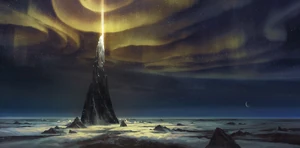
The Solari and Lunari make that conflict human. The Solari worship the sun as the true source of life and order. The Lunari preserve moonlit traditions that the Solari tried to erase. Leona and Diana make this division personal, because their bond, their beliefs, and their Aspect powers all pull against each other.
Mount Targon also changes how players understand divinity in Runeterra. The mountain can inspire faith, but it does not guarantee comfort. It offers power, but not safety. It gives purpose, but often at the cost of freedom.
The climb up Mount Targon is less about scenery than transformation, and the higher the path reaches, the less ordinary reality matters.
That sense of danger is why Targon feels so different from a normal fantasy holy mountain. Every step upward asks what a person is willing to lose for revelation.
Targon history, from Aurelion Sol to the Lunari return
Targon's history reaches far beyond mortal tribes. The oldest and most cosmic thread belongs to Aurelion Sol, the Star Forger. When he approached Runeterra, the Targonians honored him with a crown that was not a gift at all. It became a magical restraint, allowing the Aspects to exploit his celestial power.
That act casts a long shadow over all Targon lore. The same region that inspires pilgrims also enslaved a star-making dragon. The same Aspects who grant power to mortals have used deception and control when it served their larger designs.
Targon is also tied deeply to ancient Shurima. Targonian knowledge helped shape Ascension, the Sun Disc, and the god-warriors who later became central to Shuriman glory and disaster. That link also pulls Targon into the aftermath of Icathia, the Void, and the terrible chain of events that led into the Darkin War.
During the Darkin War, the Aspect of Twilight played a key role in giving mortals the knowledge needed to trap the Darkin in weapons. That makes Targon partly responsible for containing one catastrophe, but not innocent in how cosmic power repeatedly reshaped mortal history.
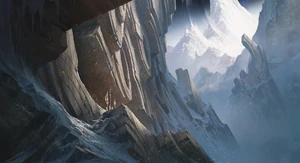
The next major layer is religious. The Solari became dominant and drove the Lunari into hiding, treating lunar faith as heresy. Diana's discovery of buried truths, her ascent, and her transformation into the Aspect of the Moon cracked that system open. Leona's own ascent as the Aspect of the Sun made the conflict even sharper, because both women returned carrying powers that their society could not easily reconcile.
Aphelios and Alune show the modern Lunari struggle. The Marus Omegnum, a Lunari temple fortress linked to the spirit realm, gives their story a mix of religious survival, magical isolation, and sibling devotion. Aphelios suffers so Alune can guide him. Alune remains hidden so the Lunari can endure.
Pantheon's story then turns Targon against itself. Atreus survives the death of the Aspect of War and chooses to fight not as a perfect divine weapon, but as a mortal who refuses to bow. That makes him one of the strongest counters to Targon's celestial hierarchy.
Call of the Mountain captures Targon's larger mood: pilgrimage, cosmic scale, dangerous faith, and the feeling that every answer on the mountain leads to something higher and stranger.
It also shows why Targon is not only about one champion or one faith. The whole region is built around people looking upward and discovering that the sky is never empty.
Major locations in Targon
Targon is geographically simple from a distance and incredibly strange up close. The region centers on one mountain, but that mountain contains lower settlements, sacred temples, impossible upper slopes, frozen warnings, shifting routes, and the peak that points beyond the material world.
The Ring of the Mountain and Rakkor settlements
The lower slopes are where ordinary life is still possible. Rakkor communities hunt, herd animals, forage, build homes in caves, and carve pathways into the mountain's shape. Even here, Targon does not feel normal. The stone patterns, ancient thresholds, and looming celestial architecture constantly remind people that they live beneath something vast.
Solari and Lunari sacred places
The Temple of the Solstice represents Solari power, with its gold-veined marble and light-focused design. The Temple of the Lunari and the Marus Omegnum carry the opposite mood, hidden, endangered, lunar, and tied to cycles that the Solari could never fully erase.

The upper slopes and the peak
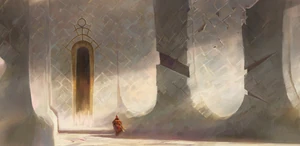
The upper slopes are where Targon becomes most hostile. The air thins, the cold worsens, paths shift, and the preserved dead become part of the mountain's warning system. The peak is the impossible prize, where the heavens open and a worthy climber may touch the attention of Targon Prime.
Targon Prime is the celestial realm beyond the summit, often imagined as a city of gold and silver. It is not a normal city, and it should not be treated like a mortal capital. It is the domain of Aspects and star-born forces whose concerns may overlap with Runeterra without ever becoming truly human.
Targon culture, faith, and what the mountain demands
Targonian culture is shaped by the mountain before anything else. Survival requires toughness, discipline, and acceptance that the landscape can kill the unprepared. Spiritual life adds another layer, because the people living around Mount Targon do not see the sky as distant scenery. They read it for signs.
Astronomers, priests, warriors, shepherds, and pilgrims all interpret the heavens in different ways. Stars, moons, planets, comets, and alignments are not only beautiful. They are treated as messages from powers that may be watching, testing, or choosing.
| Targonian group or force | Core belief or function | Why it matters |
|---|---|---|
| Rakkor | Warrior culture shaped by the mountain's harsh lower slopes | They ground Targon in mortal survival instead of pure celestial abstraction. |
| Solari | Sun-centered religious order that became dominant | Their faith drives Leona's story and the persecution of the Lunari. |
| Lunari | Moon-centered faith forced into secrecy | Their survival explains Diana, Aphelios, Alune, and the hidden history of Targon. |
| Aspects | Celestial powers that choose or use mortal hosts | They connect the region to cosmic stakes while raising questions about free will. |
| Climbers | Pilgrims seeking revelation, power, redemption, or purpose | The climb is Targon's clearest symbol: transformation through suffering. |
That mix of faith and danger makes Targon more complicated than a region of holy warriors. The Solari are not wrong to see the sun as powerful. The Lunari are not wrong to preserve the moon's truth. Pantheon is not wrong to distrust gods. Taric is not wrong to believe the mountain can redeem. Targon works because all of these views can exist at once and still clash violently.
The region also has its own natural life. Tamu flocks, mountain beasts, lightchargers, and stellacorns help keep Targon from feeling empty. They show that even under cosmic pressure, ordinary survival, herding, clothing, travel, and mythic animal life still matter.
Targon's relations with other regions
Targon feels remote, but its influence reaches far. It has shaped Shurima's ancient power, touched Demacia through Taric, Kayle, and Morgana, opposed the Void indirectly, and remained one of the few places where celestial politics can spill into mortal history.
| Region | Targon's relationship | Why it matters in lore |
|---|---|---|
| Shurima | Ancient celestial and imperial connection | Targon helped shape Ascension, the Sun Disc, and the god-warriors who later became central to Shuriman history. |
| Void | Cosmic threat and long-term enemy by implication | Taric's charge as protector and the history of Ascension both tie Targon to the world's defense against annihilation. |
| Demacia | Personal and mythic ties through Taric, Kayle, and Morgana | Demacia's justice themes become more layered once Targonian celestial power enters the story. |
| Ixtal | Useful contrast in hidden power | Ixtal hides elemental mastery behind isolation, while Targon hides cosmic power behind pilgrimage and myth. |
| Noxus | Distant contrast in ambition | Noxus weaponizes strength politically, while Targon tests whether mortals can survive contact with higher power. |
| Ionia | Spiritual contrast | Ionia seeks balance between realms, while Targon looks upward toward celestial command, revelation, and transformation. |
| Freljord | Mythic comparison in survival and ancient powers | Both regions are harsh, sacred, and filled with older-than-human forces, but they express that pressure in very different ways. |
| Piltover | Arcane-era link through Targonite stone and magical research | Piltover shows what happens when celestial materials become part of technological ambition. |
| Zaun | Indirect contrast in progress and cost | Zaun turns survival into invention below ground, while Targon turns survival into ascent above the world. |
| Bilgewater | Loose connection through Nami's search and sea routes | The connection shows Targon's lunar influence reaching cultures far from the mountain itself. |
| Shadow Isles | Ruination-era connection through Viego and Pantheon | The Black Mist reaching toward Targon proves even celestial places are not untouched by death magic. |
| Bandle City | Shared link to magical realities beyond ordinary geography | Bandle City and Targon both remind readers that Runeterra is bigger than its political borders. |
| Black Rose | Useful comparison in hidden influence | The Black Rose manipulates from below, while Targon's Aspects manipulate from above. |
| Camavor | Ruination-era contrast | Camavor's obsession with resurrection reached into Targon's orbit through Viego's search for Isolde's fetters. |
| Icathia | Ancient disaster tied to the Void and Shuriman collapse | Icathia helps explain why Targon's celestial influence matters in the world's oldest conflicts. |
Where to start with Targon lore
A strong reading path starts with the region page, then moves to Leona, Diana, Pantheon, Taric, Aphelios, Soraka, Zoe, and Aurelion Sol. That order gives you the mountain, the Solari and Lunari divide, the mortal rebellion against divine control, the redemptive climb, and the cosmic scale behind the Aspects.
For first-party reading, start with the official Targon region page. Then use RiftDaily's guides and wider lore hub to connect Targon to the rest of the setting. For account, event, or technical issues related to League content, use the official League of Legends support site instead of lore pages.
Frequently asked questions about Targon
What is Targon in League of Legends?
Targon is a remote mountain region centered on Mount Targon, the tallest and most sacred peak in Runeterra. It is tied to Aspects, celestial beings, Solari and Lunari faiths, Rakkor warriors, and climbers seeking divine transformation.
Who are the main Targon champions?
The main Targon champions are Aphelios, Aurelion Sol, Diana, Leona, Pantheon, Soraka, Taric, and Zoe. Together they cover the region's moon and sun conflict, celestial power, mortal resistance, healing, protection, and cosmic manipulation.
What are Aspects in Targon lore?
Aspects are celestial powers associated with ideas like the Sun, Moon, War, Protection, and Twilight. They can choose mortal hosts, but that connection is rarely simple, because the host may gain power while losing control over their own destiny.
What is the difference between the Solari and Lunari?
The Solari worship the sun and became the dominant religious order on Mount Targon. The Lunari preserve moon-centered beliefs and were driven into hiding after being treated as heretics. Leona and Diana make that conflict personal.
Why is Mount Targon so dangerous to climb?
Mount Targon is dangerous because the weather, altitude, shifting paths, thin air, and magical distortions make every ascent unpredictable. Many climbers die before reaching the summit, and those who survive may return changed by celestial contact.
How is Targon connected to Shurima?
Targon has ancient ties to Shurima through the Sun Disc, Ascension, and the god-warriors. Those links later connect the region to the Void, the fall of Icathia, and the Darkin War.
Is Aurelion Sol from Targon?
Aurelion Sol is not from Targon in the mortal sense. He is a cosmic star forger who was tricked and bound by Targonian power, making him one of the region's most important and resentful connections to the celestial realm.
Why Targon still feels above the world
Targon lasts because it makes divine power feel beautiful, frightening, and morally uncertain. The mountain offers revelation, but it also consumes pilgrims. The Aspects offer purpose, but they may also use mortals as tools. The Solari offer order, but their certainty creates persecution. The Lunari preserve truth, but survival forces them into secrecy.
The best way to read Targon is not as a simple holy region. Read it as the place where Runeterra looks up and discovers that the heavens are not automatically kind. That is what makes Targon lore and Targon champions worth revisiting, whether you continue through RiftDaily's guides or dig deeper into the site's wider lore coverage.