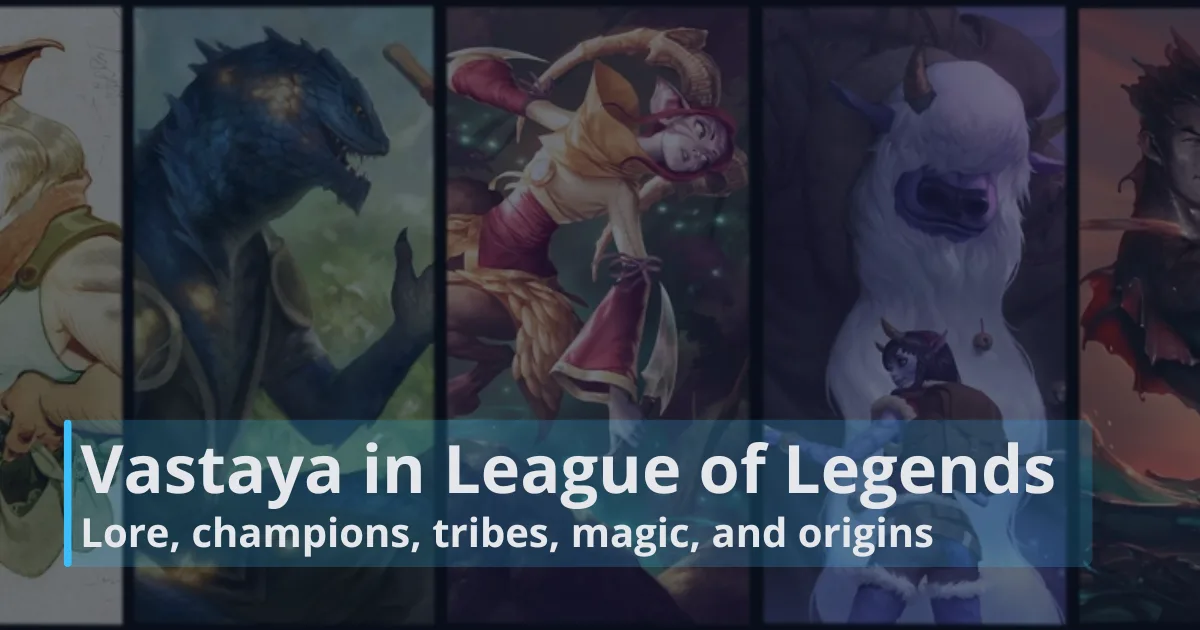
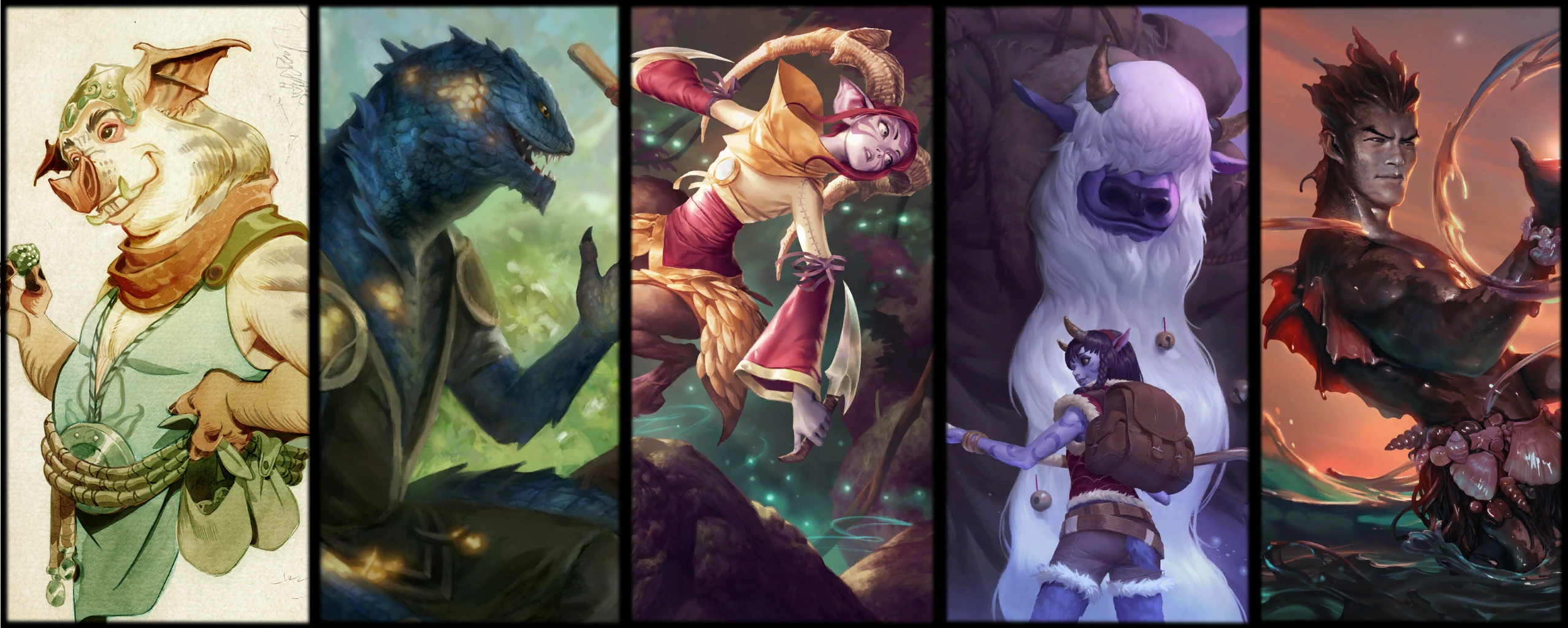
Vastaya are the magic-touched chimeric people of League of Legends, descended from mortals who merged with spirit-realm power and later formed many tribes across Runeterra. They are not one uniform species with one body type, homeland, or culture. Vastaya can be foxlike, birdlike, feline, piscine, simian, rabbitlike, or something stranger, but they all share a deep connection to natural magic.
At its simplest, Vastaya lore is about a people caught between the mortal world and the spirit world. At its most interesting, it is about ancestry, magic, tribal identity, human conflict, and the fear that the ancient balance which created them is slowly being drained away.
The short version is this: the Vastaya descend from the Vastayashai'rei, ancient shapechangers who used spirit magic to defeat sky-born titans in Ionia's mythic past. Their descendants spread into different tribes, adapted to different environments, and became some of Runeterra's most varied champions, including Ahri, Xayah, Rakan, Nami, Neeko, Rengar, Wukong, and Aurora.
Vastaya at a glance
- What Vastaya are: chimeric, magic-attuned people with human and animal features.
- Where Vastaya come from: ancient Ionia, through the legacy of the Vastayashai'rei.
- What Vastaya are known for: wild magic, shapeshifting, tribal diversity, spirit-realm ancestry, long lives, and tension with humans.
- Why Vastaya lore matters: it connects Ionia, Shurima, Targon, the Freljord, the oceans, and modern champion stories through one ancient magical bloodline.
Vastaya champions
The fastest way to understand Vastaya is through the champions. Each one shows a different tribe, environment, and magical expression, from Ahri's Vesani soul magic to Rengar's Kiilash hunting culture and Nami's Marai duty beneath the sea. For official champion pages and gameplay profiles, the League of Legends site is the cleanest place to start.
| Champion | Vastayan identity | Why the champion matters |
|---|---|---|
 Ahri | Vesani, foxlike Vastaya | Ahri shows Vastaya magic as memory, emotion, charm, and the hunger to understand the self. |
 Aurora | Bryni, rabbitlike Vastaya from the Freljord | Aurora expands Vastaya champions into spirit-walking, northern isolation, and a quieter kind of magical perception. |
 Nami | Marai, aquatic Vastaya | Nami links Vastaya lore to the ocean, the Moonstone, Targon, and the fight to protect her people from the Void below. |
 Neeko | Oovi-Kat, powerful shapeshifter | Neeko is one of the clearest examples of Vastaya shapeshifting, emotional perception, and ancient tribal memory. |
 Rakan | Lhotlan, birdlike Vastaya | Rakan turns Vastaya magic into performance, charm, movement, devotion, and rebellion beside Xayah. |
 Rengar | Kiilash, feline Vastaya | Rengar shows Vastaya culture through the hunt, pride, exile, and the need to prove worth through danger. |
 Wukong | Shimon, simian Vastaya | Wukong connects Vastaya lore to Wuju discipline, Ionian martial tradition, and the restless climb toward mastery. |
 Xayah | Lhotlan, birdlike Vastaya | Xayah is the strongest political voice among Vastaya champions, fighting to protect her people from human expansion and magical depletion. |
The main Vastaya champions feel different because they are meant to. Ahri is not supposed to read like Rengar, and Nami is not supposed to read like Xayah. The race works as a broad magical ancestry, not a single visual template.
Champions with Vastayan ancestry
Some champions are not true Vastaya, but their stories still matter because Vastayan heritage can appear through hybrid ancestry, shapeshifting, spirit-walking, or mixed parentage. These characters help show how the bloodline can persist even outside a full tribe.
| Champion | Connection to Vastaya | Why it matters |
|---|---|---|
| Nidalee | Human with Vastayan ancestry in the Shuriman jungle | Her shapeshifting makes Vastayan heritage visible without making her a full Vastaya champion. |
| Sett | Son of a Vastayan mother and a Noxian human father | Sett shows the social cost of mixed heritage, especially where some tribes treat human relationships as taboo. |
| Udyr | Freljordian Spirit Walker with some Vastayan heritage | Udyr connects Vastaya ancestry to spirit communion, animal force, and Freljordian shamanic identity. |
Other characters related to Vastaya
Vastaya stories also involve champions who fought beside them, hunted them, studied them, or crossed their paths. These links show how the race sits inside Runeterra's wider politics and magic systems.
| Character | Vastaya connection | Why it matters |
|---|---|---|
| Akali | Has tattoo work from a Vastayan artist | Shows everyday cultural exchange between Ionians and Vastaya. |
| Diana | Connected to Nami's search for the Aspect of the Moon | Links the Marai to Targon through the Moonstone. |
| Ezreal | Unknowingly encountered Neeko during an expedition | Shows how explorer stories can stumble into Vastaya magic without understanding it. |
| Irelia | Fought alongside some Vastaya during the Noxian invasion | Connects Vastaya to Ionian resistance, but also to tribal disagreement during war. |
| Ivern | Destroyed the God-Willow before becoming the Green Father | His transformation is tied to one of the most sacred sites in Vastayashai'rei history. |
| Kha'Zix | Rengar's greatest prey and rival | Turns the Kiilash hunting ethos into a personal war against the Void. |
| Lillia | Resembles Vastaya but is not Vastaya | Useful comparison for readers who confuse different spirit-touched beings. |
| Master Yi | Trains Wukong in Wuju | Connects Shimon Vastaya to one of Ionia's most important martial traditions. |
| Soraka | Is respected as a seer among some Vastaya | Shows that Vastaya spirituality reaches beyond tribal politics. |
| Swain | Fought against Vastaya during the Ionian invasion | Links Vastaya resistance directly to modern Noxian history. |
| Zed | Has attacked Vastayan lands and taken prisoners | Shows that human pressure on Vastaya comes from Ionian factions too, not only foreign empires. |
Vastaya lore and the origin of the Vastayashai'rei
Vastaya lore begins in ancient Ionia, long before modern borders and political factions. Mortals in the First Lands lived close to nature and spirit magic until a war against sky-born titans pushed them beyond ordinary limits. The most enlightened mortals drew spirit-realm power into themselves and became the Vastayashai'rei, deathless shapechangers able to wield the natural world as a weapon.
After the titans were defeated, the Vastayashai'rei did not simply become rulers over mortal people. Their descendants mixed with mortal kin and eventually became the Vastaya, a broad family of chimeric peoples shaped by magic, environment, ancestry, and animal spirits. That is why the race has so many forms rather than one fixed appearance.
This origin is important because it separates Vastaya from Bandle City and Yordle stories. Both are magical and sometimes animal-like, but they are not the same. Yordles are spirit-born beings, while Vastaya are descendants of mortals touched and changed by spirit magic.
A quick lore lesson can help anchor the basics before the deeper tribal history, especially because the terms Vastaya and Vastayashai'rei are easy to mix up at first.
Once that foundation is clear, the rest of the race makes more sense. Vastaya are not random animal people added to different regions. They are fragments of one ancient spiritual inheritance, scattered into many tribes and forced to survive changing relationships with humans.
How Vastaya magic works
Vastaya magic is tied to the natural currents of Runeterra. Many Vastaya settle near magical springs, spirit-rich areas, or invisible streams of magic that move through the world. They can survive without constant magic, but their culture, health, fertility, shapeshifting, and identity all become harder to sustain when the flow weakens.
This is one reason human expansion creates so much tension. When people harvest, redirect, or misuse natural magic, they are not only taking a resource. They are disrupting the conditions that allow Vastaya tribes to remain themselves. For Xayah, that is not an abstract political issue. It is an existential threat.
Most Vastaya have some ability to change shape, but the limits vary widely. Rakan might alter style, color, or small features over time. Neeko can transform much more dramatically and quickly because her Oovi-Kat connection to magic is unusually strong. Other tribes may express magic through hunting, movement, song, water, spirit perception, or animal instinct.
The key is that Vastaya bodies are not separate from magic. Their forms, powers, and cultures are all part of one living relationship with the world around them.

Vastaya tribes and subspecies
Vastaya is a broad race name, not a single tribe. The tribes are often grouped into sea, landwalker, and sky lineages, with many smaller peoples inside those categories. Some are well defined through champions, while others appear mostly through stories, Legends of Runeterra cards, field journals, or regional references.
| Tribe or group | Known type | Best-known connection | What it shows about Vastaya |
|---|---|---|---|
| Vesani | Foxlike | Ahri | Memory, charm, emotion, and lost ancestry. |
| Bryni | Rabbitlike | Aurora | Freljordian isolation and spirit perception. |
| Marai | Fishlike, aquatic | Nami | Ocean culture, Moonstone duty, and Void defense. |
| Oovi-Kat | Originally chameleonlike | Neeko | Shapeshifting, sho'ma, and ancient tribal memory. |
| Lhotlan | Birdlike | Xayah and Rakan | Ionian rebellion, romance, performance, and cultural protection. |
| Kiilash | Feline | Rengar | Honor, hunting, exile, and predatory pride. |
| Shimon | Monkeylike | Wukong | Wisdom, discipline, tree-top society, and Wuju ties. |
| Ottrani | Goatlike | Legends of Runeterra followers | Shows the variety of Ionian landwalker tribes beyond champions. |
| Crimson Razorscale | Sea hunters | Deep-water Vastaya references | Expands the sea tribes beyond Nami's Marai culture. |
| Chyra and Strig | Sky tribes | Referenced tribal lineages | Proves Vastaya culture also reaches into aerial and winged forms. |
This tribal structure is why the phrase Vastaya champions can be misleading if read too narrowly. Ahri, Rengar, Nami, and Xayah all belong to the same race category, but their bodies, values, powers, and problems come from very different tribal contexts.
Xayah, Rakan, and the Lhotlan fight for wild magic
Xayah and Rakan are the clearest window into modern Vastaya politics. Their Lhotlan tribe comes from Ionia, where human settlements and magical exploitation have damaged old agreements around natural magic. Xayah sees that damage as a threat to her people's survival, while Rakan brings charisma, performance, and devotion into the same struggle.
Their relationship also shows how Vastaya culture treats declarations and bonds as magically meaningful. Their partnership is not only emotional. When Vastaya declare love, loyalty, or identity, those words can carry social and magical weight in ways that human cultures do not fully understand.
Xayah and Rakan's reveal trailer captures the balance that makes Lhotlan stories work: romance, spectacle, danger, and rebellion all moving at once.
That tone is important because it prevents Vastaya lore from becoming only tragedy. Xayah is angry for good reasons, but the Lhotlan are also artistic, expressive, romantic, and alive with magic. Their rebellion is about preserving a way of being, not only winning fights.
Why humans and Vastaya are in conflict
The central modern conflict in Vastaya lore is not simply "humans are bad." It is more specific: humans often reshape land, harvest magic, expand settlements, and break older agreements without understanding what those choices cost. For humans, magic may look like a resource. For Vastaya, it is closer to blood, breath, memory, and future generations.
In Ionia, that conflict became sharper after the Noxian invasion. Some Vastaya fought alongside Ionians against Noxus. Some tribes made different choices. Some human factions, including the Order of Shadows, created new pressure on Vastayan lands. The result is a messy political situation where ancient spiritual rights collide with modern war, fear, and hunger for power.
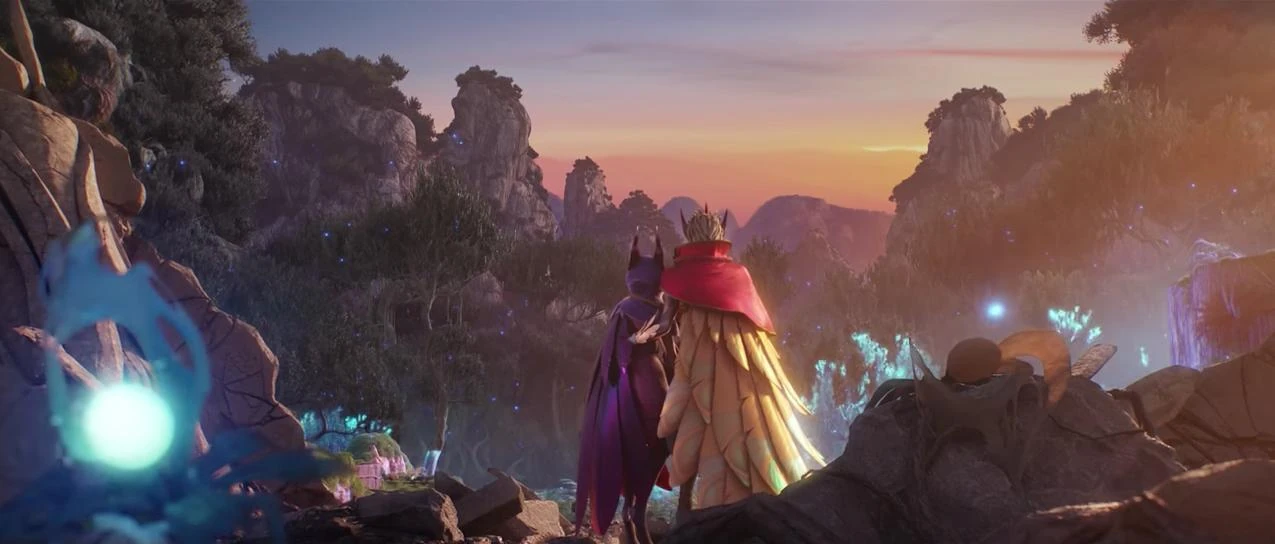
This makes Vastaya lore especially useful for understanding Ionia. The First Lands are not only peaceful forests and temples. They are contested magical ecosystems, and the Vastaya are among the people most directly harmed when that balance breaks.
Vastaya across Runeterra
Although Vastaya origins are Ionian, their stories reach across Runeterra. Some tribes remained in or near Ionia, while others settled around seas, deserts, forests, northern lands, and magical routes. That spread makes Vastaya one of the best race topics for connecting regions that otherwise feel separate.
| Region or faction | Vastaya connection | Why it matters |
|---|---|---|
| Ionia | Origin of the Vastayashai'rei and home to Lhotlan, Shimon, Oovi-Kat history, and many tribes | Ionia is the heart of Vastaya lore because its spirit magic shaped their origin and modern conflict. |
| Shurima | Kiilash hunters, Nidalee's ancestry, Neeko's later travels, and Rengar's hunting culture | Shurima shows Vastaya adapting to deserts, jungles, and Void-threatened lands. |
| Targon | Nami's Moonstone quest and the Aspect of the Moon | The Marai make Vastaya lore part of a larger celestial and oceanic cycle. |
| Freljord | Aurora's Bryni identity and Udyr's Vastayan heritage | The Freljord expands Vastaya stories into cold, spirit-heavy northern lands. |
| Noxus | Ionian invasion, Swain's campaigns, Sett's mixed parentage, and tribes that chose sides | Noxus turns Vastaya conflict into a political and military issue, not only a spiritual one. |
| Demacia | Contrast with petricite law and fear of magic | Demacia helps show how difficult Vastaya survival would be in cultures that mistrust wild magic. |
| Piltover | Eduard Santangelo's study of Vastaya and Lest living in Piltover | Piltover frames Vastaya through scholarship, curiosity, and the risks of outsider classification. |
| Zaun | Contrast through chemtech mutation and Warwick comparisons | Zaun helps separate natural chimeric ancestry from artificial transformation. |
| Bilgewater | Sea routes, ocean myths, and indirect links to aquatic Vastaya | Bilgewater makes the ocean-facing side of Vastaya feel dangerous and valuable. |
| Shadow Isles | Contrast with cursed undeath and Ruined King-era journeys | The Shadow Isles show a darker magical ecology than the natural magic Vastaya depend on. |
| Bandle City | Common confusion with Yordles | Bandle City helps clarify that Yordles and Vastaya are both magical, but not the same race. |
| Ixtal | Elemental isolation and jungle-adjacent magic | Ixtal is a useful comparison for hidden magical cultures protecting older knowledge. |
| The Void | Rengar hunts Kha'Zix, Nami protects her people from deep Voidborn, and Shuriman lands are threatened | The Void creates some of the clearest external threats facing Vastaya tribes. |
| Camavor | Fallen-kingdom contrast | Camavor shows cursed royal legacy, while Vastaya show older natural legacy and living tribal memory. |
| Icathia | Void disaster comparison | Icathia is a warning about mishandled power, while Vastaya are a warning about draining natural magic over time. |
Vastaya, Yordles, and other magical beings
Vastaya are often confused with other magical beings because many champions in League of Legends have animal traits, unusual bodies, or spirit connections. The differences matter. Vastaya are descendants of mortals and Vastayashai'rei, while Yordles are spirit-born beings from Bandle City. Lillia resembles Vastaya, but she is born from the dreams of the Dream Tree. Cassiopeia and Warwick have animal-like forms, but their transformations come from curses and chemtech, not Vastayan ancestry.
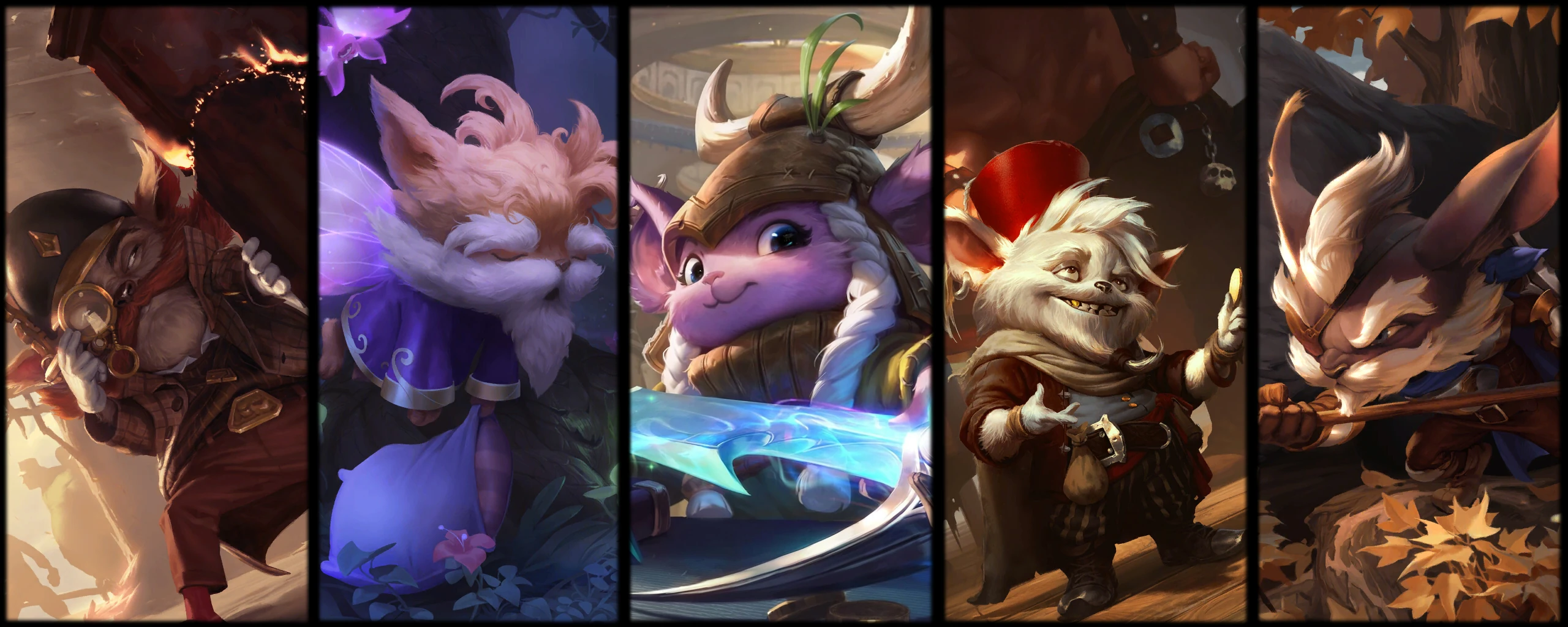
This distinction is useful because Runeterra has many kinds of transformation. Some are natural, some spiritual, some technological, some cursed, and some Void-touched. Vastaya sit in the natural-spiritual category: magical, embodied, tribal, and tied to the living world rather than to pure spirit, celestial order, or artificial mutation.
Where to start with Vastaya lore
A strong Vastaya lore reading path starts with the official Vastaya race page, then moves to Xayah, Rakan, Ahri, Nami, Neeko, Rengar, Wukong, Aurora, Nidalee, Sett, and Udyr. That order gives you the race origin first, then Ionian politics, tribe identity, sea culture, shapeshifting, hunting, martial discipline, northern spirit magic, and hybrid ancestry.
A deeper overview works well here because Vastaya lore can feel scattered if you only read champion bios. The race becomes much clearer when you follow the shared threads: Vastayashai'rei origins, wild magic, tribal forms, human pressure, and the fight to preserve magical ecosystems.
After that foundation, individual champion stories stop feeling random. Ahri becomes the Vesani search for identity, Xayah becomes a political resistance story, Rakan becomes magic as love and spectacle, Nami becomes duty under the sea, and Rengar becomes the harsh honor system of the Kiilash.
For official lore browsing, start with the official Vastaya page. Then use RiftDaily's guides and wider lore hub to connect Vastaya to Ionia, Shurima, Targon, the Freljord, and the rest of Runeterra. For account help, event issues, or live game support, use the official League of Legends support site.
Frequently asked questions about Vastaya
What are Vastaya in League of Legends?
Vastaya are a magic-touched chimeric race descended from mortals who inherited the power of the spirit realm through the Vastayashai'rei. They combine human and animal features and are deeply connected to natural magic.
Who are the Vastaya champions?
The main Vastaya champions are Ahri, Aurora, Nami, Neeko, Rakan, Rengar, Wukong, and Xayah. Nidalee, Sett, and Udyr are better described as champions with Vastayan ancestry or heritage rather than full Vastaya champions.
What is the difference between Vastaya and Vastayashai'rei?
The Vastayashai'rei were the ancient, powerful shapechangers who merged with spirit magic to defeat titans in Ionia's mythic past. The Vastaya are their later descendants, less powerful but still strongly connected to magic and animal spirits.
Are Vastaya the same as Yordles?
No. Vastaya and Yordles are different. Vastaya descend from mortals changed by spirit-realm power, while Yordles are spirit-born beings tied to Bandle City. They can both look animal-like, but their origins are not the same.
Where do Vastaya come from?
Vastaya origins trace back to Ionia, also called the First Lands. Their ancestors used spirit magic to fight sky-born titans, and later Vastaya tribes spread into many parts of Runeterra.
Why are Xayah and Rakan important to Vastaya lore?
Xayah and Rakan are important because they show the modern conflict between Vastaya and humans most clearly. Xayah fights to protect wild magic and Vastayan lands, while Rakan brings charm, performance, and loyalty into the same rebellion.
Can Vastaya shapeshift?
Many Vastaya can change shape to some degree, but the strength and speed of that ability varies by tribe and individual. Neeko is especially skilled because her Oovi-Kat magic is strongly connected to transformation.
Are Vastaya immortal?
Most Vastaya live much longer than humans, and some legends suggest lifespans of centuries or more. They are not all shown as truly immortal, but their connection to magic and unusual relationship with time make them far longer-lived than ordinary mortals.
Why Vastaya make Runeterra feel alive
Vastaya matter because they make Runeterra feel like a living magical ecosystem, not only a map of nations and armies. Through them, forests can have memory, rivers can have spirit, declarations can carry magic, and a tribe's survival can depend on whether humans respect forces they barely understand.
The best way to read Vastaya lore is to start with the race origin, then follow the tribes outward. Xayah and Rakan reveal the political wound in Ionia, Ahri reveals the emotional cost of lost heritage, Nami reveals the oceanic and Targonian side, Rengar shows the hunt, Wukong shows discipline, and Aurora brings the Freljord into the picture. That is what makes Vastaya champions worth revisiting, whether you continue through RiftDaily's guides or explore the site's wider lore coverage.