
League of Legends MMR (Matchmaking Rating) is Riot Games' hidden estimate of your skill, used to match you with similarly skilled players and help determine how your ranked climb progresses. You cannot check your exact LoL MMR in the client or through an official public checker, but your LP gains, losses and matchmaking can offer useful clues.
If you're gaining less LP for a win than you lose for a defeat, it usually means your visible rank is ahead of your hidden rating. That doesn't make your account impossible to climb on. Understanding the difference between MMR, rank and LP is the first step toward interpreting what the system is telling you.
What is MMR in League of Legends?
MMR stands for Matchmaking Rating. Unlike a visible rank such as Gold II, it is an internal estimate Riot uses to find suitable opponents. The rating can change after ranked results even when your tier and division stay the same.
Riot does not publish MMR as a player-facing number. The company has explained that a constantly changing numerical rating is less useful as a progression goal than visible tiers and divisions, particularly in a team game where everyone else is improving too. You can still see how your ranked climb is going through rank and League Points (LP). Riot explains the distinction in its MMR, Rank, and LP guide.
The matchmaker doesn't simply group everyone with the same badge. It tries to build teams with comparable estimated strength while accounting for role preferences, autofill and queue times. That is why a Silver player with a much higher hidden rating can legitimately appear in a Platinum lobby: the visible badge may be behind the skill level used for matchmaking.
What does a fair match mean?
Riot aims for roughly even pre-game winning chances. An earlier developer explanation described most matched teams as being very close to 50% expected win probability, but it is not a guaranteed threshold for every modern lobby. Balanced before the game starts does not mean balanced-looking after it begins, and it does not mean Riot forces your personal win rate to 50%.
- Fairness: Bring the teams' overall estimated skill as close together as possible.
- Role preferences: Give players positions they selected when the available pool allows it.
- Queue time: Find a game without making everyone wait indefinitely, sometimes requiring compromises.
How does LoL MMR work?
League of Legends MMR works like a constantly updated estimate of your skill. Riot uses it to find players and teams that should provide a competitive match, then adjusts your rating after the result. In ordinary ranked games, winning raises your MMR and losing lowers it. The more your results change, the more the level of opposition you encounter can change too.
A useful distinction: MMR can move before your rank does. You might keep the same Gold badge after a win, yet already be closer to facing tougher opponents in your next match. A promotion is a visible milestone, not the moment Riot starts tracking your results.
What happens to your MMR before and after a match?
Here is how the process works when you queue for a ranked game:
- You start with a hidden rating. If you've played ranked before, Riot has results from your earlier games to estimate your skill. First-time ranked players need an initial estimate before their ranked results can refine it.
- The matchmaker builds a lobby. It tries to create two teams with similar chances of winning, mainly by balancing their average MMR. Riot describes roughly 50% win odds as the target, while also accounting for positions, premade groups and how long players have been waiting.
- You play and get a result. A win is positive evidence for your skill estimate; an ordinary loss is negative evidence. One great KDA or one terrible lane doesn't independently determine the result of your hidden-rating change.
- Your MMR updates behind the scenes. Winning normally moves it upward; losing moves it downward. At the same time, LP changes your visible ranked progress. Riot does not show the MMR points involved or publish a formula for the exact change after each match.
- The system uses the updated estimate next time. Keep winning and you may start meeting stronger opposition. Lose consistently and the level of opposition can move the other way. Your visible badge may take longer to catch up.
This repeats after every ordinary ranked result. Riot isn't waiting until you reach 100 LP or promote to a new division to reassess your matchmaking rating. It keeps learning from your results between promotions too. Riot's matchmaking explanation also makes clear that a balanced lobby is a prediction, not a promise that the game will be close. Drafts, unfamiliar roles, early mistakes and snowballing can still produce one-sided matches.
Example: why a Gold player can start facing Platinum opponents
Imagine two players who are both visibly Gold III. One has been winning consistently against their recent opponents. The other has been losing. Their profile badges look the same, but their hidden ratings do not necessarily tell the same story.
| Situation | What happens to MMR | What the player may notice |
|---|---|---|
| Gold III player wins several ranked games | The wins raise their hidden skill estimate. | They may face tougher opponents, even if they have not been promoted yet. |
| That player's MMR moves ahead of their visible rank | Matchmaking follows the stronger skill estimate rather than only the Gold III badge. | Some opponents may have Platinum badges, and LP gains may become more favorable while rank catches up. |
| Another Gold III player loses repeatedly | The losses lower their hidden skill estimate. | Their lobbies can shift toward weaker opposition, and their LP gains may become less favorable. |
| Both players continue playing over time | The system keeps adjusting each estimate with new results. | Their future opponents and LP patterns can remain different despite having started at the same displayed rank. |
The important part is that MMR can move before rank does. A Gold player facing Platinum opponents isn't automatically in an unfair lobby. Their hidden rating may be higher than their badge suggests, or those opponents' ratings may differ from what their badges suggest. Riot's Ranked 2026 developer update introduced the Climb Indicator to make that kind of visible-rank mismatch easier to understand.
Does beating higher-ranked opponents give you more MMR?
Not in any amount players can reliably calculate. Riot uses hidden ratings to estimate team strength and acknowledges that matches aren't always perfectly even. But it has not published the complete formula for how much your hidden MMR changes after a particular victory or defeat. Its explanation of LP includes adjustments for unusual expected win odds, but an LP adjustment is not a public MMR conversion formula.
More importantly, the opponent's visible rank isn't the same as their MMR. Beating a Platinum-badged player doesn't establish that you beat someone with Platinum-level hidden MMR, and there is no confirmed bonus just for beating a more impressive badge. The safe rule is to focus on the match result and the trend across many games.
Do KDA, CS, damage or champion grades affect MMR?
Riot does not award ordinary ranked MMR directly for a high KDA, more CS, better damage or a high champion grade. If you finish 15/2 but lose, that impressive scoreline doesn't turn your defeat into a hidden-rating win. Equally, a low-KDA victory isn't automatically worth less MMR because you had fewer kills.
League is a team game. A support might save a carry by sacrificing themselves. A tank might keep enemies away from Baron without getting a kill. Riot explained in its matchmaking developer discussion that directly rewarding personal scorelines could encourage players to chase statistics rather than play to win.
Your individual performance still matters because it affects your chance of winning. Better farming, fewer avoidable deaths, stronger vision and smarter objectives can produce more victories over time. Champion grades are relevant to separate systems, including those in RiftDaily's champion mastery guide, not a reliable measurement of ranked MMR.
What if you play well but lose because of your teammates?
In a normal ranked defeat, your hidden rating goes down even if you won your lane or had the strongest scoreline on the team. Matchmaking evaluates results across many games, rather than deciding which individual deserves the win after each match. Your influence isn't equal in every game, but a long series of consistently better decisions can improve the share of matches you win.
There are limited exceptions. When Riot activates Loss Prevented for a qualifying match, players don't lose LP or MMR. An ordinary teammate mistake or disconnect does not automatically activate this protection, and an LP-specific adjustment shouldn't be assumed to change hidden MMR in the same way.
Do win streaks and win rate affect MMR?
Yes. Every win and loss contributes to your results over time. If you keep winning against the competition you're given, your hidden rating can rise and you may begin facing stronger players. If those tougher matches eventually become evenly matched to your skill, you may start winning closer to half of them. That doesn't mean Riot decided you were winning too often and assigned you losses.
For example, imagine you win frequently while climbing out of a rank where you are stronger than most opponents. Your seasonal win rate could stay above 50% even after you reach a level where games feel considerably harder. The old wins remain in your statistics, but the opponents you face now are different. That's why recent results against your current competition tell a more useful story than a lifetime win-rate number alone.
Riot has rejected the theory that a hot streak makes the matchmaker deliberately assign you weaker teammates. It hasn't disclosed a universal win-streak multiplier or a number of wins guaranteed to repair your MMR. Consistently winning more often than losing is the meaningful route upward; your LP gains and losses can then help show whether your visible rank is catching up with your hidden skill estimate.
How to check your MMR in League of Legends
There is no official way to see your exact League of Legends MMR. Riot deliberately hides the internal rating. A website advertising a specific MMR number is showing its own estimate, not a verified number supplied by Riot's matchmaking system. You can use your results to judge whether your rating is trending upward or downward, but you cannot translate LP directly into an exact MMR score.
You can still make a reasonable assessment of whether your hidden rating is above, near or below your visible rank:

- Compare ordinary LP gains and losses: If wins consistently award more than losses deduct, your MMR is likely ahead of your rank. The opposite pattern can signal that it has fallen behind.
- Look at opponents across several games: Repeatedly facing higher-ranked players can be consistent with a higher rating, but one lobby isn't enough to draw a firm conclusion.
- Watch for Riot's Climb Indicator: The loading-screen indicator highlights cases where a player's visible rank is behind their estimated matchmaking skill.
- Track recent results in the same queue: A stretch of results against comparable opposition is more informative than a single lucky win, difficult loss or screenshot of one lobby.
Are LoL MMR checker websites accurate?
Third-party MMR checkers may analyze publicly accessible match history and ranked results to produce a model-based estimate. But Riot does not expose the exact hidden rating through its public match-data tools. Accuracy therefore depends on assumptions, limited observations and how the matchmaker changes. Different sites may disagree, and a number displayed to three decimal places is not necessarily any more trustworthy than a broad estimate.
Treat an MMR checker as an optional trend indicator, not proof that you're secretly in a particular tier. A tool cannot reverse-engineer an exact Riot rating simply by assigning a numerical score to publicly visible ranks. Avoid any service that asks for your Riot password, offers to log in to check your MMR, or promises a guaranteed MMR reset. Your own LP pattern and match history are usually enough to answer the practical question: is your visible rank catching up with your matchmaking level, or falling behind it?
MMR vs rank vs LP: What is the difference?
MMR determines matchmaking skill, rank displays competitive progress, and LP moves your visible rank. These three systems are connected, but they are not interchangeable.
| System | What it represents | Can you see it? | How it connects |
|---|---|---|---|
| MMR | Riot's estimate of your matchmaking skill in a queue | No, the exact rating is hidden | Influences opponents and the relationship between rank and LP changes |
| Rank | Your visible tier and division, such as Gold II | Yes | Provides milestones that can lag behind your MMR |
| LP | League Points toward promotions or demotions | Yes | Gained or lost from ranked results, with adjustments based on MMR and specific rules |
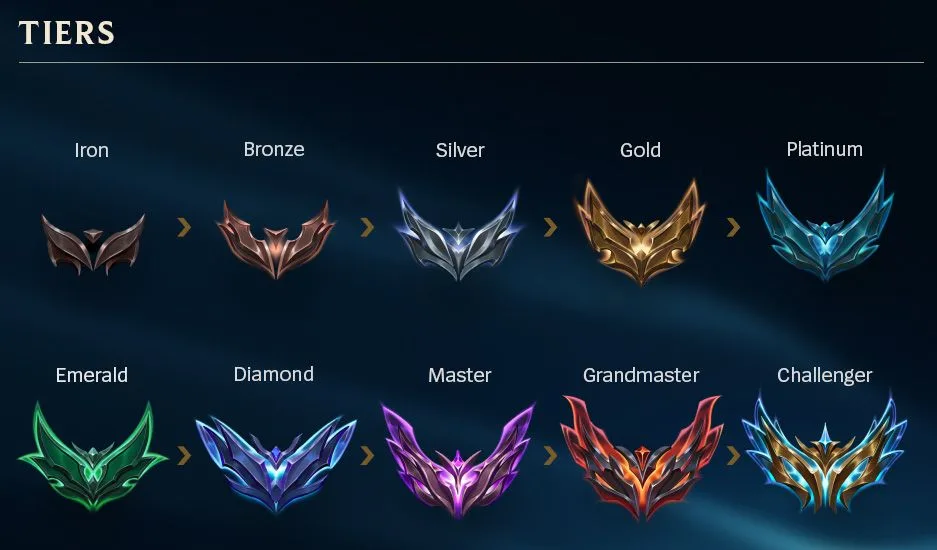
Imagine two players who are both visibly Gold II. One has recently climbed from Silver and is regularly matched against stronger opponents. The other has just lost a series of games after reaching Gold. They share the same badge, but their hidden ratings may differ, and their LP gains can reflect that difference. These are illustrative situations, not published MMR values or a rank-conversion formula.
Can your MMR rise before you get promoted?
Yes. A promotion is a visible-rank milestone, not the switch that permits your hidden rating to change. Suppose you remain in Gold II after winning two games. Both wins can still inform your matchmaking estimate before you reach Gold I. Similarly, losing while at a protected rank boundary can affect the hidden rating even when the rank badge does not immediately change.
This explains why a player can feel that opponents are getting better without seeing a new badge, or keep the same tier after several losses yet receive smaller LP gains later. Promotion and demotion boundaries follow separate visible-rank rules; they do not determine when the hidden rating can change.
For the full order of tiers, divisions and ranked eligibility rules, see RiftDaily's League of Legends ranks guide. The distinction between hidden MMR and visible progression is also explained in Riot Games Support's video below.
How MMR affects LP gains and losses
LP acts as a bridge between your hidden rating and visible rank. If your MMR suggests you belong higher than your displayed rank, the system can speed up your climb with more favorable LP changes. If your MMR suggests you belong lower, your LP gains may shrink while losses become more expensive. Riot describes these tendencies directly in its ranked LP documentation.
| MMR relative to visible rank | Typical LP pattern | What it means |
|---|---|---|
| MMR above rank | Gain more on wins than you lose on defeats | Your rank may need to catch up with your matchmaking level |
| MMR near rank | Win and loss LP amounts are roughly similar | Your visible position and hidden estimate are broadly aligned |
| MMR below rank | Gain less on wins than you lose on defeats | Your visible rank may be ahead of the level the system currently estimates |
Why am I gaining 15 LP but losing 25?
A result such as +15 LP for a win and -25 LP for a loss is an illustrative example of unfavorable LP gains. If this pattern persists across ordinary matches, it commonly means your visible rank is ahead of your hidden MMR. It does not show your exact MMR or prove Riot has applied a permanent account penalty. Those values are an example, not the universal baseline for ranked games.
The practical response is to improve your results against your current opposition. More victories than defeats can gradually move your hidden rating up; if your visible rank also changes, the LP relationship may take time to settle. One win won't necessarily reverse an extended losing stretch.
Here's the counterintuitive part: a positive win record can still produce negative LP when losses cost much more than wins award. Imagine your LP changes stayed at exactly +15 for each win and -25 for each defeat across ten games:
| Record over 10 games | LP gained from wins | LP lost from defeats | Net LP |
|---|---|---|---|
| 5 wins, 5 losses (50%) | +75 | -125 | -50 LP |
| 6 wins, 4 losses (60%) | +90 | -100 | -10 LP |
| 7 wins, 3 losses (70%) | +105 | -75 | +30 LP |
With those hypothetical fixed amounts, you'd need to win more than 62.5% of games just to gain LP overall. That is a break-even calculation for the example, not the win rate Riot requires to increase MMR. Your hidden rating can still improve from a winning record while your visible LP total temporarily moves the other way. If the gap between MMR and rank narrows, later LP changes may look different.
Why are my LP gains unusually high or low?
Not every unexpected LP number reveals something about MMR. Check whether the game had a special condition before treating the post-match LP screen as a measurement of hidden skill:
- Aegis of Valor: Eligible autofilled or priority-role games can grant double LP for a victory. Riot's later 2026 update removed its loss protection and minimum mastery-grade requirement, so older explanations describing C-grade protection on defeats are outdated. Aegis is an LP reward, not evidence of a double MMR increase.
- Consolation LP and cheating-related adjustments: Riot may issue Consolation LP after verified disruptive behavior, and can apply other adjustments for qualifying cheating cases under its Disruptive Behavior Repair rules. Compensation is automated, conditional and not a universal MMR reversal.
- Loss prevention and penalties: During a system-wide issue, Riot's Loss Prevented mode can protect both LP and MMR from a defeat, while limiting gains on victories. AFK and leaver penalties can separately alter LP.
- Demotion protection and placement rules: A visible rank boundary or placement match can change how LP is displayed without implying the same change in hidden MMR.
- Match strength: Differences in expected win probability can also alter an individual LP reward or deduction.
LP protection is not one single mechanic. Riot explicitly says its Loss Prevented system prevents MMR loss during qualifying server-wide problems. By contrast, Aegis changes LP rewards and the public rules for Consolation LP describe refunds, not a general promise that every refunded match has its MMR result erased. Avoid inferring MMR changes from the LP screen alone.
For an Aegis-eligible match, the important distinction is that double LP does not mean double MMR. If your post-game LP reward looks unusually generous, check for the Aegis indicator before drawing conclusions about your hidden rating. Aegis applies in eligible autofill and priority-role situations, but not to a full five-player Ranked Flex premade.
How to improve your MMR in LoL
The reliable way to increase ranked MMR is to win consistently against the players you're matched with. The goal is not to chase a hidden point total. It is to make better decisions often enough to beat your current opposition as the matchmaker adjusts.
How many wins does it take to fix bad MMR?
There is no fixed number of wins that repairs bad MMR. Riot does not publish the amount gained per ranked victory or a win-streak threshold that restores favorable LP. A few wins might improve your hidden estimate without immediately making your LP gains larger, especially if your visible rank also rises during that run.
Instead of aiming for a magic number such as five or ten wins, compare your ordinary LP gains and losses over a meaningful run of games in the same queue. If wins regularly start awarding more relative to losses, the gap may be narrowing. If they do not, keep working on your results rather than trying to reset the account. An unusual Aegis bonus or protected loss should not be counted as a normal LP change.
What actually helps you win more ranked games?
- Play a small pool of familiar champions. Knowing your damage, matchups and limits reduces the cost of constantly relearning a pick. Build around champions you can execute reliably, not only those with a recent high win rate.
- Learn to turn leads into objectives. A kill only matters if it helps secure waves, turrets, dragons, Baron, vision or a winning teamfight. Review games where you won lane but lost the map.
- Cut avoidable deaths. Respect missing opponents, wave position and objective timers. Losing less gold and map pressure often matters more than squeezing out one extra trade.
- Review a few decisive mistakes. Start with your first avoidable death, a missed objective setup or a bad late-game fight. Ask what information you lacked and what safer choice was available, then choose one change to practice rather than memorizing ten vague tips.
- Keep your setup and decision-making consistent. Reliable controls, camera habits and stable performance help you execute decisions. RiftDaily's League of Legends settings guide can help remove technical distractions, though settings alone do not award MMR.
- Stop playing when your decisions deteriorate. A short break can prevent more avoidable losses when you're tired or frustrated. Rest itself does not earn MMR; how you perform after returning is what matters.
If you're new to Summoner's Rift fundamentals, work through the League of Legends beginner guide before worrying about a precise MMR estimate. Understanding waves, objectives and teamfights gives you something actionable to improve. Keeping up with major gameplay changes through RiftDaily's League of Legends patch notes can also help you avoid habits that no longer work.
How to tell whether your changes are helping
Keep a simple record of the same ranked queue rather than combining Solo/Duo, Flex and normal-game results. Note your champion, role, result, LP change and the most important decision you want to improve. Exclude special LP rewards or protected games when you compare your usual gains and losses. Over time, you should be able to tell whether stronger play is producing more wins, not just better KDA.
- If your win rate improves but LP is still negative: Keep assessing ordinary match results; your visible rank and MMR can take time to move closer together.
- If your LP gains are improving but you are losing more games: Do not assume the work is done. Focus on the decisions that still cost games at stronger opposition.
- If your results stay near even: You may be approaching the level the matchmaker currently estimates. A new champion or role can temporarily make that level harder to maintain.
Do dodging, new accounts or normal games fix bad MMR?
| Common idea | Does it fix ranked MMR? | What actually happens |
|---|---|---|
| Dodge difficult lobbies | No reliable improvement | Dodges bring queue and LP penalties. Master+ has stricter rules that can affect MMR, so the claim that dodging never affects MMR is outdated. |
| Create a fresh account | No skill improvement | A new account starts with a different rating history and placement process, not a guarantee of better long-term results. |
| Win normal games | Not for an established ranked rating | Normal-game MMR is separate, although it can inform a never-ranked account's initial placement. |
| Take a break | Not as a quick fix | Rest can improve future decisions. Short inactivity is not an MMR reward, while very long breaks can affect returning-player calibration under Riot's broader ranked policies. |
| Intentionally demote | No | Losing deliberately harms results and may violate competitive integrity rules. |
| Pay for boosting | No legitimate solution | Account boosting or rank manipulation risks penalties and doesn't build the skill needed to maintain a higher rating. |
Riot's queue-dodging rules explicitly include an MMR-scoring consequence for Apex-tier dodges. Its 2026 ranked changes also treat dodges at Master and above as full losses. Below those ranks, dodging costs time and LP but is not a method for improving your actual skill. Neither intentionally losing nor starting an alternative account is a legitimate shortcut to a higher sustainable rating.
Solo/Duo, Flex, normal and ARAM MMR
Your MMR is not one universal number shared by every League of Legends mode. Riot confirms separate matchmaking ratings for Normal, ranked Solo/Duo and ranked Flex. That lets a player experiment with friends in one queue without every loss immediately rewriting their Solo/Duo rating.
| Queue or mode | MMR relationship | What to remember |
|---|---|---|
| Ranked Solo/Duo | Has its own ranked MMR | Its results drive your Solo/Duo matchmaking and related LP progression |
| Ranked Flex | Separate ranked MMR, with calibration informed by Solo/Duo skill | Riot's 2026 changes aimed to bring Flex matchmaking closer to players' Solo/Duo levels, not raise Solo/Duo MMR from Flex |
| Normal games, including relevant Summoner's Rift queues | Separate normal matchmaking rating | Swiftplay and Normal Draft can inform initial ranked seeding for an account that has never played ranked |
| ARAM | Mode-specific matchmaking, not Solo/Duo ranked MMR | ARAM results do not directly award Solo/Duo ranked LP or rewrite an established Solo/Duo rating |
Does duo queue change your MMR? Your Solo/Duo matches still contribute to your Solo/Duo rating when you win or lose, whether you're playing alone or with a partner. The duo itself does not provide a separate personal MMR reset or a guaranteed rating boost. Riot recognizes that premade coordination can affect match balance, so playing as a duo can influence which opposing team is considered a fair match. It does not create a published, fixed LP penalty for every duo. Eligibility at high ranks has changed, so use Riot's ranked queue rules for current duo restrictions.
In 2026, Riot adjusted Flex matchmaking to better account for highly skilled Solo/Duo players whose Flex rank had lagged behind. This was a one-way alignment goal: a strong Flex record isn't a shortcut to raising Solo/Duo MMR. For a different competitive format to enjoy with friends, see the League of Legends Clash schedule; Clash participation is not a ranked MMR repair tool.
How placements, ranked resets and new accounts affect MMR
Placement matches and first-time ranked players
For the 2026 ranked system, Riot's placement rules specify five placement matches per ranked queue. Initial placement takes account of those match results, opponent difficulty and a returning player's previous ranked standing. For accounts that have never played ranked, Swiftplay and Normal Draft MMR are taken into consideration.
Placements can feel unusually generous with LP: under these rules, a defeat awards zero LP instead of deducting it, while wins contribute to your placement. That visible protection doesn't mean losing a placement is beneficial to hidden matchmaking. It also doesn't mean every brand-new account starts at the same skill estimate.
Why seasonal resets can lower rank without erasing MMR
A reset may affect the rank shown on your profile differently from the internal rating used to build matches. After a typical visible-rank reset, players can start lower than their previous badge while still facing similarly skilled opponents. That gap is one reason early climbs may award relatively favorable LP.
Not every reset follows the same rules. Riot's 2026 Apex-tier reset was a special intervention for Master, Grandmaster and Challenger players in NA, EUW, EUNE, BR, LAN and TR. The affected players' visible ranks were set to Master 0 LP, and their matchmaking ratings were also hard-reset to the corresponding starting level. It wasn't a general account-wide reset available on request. RiftDaily also covered the Apex reset and its reasons.
Returning after a long break: LP decay is not the whole story
Diamond and Apex players can lose visible LP through inactivity under Riot's ranked decay rules. That daily LP deduction should not be read as an equal number of hidden MMR points disappearing. For most players below Diamond, routine ranked LP decay does not apply.
There is a separate consideration for players who disappear for a long time. Riot has previously described adjusting the return-to-ranked experience for accounts inactive for six months or more, because returning at an outdated skill estimate can create lopsided games. Those adjustments are not a published daily MMR decay formula and should not be confused with the Diamond+ LP timer. Your first few games back are still best treated as an opportunity to rebuild consistency, not proof of a permanently ruined account.
What changed in the 2026 MMR-to-rank distribution?
Riot recalibrated how portions of hidden skill map onto visible ranks. Its MMR-to-Rank Distribution update explains that experienced players previously sitting in Iron could be better represented in Bronze, while some players toward the high end of Diamond belonged in Master-level matchmaking. That is a change to the relationship between rank labels and skill distribution, not evidence that every player suddenly became better or worse.
Riot also discussed the strain this placed on Apex progression and LP gains. The accompanying official developer video provides context on why rank distribution was adjusted rather than merely showing a new set of tier percentages.
What Riot has announced for Ranked Rush in 2027
Announced for 2027, not part of the live 2026 ranked system: Riot plans for everyone's visible rank to reset to Iron IV at the start of Ranked Rush while preserving each player's MMR for matchmaking. Riot also says the climb will feature very large LP increases. In other words, the Iron IV badge will not mean everyone is suddenly matched with genuinely new Iron-level players. This planned visual reset is fundamentally different from the exceptional 2026 Apex hard reset, which changed MMR as well.
These details come from Riot's Season 1 2027 developer update and remain an announced future design until implemented. For the broader seasonal changes, including Ranked Rush rewards, see RiftDaily's League of Legends Season 1 2027 coverage.
Common MMR problems and what they actually mean
Before blaming a hidden rating, separate a real matchmaking trend from a single strange game. These are the symptoms worth checking:
| What you notice | Likely explanation | What to do |
|---|---|---|
| Small LP gains, large LP losses | MMR may trail visible rank, unless an LP-specific rule applies | Check several ordinary matches and focus on sustainable wins |
| Higher-ranked opponents | Visible ranks can lag behind hidden ratings, or teams may be balanced across mixed ranks | Compare multiple lobbies, not just one opponent's badge |
| LP changes after a promotion or demotion | Rank and MMR are moving toward a new alignment; rank protection can also affect visible LP | Judge the pattern over time rather than one result |
| Strong KDA but repeated defeats | Good statistics aren't a direct substitute for winning | Review map decisions, objective fights and how leads were converted |
| Solo/Duo feels harder than Flex | The modes have different ratings and matchmaking conditions | Evaluate each queue independently |
| An unexpected LP reward or refund | Aegis, compensation, prevention, placement or penalty rules may apply | Review the match result and any client notification before assuming an MMR change |
Riot has said it does not deliberately punish a winning streak by assigning lower-skill teammates or disproportionately tougher opponents. Claims about a built-in “losers queue” or a forced personal 50% win rate therefore lack evidence from Riot's published matchmaking design. Riot describes matchmaking around estimated team strength, role parity and queue-time trade-offs. Ordinary variance, different roles, premade coordination and in-game snowballing can still produce consecutive one-sided defeats. A balanced pre-match forecast is not a guarantee of a balanced-feeling match.
Frequently asked questions about League of Legends MMR
Does a 50% win rate mean my MMR is stuck?
No. A 50% overall win rate can include earlier climbing and losing streaks. Your recent results against your present opposition and the relationship between LP gains and losses are more useful than the lifetime percentage alone.
Can I lose MMR even when I am at 0 LP?
Yes. A protected visible-rank boundary doesn't automatically protect your hidden MMR. Normal ranked wins and losses still matter even if the displayed LP cannot fall further without a demotion or a special rule changes the LP outcome.
Can a good player be stuck with bad LP gains forever?
No permanent LP penalty is established by Riot's explanation. If you consistently win above your current level, your matchmaking rating can improve. It may take a sustained change in results for the visible rank and hidden estimate to line up again.
Does ranked inactivity lower my MMR?
Ordinary ranked decay takes visible LP from Diamond+ accounts, not a matching daily number of MMR points. However, Riot has also described separate return-to-ranked adjustments for players who were absent for many months. There is no public, universal daily MMR decay formula for all accounts.
Can Riot Support reveal my exact MMR?
Riot does not provide an official public exact-MMR lookup. Its support material explains why the rating is hidden and directs players toward rank and LP as the practical way to understand progression.
Is an MMR number from another server directly comparable?
Not reliably. Matchmaking populations and rating distributions can differ between servers, and Riot doesn't publish a cross-server scale you can use to compare two supposed exact MMR numbers.
Can Riot reset my MMR if I submit a support ticket?
Riot does not offer a routine manual MMR reset to repair disappointing LP gains. Official resets, when they happen, are announced ranked-system changes rather than a personal fix available on request. An account or matchmaking issue can be reported, but it should not be confused with a guaranteed rating reset.
How to interpret your LP gains and build a better climb
If you're trying to work out whether your matchmaking rating is improving, start with a record of ordinary ranked results in one queue. Look for a sustained trend, not a single +15 or -25 screenshot. Compare your net results with how your usual LP gains and losses are changing, and separate out Aegis bonuses, penalties and protected games. Together, those clues can show whether your visible rank appears to be catching up with your hidden rating.
Then choose a manageable champion pool and one repeatable mistake to fix. For example, track whether your first death comes from an unwarded river, a greedy wave push or fighting before your team can contest an objective. Revisit that habit over several Solo/Duo games, alongside your results and ordinary LP gains. Improvement is not a mysterious number appearing in a checker. It is getting to the point where you regularly win against the opponents Riot gives you, then adapting as the competition gets stronger.
If you want the visible ladder explained in more depth, the ranked tiers and LP guide covers divisions, promotion and queue eligibility. For the actual habits behind a sustained climb, RiftDaily's League of Legends guides offer practical lessons. Keep the distinction simple: LP shows your progress, MMR helps decide your opposition, and better decisions produce the wins that ultimately move both.