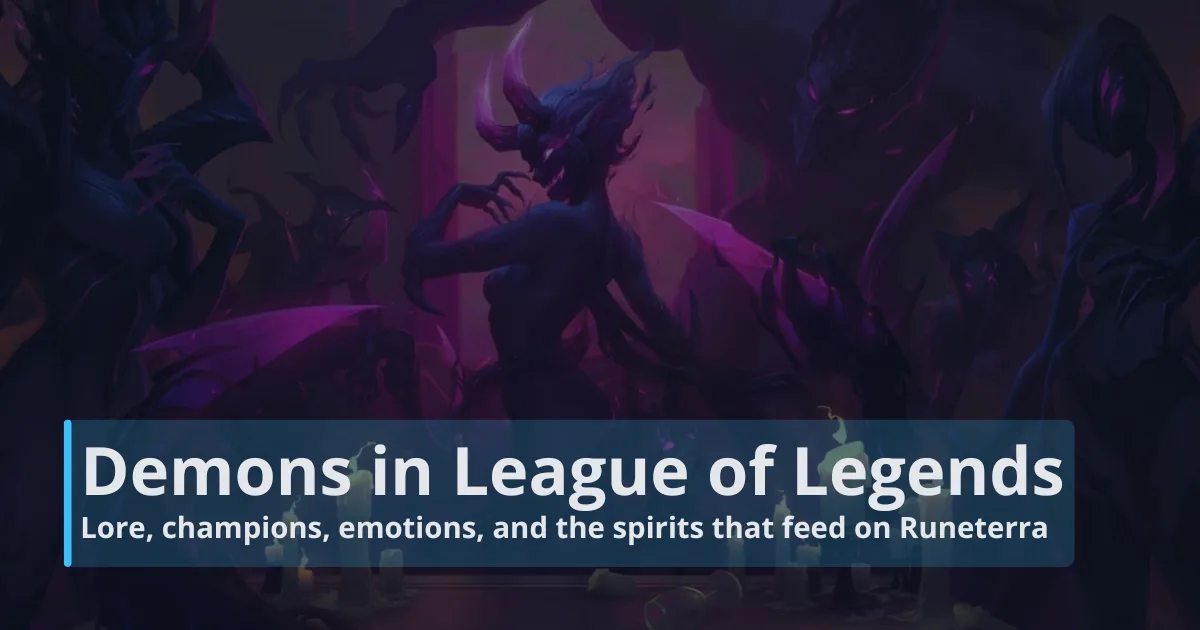
Demon is the League of Legends term for a dangerous spirit that feeds on mortal emotions, usually by manipulating, terrifying, tempting, or breaking its victims. Demons do not begin as simple horned monsters with one fixed form. They are spiritual predators shaped by suffering, hunger, fear, obsession, agony, nightmares, secrets, joy, addiction, and the darker currents of Runeterra.
At its simplest, a Demon is a spirit that eats emotion. At its most interesting, Demon lore explains why Fiddlesticks feels ancient, why Evelynn hunts through pain, why Tahm Kench speaks like a bargain, why Nocturne spreads nightmares, and why characters like Swain, Annie, Nilah, and Yone are tied to demonic power without being Demons themselves.
The short version is this: Demons come from the spirit realm, but they manifest in the physical world where mortal emotion is strong enough to feed them. Some are primordial powers, some are full Demons, and some are lesser Azakana that attach to specific fears or weaknesses. They are not the same as Yordles, Vastaya, Voidborn, undead, or Darkin, even when their bodies look monstrous.
Demon at a glance
- What a Demon is: a spirit that feeds on emotion and suffering.
- Where Demons come from: the spirit realm, though many manifest in the physical world.
- What Demons are known for: shapeshifting, bargains, nightmares, possession, fear, agony, addiction, secrets, Azakana, and emotional manipulation.
- Why Demon lore matters: it connects ancient spirits to champions across Noxus, Demacia, Ionia, Bilgewater, Targon, the Freljord, and beyond.
Demon champions
The main Demon champions are Evelynn, Fiddlesticks, Nocturne, and Tahm Kench. Each one feeds through a different emotional path, which is why Demon champions do not feel like one simple monster type. For official champion pages and gameplay profiles, the League of Legends site is the cleanest place to start.
| Champion | Demon identity | Emotion or hunger | Why the champion matters |
|---|---|---|---|
 Evelynn | Demon of agony | Pain, desire, and suffering | Evelynn shows how a Demon can turn beauty into bait, feeding through the suffering of victims who realize the trap too late. |
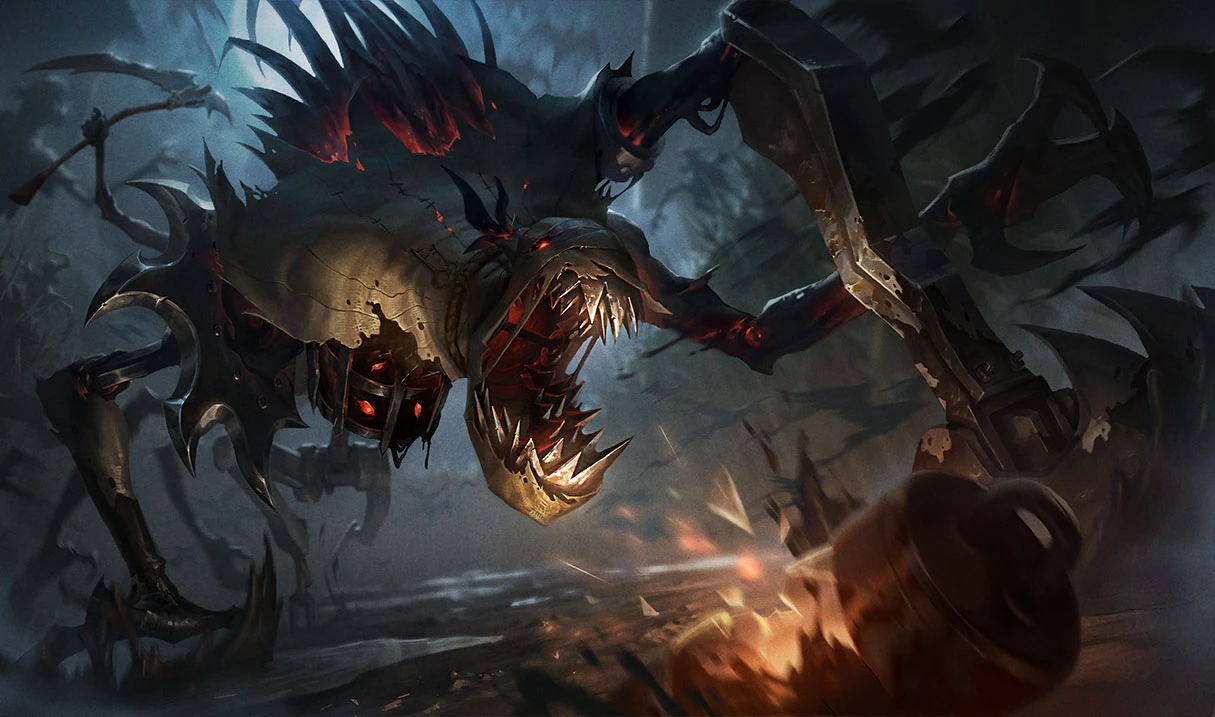
 Fiddlesticks | Primordial Demon of fear | Fear and horror | Fiddlesticks is one of the Ten, an ancient Demon tied to the first screams of creation and the oldest form of terror. |
 Nocturne | Demon of nightmares | Nightmares and shadow-born fear | Nocturne links Demon lore to shadow magic, dream invasion, Fossbarrow, Lux, Garen, and the terror of sleep itself. |
 Tahm Kench | Demon of addiction | Greed, vice, addiction, and bargains | Tahm Kench shows the social side of Demon horror, where a friendly deal becomes a slow invitation to ruin. |
The key pattern is that every Demon champion feeds by understanding what mortals already carry inside them. Fiddlesticks does not need to invent fear. Evelynn does not need to invent pain. Tahm Kench does not need to invent appetite. Nocturne does not need to invent nightmares. They all make existing weaknesses sharper.
Related champions tied to Demons
Many important Demon stories involve champions who are not Demons themselves. Some control a Demon, fight one, are possessed by one, carry one, hunt one, or are mistaken for one. These relationships make Demon lore much bigger than the four main Demon champions.
| Champion | Demon connection | Why it matters |
|---|---|---|
| Annie | Bonded to Tybaulk through Tibbers | Shows how a Demon of fire can become tied to a child, a toy, and uncontrolled magical emotion. |
| Garen | Fought demonic nightmare creatures in Fossbarrow | Connects Demon lore to Demacia, fear, and the Dauntless Vanguard. |
| Jhin | Was mistaken for a Demon | Clarifies that a monstrous human is not the same thing as a true Demon. |
| Kayn | Uses shadow magic connected to Nocturne's origin | Shows how Ionian shadow arts can overlap with demonic danger. |
| LeBlanc | Her faction sealed Tybaulk and Atakhan | Links Demons to Noxus, occult politics, and the weaponization of spirits. |
| Lux | Used light magic against Nocturne's possession | Shows that powerful magic can counter a Demon even when ordinary weapons fail. |
| Mordekaiser | Once commanded Tybaulk and Atakhan | Connects Demons to old empire, death magic, and the forces beneath the Immortal Bastion. |
| Nilah | Wields the power of Ashlesh, the Lord of Joy | Turns Demon power into heroic action, but at the cost of memory and emotional freedom. |
| Pantheon | Fought Camphor near Mount Targon | Connects Demons to Targon, despair, doubt, and mortal resilience. |
| Shen | Banished a Demon with spiritual discipline | Shows how the Kinkou balance physical and spirit threats. |
| Swain | Controls Raum, the Demon of secrets | Explains why Swain's power is not only political or military, but demonic intelligence turned into statecraft. |
| Vayne | Hunts Evelynn after her parents' deaths | Gives Demon lore a revenge thread and ties personal trauma to monster-hunting. |
| Yasuo | Faced a Demon during Kin of the Stained Blade | Connects Demon stories to guilt, memory, and Ionian myth. |
| Yone | Fused with an Azakana and now hunts them | Yone is the clearest bridge between lesser Demons, masks, and the human struggle to name inner wounds. |
| Zed | Uses shadow magic tied to demonic corruption | Shows that some Demon threats grow from magic humans thought they could command. |
Demon lore and how emotional hunger works
Demon lore is built around emotional hunger. Demons are spirits with no stable natural body, so they shape themselves around what lets them feed. A Demon can wear a seductive form, a friendly grin, a nightmare silhouette, a scarecrow frame, a child's toy, a raven-eyed secret, or a monstrous mask if that form brings victims closer to the emotion it wants.
This is why Demons are more flexible than ordinary monsters. Their bodies are tools. Fiddlesticks can mimic voices and local fears. Evelynn can become desirable enough to lower a victim's guard. Tahm Kench can sound generous until the debt becomes impossible. Nocturne can turn sleep into invasion. The form changes, but the feeding pattern stays consistent.
Demons also explain why Runeterra's darkest history matters. The Rune Wars, the First Noxian Invasion, the fall of kingdoms, the despair around Mount Targon, and the fear that spreads after disasters all create emotional abundance. Where mortals suffer, Demons can gather.
A broad Demon overview works well here because the race can feel scattered across many champion bios until the emotional pattern is clear.
After that foundation, Demon champions stop feeling like separate horror archetypes and start feeling like parts of the same ecosystem: fear, pain, secrets, nightmares, addiction, and despair all turned into predators.
Fiddlesticks, the Ten, and primordial Demon power
Fiddlesticks is the most important Demon for understanding the top of the hierarchy. It is known as the Lord of Fear and the Voice-Eater, one of the original Ten, and a being tied to the first screams of creation. That makes Fiddlesticks different from a lesser Demon that grows out of one local fear. It is fear at a primordial scale.
The Ten are the first and most terrifying demonic entities in known lore. Fiddlesticks represents fear. Ashlesh, the Lord of Joy, represents another root-level emotional hunger and is now tied to Nilah through the Seventh Layer. The other members are still mysterious, which helps the Demon hierarchy feel larger than the named champions.
Fiddlesticks works because it is not just scary. It is wrong. It repeats voices, tears open memory, and weaponizes the sounds people associate with safety, loss, or panic. That makes its horror older than politics, older than war, and older than most stories people tell about monsters.
The Fiddlesticks update trailer is one of the best visual entries into Demon lore because it shows fear as an atmosphere before the creature fully arrives.
That scene also explains why Demons are so hard to fight. By the time a victim sees the body, the Demon has already entered the mind.
Fear is the easiest Demon emotion to understand because it is immediate. A scream, a dark road, a childhood memory, a voice that should not be there, all of it can become food. But fear also branches into more specific forms, which is why the Demon family tree matters. Nightmares, secrets, delirium, obsession, frenzy, and bliss can all grow out of primal emotional roots.
Nightmares, shadows, and Nocturne
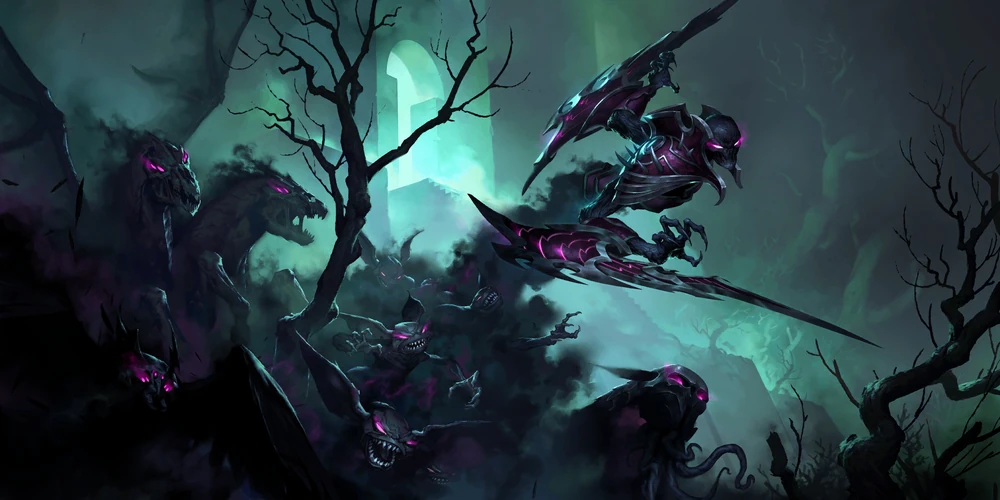
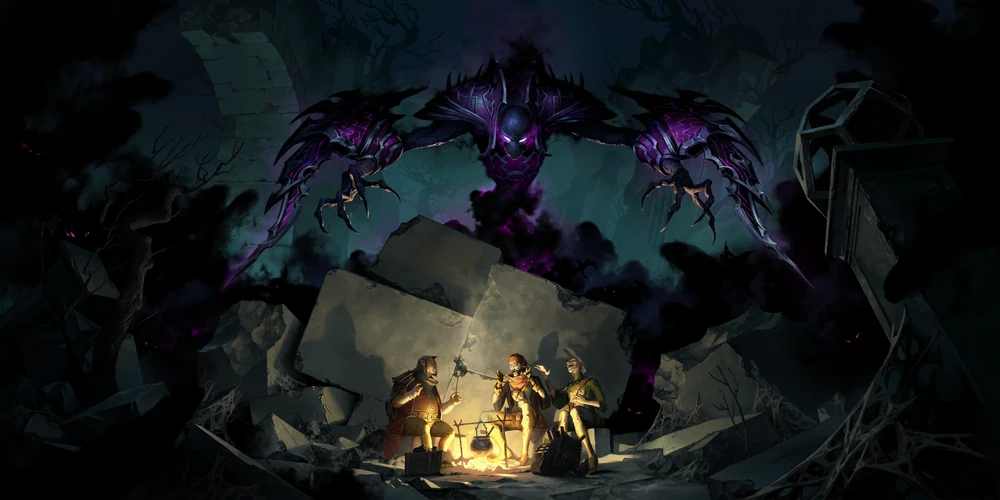
Nocturne shows how Demon lore becomes psychological horror. He is not frightening because he has claws. He is frightening because he makes sleep unsafe. Born from shadow magic and tied to nightmares, Nocturne turns the private mind into a hunting ground where victims cannot easily tell memory, dream, and attack apart.
His stories also connect Demons to Demacia through Fossbarrow, where nightmares take form and Lux's light becomes one of the few things capable of disrupting demonic possession. That makes Nocturne useful for understanding how a spirit predator can threaten even a region built around order, duty, and control.
Camphor, doubt, and the danger of spiritual failure
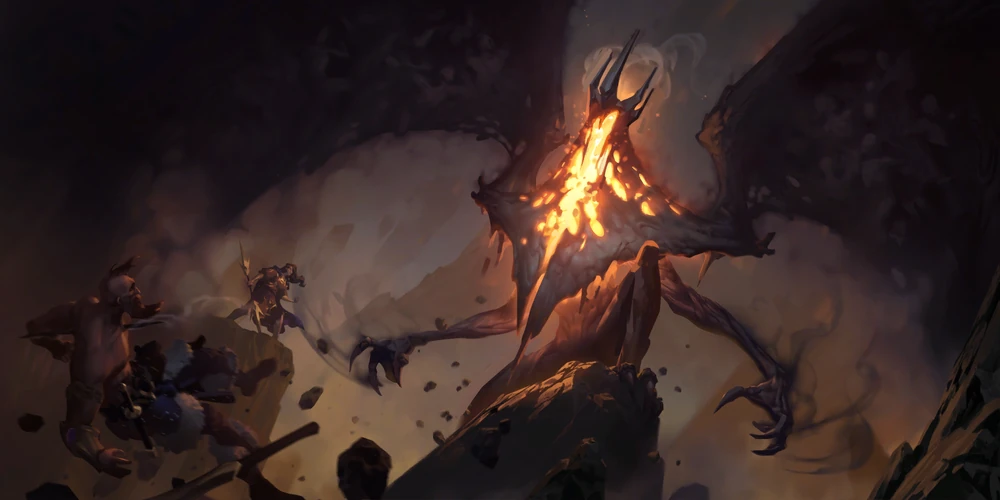
Camphor is one of the clearest examples of a Demon built around a specific emotional wound. She manifested from the despair of those who failed to climb Mount Targon and fed on doubt. That makes her different from a battlefield monster. Camphor attacks the meaning of a person's struggle, taking what they value and turning the loss into nourishment.
Her connection to Pantheon matters because Pantheon is built around mortal refusal: the idea that humans can keep standing even after gods, fate, or impossible odds break them. A Demon of doubt is therefore a natural enemy for him, because it feeds on the exact weakness he rejects.
Azakana and why lesser Demons matter
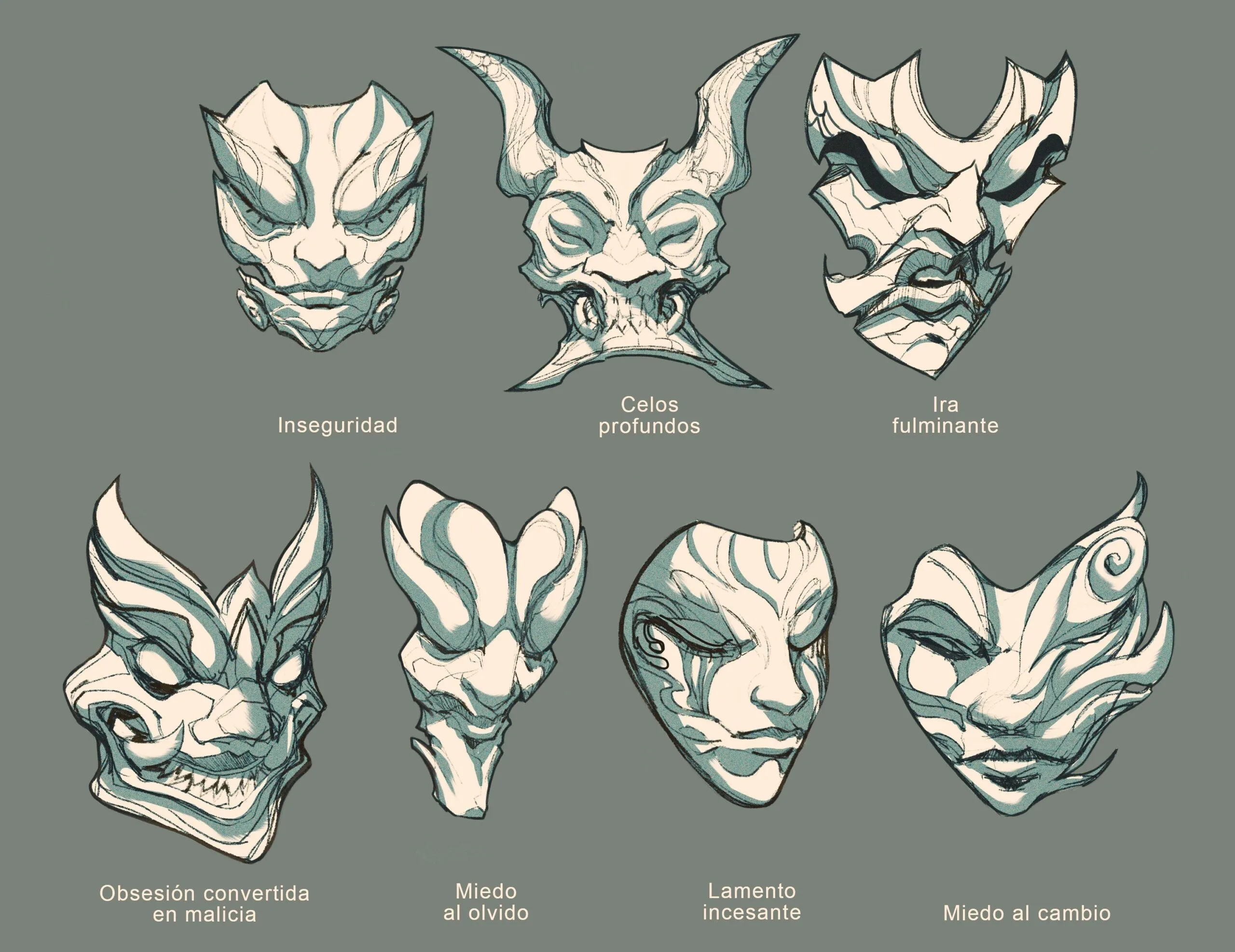
Azakana are lesser Demons, especially important in Ionia after years of grief, war, and spiritual imbalance. The word is tied to the idea of a "little demon," but that name should not make them sound harmless. An Azakana feeds on a very specific fear, guilt, doubt, or weakness until the victim is hollowed out by it.
The difference between a full Demon and an Azakana is scale. Fiddlesticks feeds on fear as a primal force. An Azakana might feed on one precise fear, such as being forgotten, being unloved, failing a duty, or being unable to escape the past. That specificity is what makes them feel personal.
Yone matters because he is not simply fighting monsters with swords. He is hunting named inner wounds. When he seals an Azakana into a mask, he is giving shape to something that would otherwise keep feeding unseen.
Azakana are one reason Demon lore fits Ionia so well. Ionia is already a place where the physical and spiritual worlds overlap. When war, grief, occupation, and revenge disturb that balance, emotions become more than private pain. They can attract predators from the spirit realm.
Known Demons and what they feed on
The known Demons in League lore range from primordial entities to full Demons, bound spirits, and lesser predators. The table below keeps the major names clear without pretending every detail is equally central to the main champion roster.
| Demon | Type or title | Emotion or theme | Key connection |
|---|---|---|---|
| Fiddlesticks | One of the Ten, Lord of Fear | Fear and horror | Main Demon champion and primordial terror. |
| Ashlesh | One of the Ten, Lord of Joy | Excessive joy, bliss, obsession | Power controlled by Nilah through the Seventh Layer. |
| Evelynn | Full Demon, Demon of agony | Pain and suffering | Main Demon champion and Vayne's personal enemy. |
| Nocturne | Full Demon, Demon of nightmares | Nightmares and shadow fear | Main Demon champion tied to shadow magic and Fossbarrow. |
| Tahm Kench | Full Demon, Demon of addiction | Addiction, greed, vice, debt | Main Demon champion known for bargains and devouring. |
| Raum | Demon of secrets | Secrets and hidden knowledge | Controlled by Swain, shaping Noxian power. |
| Tybaulk | Fire Demon | Burning agony | Bound to Annie through Tibbers after occult Noxian meddling. |
| Atakhan | Shadow Demon | Bloodshed and shadow war | Formerly tied to Mordekaiser and later to Noxian occult politics. |
| Camphor | Demon of doubt | Doubt and despair | Fought by Pantheon near Mount Targon. |
| Airis, Domination, Solitude, Steem, Sultur, and Vora | Lesser Demons | Various personal hungers | Connected to Evelynn's wider lesser Demon stories. |
The safest way to read this list is by importance to the main lore. Fiddlesticks, Evelynn, Nocturne, and Tahm Kench are the core Demon champions. Raum, Tybaulk, Ashlesh, Atakhan, Camphor, and the Azakana explain how demonic power spreads into other champion stories.
Lesser Demons beyond the main champions
Lesser Demons matter because they prove the race is not limited to the biggest names. Sultur, Vora, Solitude, Steem, Domination, Airis, and other minor entities show how Demons can hide in taverns, cities, ruins, roads, and lonely corners where prey is easier to isolate.
This is also where Demon lore becomes more frightening on a day-to-day level. A primordial Demon like Fiddlesticks is catastrophic, but a lesser Demon can feel more plausible: a stranger with the right words, a place that drains hope, a habit that becomes a debt, or a private weakness that suddenly has teeth.
Demon lore across Runeterra
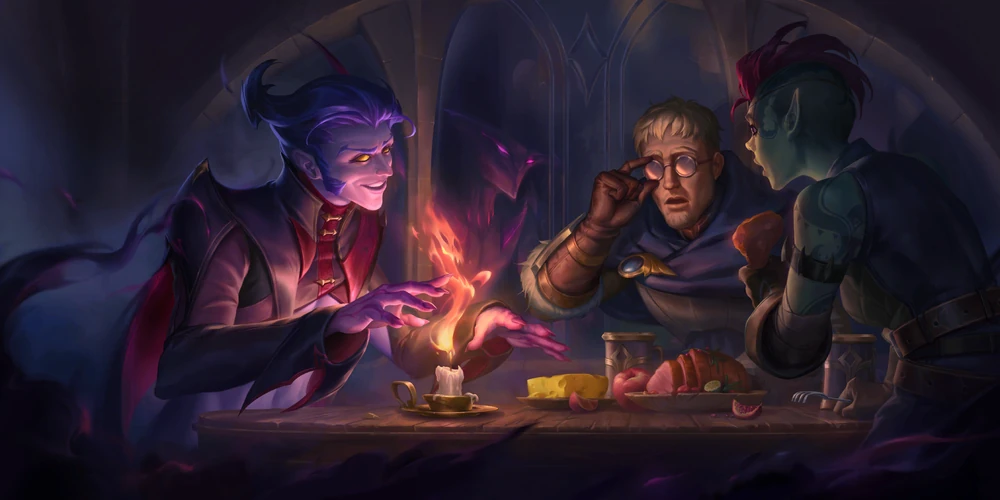
Demon stories work across Runeterra because emotional suffering does not belong to one region. Fear can grow in Demacia. Secrets can rule Noxus. Nightmares can spread through Ionia. Addiction can thrive in Bilgewater. Despair can cling to Targon. Wherever mortals break, Demons can feed.
| Region or faction | Demon connection | Why it matters |
|---|---|---|
| Demacia | Fiddlesticks and Nocturne stories touch Demacian fear | Demacia's order and petricite faith look strong until terror reaches the mind. |
| Noxus | Swain, Raum, Tybaulk, Atakhan, Mordekaiser, and demonic study | Noxus treats Demons like weapons, which makes the empire both powerful and vulnerable. |
| Ionia | Azakana, Yone, Yasuo, Shen, Zed, and post-invasion grief | Ionia shows how spiritual imbalance and war trauma can feed lesser Demons. |
| Bilgewater | Tahm Kench, Nilah, and the appetite for bargains | Bilgewater is perfect Demon ground because greed, debt, legend, and desperation thrive there. |
| Shadow Isles | Sultur, Vora, and comparison with cursed undeath | The Shadow Isles help separate Demons from wraiths, revenants, and Black Mist corruption. |
| Targon | Camphor, Pantheon, and the despair of failed climbers | Targon turns doubt and failure into a spiritual battlefield. |
| Freljord | Ancient fear, survival, and spirit comparisons | The Freljord is useful for comparing Demons to spirit gods, Watcher terror, and old myths. |
| Piltover | Solitude and the danger of studying spirits like specimens | Piltover's rational culture does not make emotional predators less dangerous. |
| Zaun | Solitude, despair, chemtech hardship, and shadowed lives | Zaun shows how suffering and isolation can become food for lesser Demons. |
| Shurima | Lesser Demon references and contrast with Ascended history | Shurima helps separate demonic spirits from Ascended, Darkin, and ancient god-warriors. |
| Ixtal | Hidden magic comparison | Ixtal's controlled elemental magic contrasts with Demons, which feed on uncontrolled emotion. |
| The Void | Alien hunger comparison | The Void consumes existence, while Demons feed through mortal emotion. |
| Bandle City | Comparison with spirit-born Yordles | Yordles are magical spirits too, but they are not emotional predators like Demons. |
| Camavor | Grief, obsession, and Ruination comparison | Camavor shows mortal emotional collapse on a kingdom scale, which makes it useful context for demonic hunger. |
| Icathia | Trauma and forbidden-power comparison | Icathia shows catastrophic horror, but its Void disaster is different from Demon feeding. |
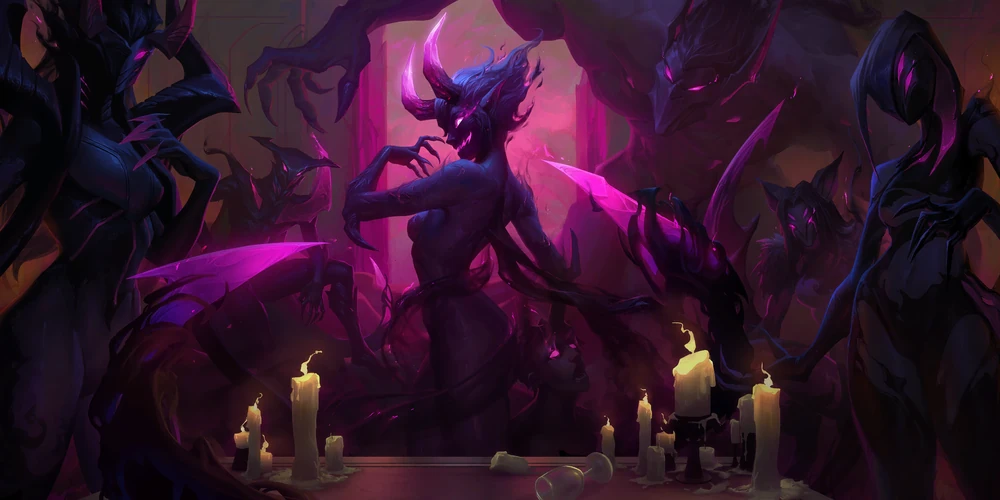
Demon lore is built around emotional hunger. Demons are spirits with no stable natural body, so they shape themselves around what lets them feed. A Demon can wear a seductive form, a friendly grin, a nightmare silhouette, a scarecrow frame, a child's toy, a raven-eyed secret, or a monstrous mask if that form brings victims closer to the emotion it wants.
Evelynn is one of the clearest examples. Her beauty is not her true nature, it is bait. She chooses a form that lets victims move closer willingly, then feeds when desire turns into agony. That is why Demons are emotional predators first and physical threats second.
Demon, Yordles, Vastaya, Voidborn, and other magical beings
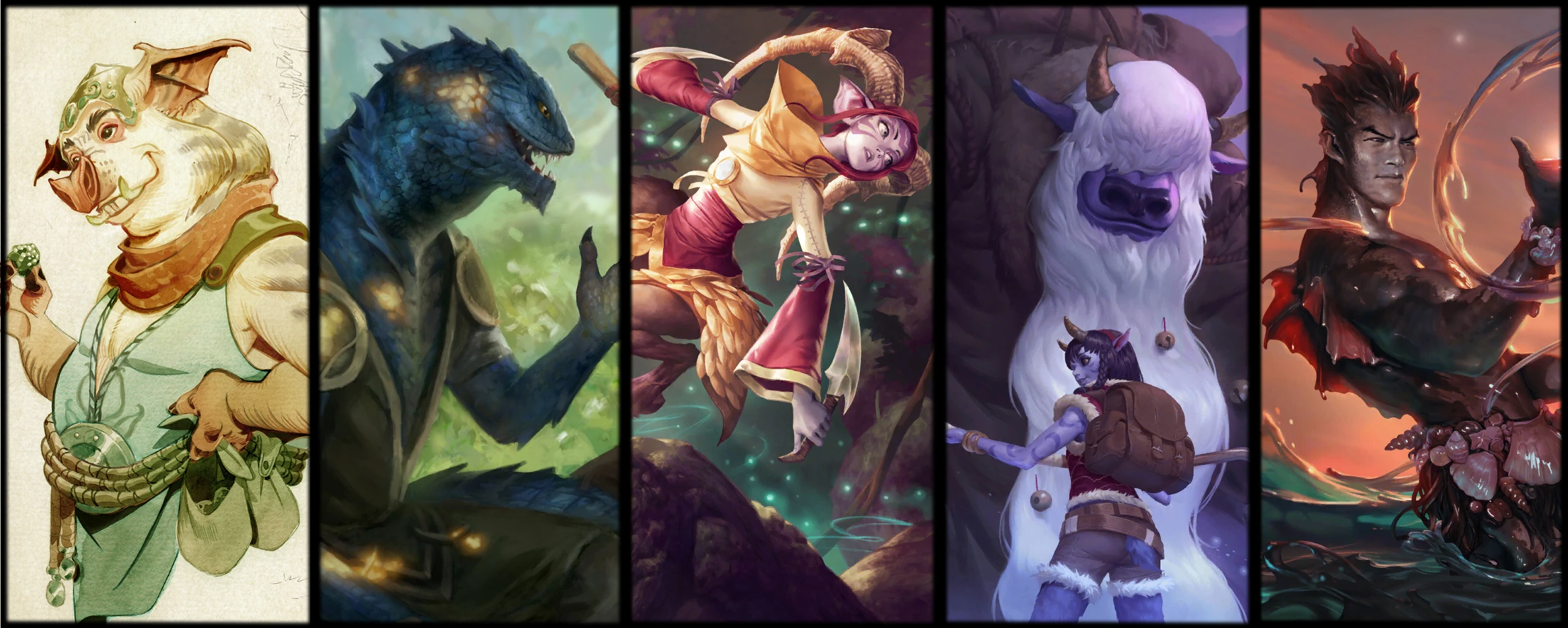
Demon lore is easiest to understand when it is separated from other magical categories. Demons are spirits that feed on emotion. Yordles are spirit-born beings from Bandle City and related pockets of the spirit realm. Vastaya are magic-touched descendants of mortals and the Vastayashai'rei. Voidborn come from the Void. Darkin are corrupted Ascended trapped in weapons. Undead are tied to death, curses, or the Black Mist.
These distinctions matter because League of Legends uses many kinds of monstrosity. Evelynn is not simply a succubus-like human. Tahm Kench is not just a talking monster. Nocturne is not merely a shadow creature. Fiddlesticks is not an animated scarecrow in the usual sense. A Demon is defined by hunger, emotion, spirit origin, and predation.
Shaco is a useful warning here. He is called the Demon Jester, and folklore around him sounds demonic, but current lore does not treat him as a confirmed Demon. Jhin is another example, since people mistake his killings for the work of a Demon, but he is a human murderer rather than a spirit predator.
Where to start with Demon lore
A strong Demon lore reading path starts with Fiddlesticks, then moves to Evelynn, Tahm Kench, Nocturne, Yone, Swain, Nilah, Annie, Mordekaiser, LeBlanc, Pantheon, Lux, Shen, and Vayne. That order gives you fear first, then pain, addiction, nightmares, Azakana, secrets, joy, fire, old Noxian bindings, spiritual banishment, light magic, and revenge.
A second Demon overview can be useful at this point because the topic spans champions, short stories, Spirit Blossom ideas, Noxian occult documents, and multiple regions. The best summaries keep the focus on what Demons feed on, not only where they appear.
After that, the individual champion stories become much easier to place. Fiddlesticks is primordial fear, Evelynn is agony, Tahm Kench is addiction, Nocturne is nightmare, Swain is secrets under control, Nilah is joy weaponized, Annie is fire bound to innocence, and Yone is the mask-maker of personal Demons.
For official lore browsing, start with the Universe lore archive. Then use RiftDaily's guides and wider lore hub to connect Demons to Runeterra's regions, spirit magic, and champion histories. For account help, event issues, or live game support, use the official League of Legends support site.
Frequently asked questions about Demon
What is a Demon in League of Legends?
A Demon is a spirit that feeds on mortal emotions. Demons usually manipulate victims into fear, pain, obsession, addiction, nightmares, doubt, joy, or despair, then feed until the victim is destroyed or consumed.
Who are the Demon champions?
The main Demon champions are Evelynn, Fiddlesticks, Nocturne, and Tahm Kench. Other champions such as Swain, Annie, Nilah, and Yone are strongly tied to Demons, but they are not Demon champions themselves.
Is Fiddlesticks the strongest Demon?
Fiddlesticks is one of the oldest and most important Demons, known as the Lord of Fear and one of the Ten. It is usually treated as a primordial Demon rather than a normal full Demon.
What are the Ten Demons?
The Ten are the first and most powerful demonic entities in known Runeterra lore. Fiddlesticks is one of them, and Ashlesh, the Lord of Joy, is another. The full list and nature of the Ten remain mysterious.
What are Azakana?
Azakana are lesser Demons, especially known in Ionian lore. They feed on very specific fears, doubts, or emotional weaknesses, and Yone hunts them by sealing them into masks.
Is Swain a Demon?
No. Swain is not a Demon. He is a human who controls the Demon Raum, a being tied to secrets, knowledge, and the hidden truths Swain uses to rule Noxus.
Is Annie's Tibbers a Demon?
Tibbers is tied to Tybaulk, a fire Demon once connected to Mordekaiser and later bound through Noxian occult schemes. Annie herself is not a Demon, but her magic is deeply connected to one.
Are Demons the same as Voidborn?
No. Demons are spirit-realm predators that feed on emotions, while Voidborn are connected to the Void and its hunger to unmake reality. Both are terrifying, but their origins and motives are different.
Why Demons make Runeterra feel haunted
Demons matter because they make Runeterra's emotions dangerous. A war does not end when the battlefield is empty. A bargain does not end when the ink dries. A nightmare does not end when someone wakes up. Fear, pain, secrets, addiction, despair, and obsession can all leave enough residue for something hungry to notice.
The best way to read Demon lore is to start with the emotion first and the monster second. Fiddlesticks is fear, Evelynn is agony, Tahm Kench is addiction, Nocturne is nightmare, Raum is secrets, Ashlesh is joy, Tybaulk is fire-fed pain, and Azakana are small wounds that learned how to eat. That is what makes Demon champions worth revisiting, whether you continue through RiftDaily's guides or explore the site's wider lore coverage.