Darkin are corrupted Ascended God-Warriors in League of Legends, once noble defenders of Shurima who were broken by war, blood magic, and the fall of the empire they served. They are now best known as living weapons, trapped inside blades, bows, scythes, daggers, and other artifacts that can corrupt whoever tries to wield them.
That simple idea is what makes Darkin lore so strong. The Darkin are not just monsters. They are former heroes who survived the Void War, lost their purpose, turned on the world, and were punished with a prison worse than death. Their stories connect Shurima, the Void, Targon, Ionia, Noxus, Demacia, and nearly every major ancient conflict in Runeterra.
If you want the short version, the Darkin began as Ascended warriors of ancient Shurima. After the horrors of the Void War and the collapse of Shurima, many became tyrants who reshaped themselves through blood magic. The Aspects and mortal allies eventually defeated them by sealing them inside their own weapons, where they remained conscious, furious, and desperate for hosts.
Darkin at a glance
- What Darkin are: corrupted Ascended, also known as fallen God-Warriors or Sunborn.
- What Darkin are known for: sentient weapons, blood magic, host corruption, Shuriman origins, and the Great Darkin War.
- What drives Darkin lore: trauma, immortality, imprisonment, vengeance, and the terrible cost of surviving world-ending wars.
- Why the Darkin matter: they connect League's ancient history to some of its most important champions, including Aatrox, Varus, Rhaast, Naafiri, and Zaahen.
Darkin champions
The fastest way to understand the Darkin is through their champions. Each one shows a different version of the same curse: a trapped godlike being trying to use a body, a pack, or a weapon to regain agency. For official champion pages and game profiles, the League of Legends site is the cleanest place to start.
| Champion | Darkin role | Why the champion matters |
|---|---|---|
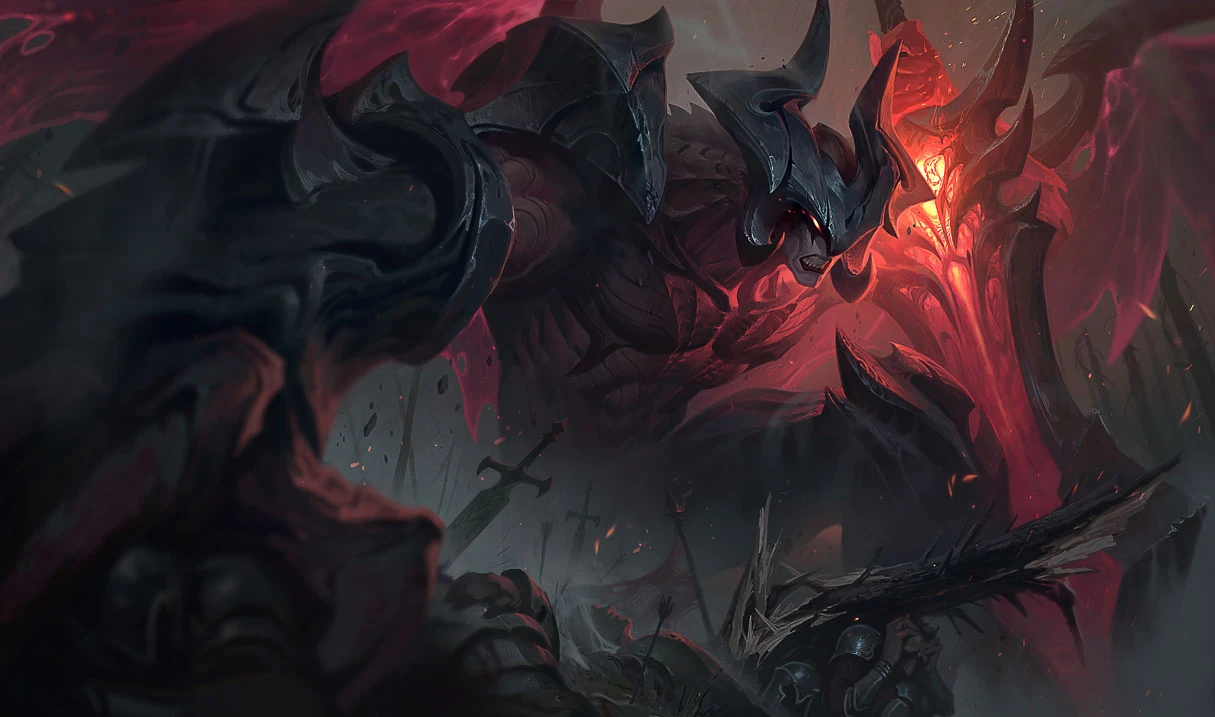
 Aatrox | The Darkin Blade | Aatrox is the most apocalyptic Darkin, a former Shuriman hero whose imprisonment made him seek an end to all things, including himself. |
 Naafiri | The Darkin Dagger | Naafiri is unique because she found a host in a pack of Shuriman dune hounds, turning Darkin identity into something collective and predatory. |
 Rhaast | The Darkin Scythe | Rhaast matters because his story is a direct contest of wills with Kayn, where either the wielder masters the weapon or the weapon consumes the wielder. |
 Varus | The Darkin Bow | Varus is a three-part body of vengeance, with the Darkin sharing one form with Valmar and Kai rather than fully erasing them. |
 Zaahen | The Darkin Glaive | Zaahen adds a rare counterpoint to the faction, a Darkin who hunts his own kind while resisting the corruption that threatens to define him. |
Rhaast is worth clarifying because he is not selected as a separate champion in the League client. He is the Darkin form and personality inside Kayn's scythe. Lore-wise, though, Rhaast is one of the central Darkin figures, so he belongs in any serious discussion of Darkin champions.
Other champions related to the Darkin
Not every important Darkin connection comes from being one. Some champions ruled the Ascended, fought beside them, sealed them away, survived their violence, or learned the blood magic that made them so terrifying.
| Champion | Connection to the Darkin |
|---|---|
| Azir | Ruled ancient Shurima, the empire that created the Ascended warriors who later became the Darkin. |
| Kayn | Wields Rhaast and turns Darkin lore into a personal struggle between ambition, shadow magic, and possession. |
| Master Yi | Connects to Xolaani through Jun and the Wuju tradition in Ionia. |
| Nasus | Fought alongside other Ascended before some of them fell into Darkin corruption. |
| Pantheon | Links the Darkin War to Targon, the Aspects, and the celestial intervention that sealed the Darkin away. |
| Renekton | Another Ascended who fought in the same ancient world that produced the Darkin. |
| Tryndamere | Survived Aatrox's massacre in the Freljord, making him one of the clearest living victims of Darkin violence. |
| Vladimir | Learned blood magic from a Darkin, then carried that forbidden art into Noxus and its hidden circles. |
| Zoe | Inherited the Aspect of Twilight role after Myisha, whose actions helped mortals learn how to imprison the Darkin. |
How the Darkin became living weapons
Darkin lore starts with a tragedy of survival. The Ascended were created to protect Shurima and fight threats too large for ordinary mortals. Against the Void, they succeeded, but survival left scars. After the fall of Shurima and Azir's death, the surviving Sunborn lost the empire, command structure, and sacred purpose that had held them together.
With no emperor to follow, many of these immortal warriors turned on the world and on each other. They used blood magic to reshape flesh, armor, and weapons, becoming more monstrous with every conflict. Their war was not only a civil war among powerful beings. It was a catastrophe for everyone caught beneath them.
That is why the Darkin are so different from ordinary villains. Their corruption was not only external. The Void War broke them, but they also chose domination, enslavement, blood magic, and revenge. They were victims and perpetrators at the same time, which makes Darkin lore darker than a simple fall-from-grace story.
For the clearest official written starting point, the Legend of the Darkin story is essential because it frames the Darkin as thrice-cursed: by ancient war, imperial collapse, and the betrayal that sealed them inside weapons.

The key phrase is not just "sentient weapons." That is how many people in Runeterra understand them from the outside. The deeper truth is worse. A Darkin weapon is a prison containing a former Ascended mind that can still think, hate, whisper, and corrupt.
When someone touches or wields a Darkin weapon, the relationship can become parasitic. The wielder gains power, but the Darkin gains a route back into the world. Sometimes the host resists. Sometimes the Darkin dominates. Sometimes, as with Varus, the result becomes an unstable mixture rather than a clean victory for either side.
From Ascended heroes to the Great Darkin War
The Darkin story cannot be separated from the ancient Shuriman empire. Shurima's Ascended were created under the Sun Disc, turning chosen mortals into godlike champions. Some became protectors, scholars, generals, and living symbols of imperial power. But the same scale that made them heroic also made their collapse terrifying.
The Void War was the first great wound. In places like Icathia, the world saw what happened when desperate mortals opened the door to forces beyond life, reason, and empire. The Ascended fought that horror and helped stop it, but even immortal bodies could not fully protect mortal minds from what they witnessed.
After Shurima fell, the surviving Ascended lacked a center. Some tried to claim rulership. Others fought over territory, worship, and vengeance. Blood magic allowed them to reshape bodies and armies into weapons of will. Over time, the Sunborn became known as Darkin, not because they were a separate species from the beginning, but because they had become unrecognizable from what they once were.
The Great Darkin War was the result. Runeterra could not survive an endless war between corrupted god-warriors, so the Aspects and mortal allies intervened. The solution was not execution. It was imprisonment. The Darkin were trapped inside their own weapons and scattered across the world, leaving behind myths, sealed artifacts, and a terrible question: what happens when someone picks one up again?
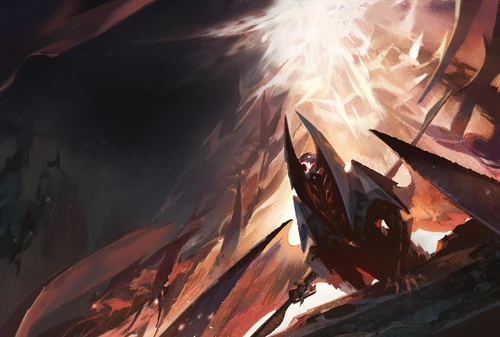
Legends of Runeterra explored this mythic scale by showing Darkin weapons across many regions, from Demacian shields to Targonian artifacts, Zaunite caverns, and corrupted creatures. Not every host or event from the card game's Darkin Saga should be treated as main League canon unless later confirmed, but the expansion is still useful for understanding the shape of the threat.
The important idea is that the Darkin are not locked to one homeland anymore. Their origin is Shuriman, but their prisons can surface anywhere. That makes every buried weapon, strange relic, or impossible battlefield trophy feel dangerous.
The first Darkin Saga trailer gives the conflict a sweeping, ancient feeling, where weapons, legends, and old names rise back into the present rather than staying safely buried.
It is most useful as a visual bridge between ancient imprisonment and modern reawakening, especially if the written lore feels too abstract at first.
The second Darkin Saga trailer leans harder into control, domination, and the danger of Darkin power spreading through followers and hosts.
That theme matters because Darkin horror is rarely just about a weapon being sharp. It is about one will forcing itself through another body.
How Darkin weapons and hosts work
A Darkin weapon is not simply enchanted gear. It is the prison of a conscious being that once had an Ascended body. The weapon can offer power, whisper to a wielder, and gradually reshape flesh. The longer contact continues, the more the host risks losing themselves.
The exact relationship changes by character. Aatrox has already overwritten many hosts and uses bodies like raw material. Rhaast is still locked in a contest with Kayn. Varus exists as a tense union between a Darkin and two human lovers. Naafiri spread into a pack, which gives her a different sense of self. Zaahen complicates the pattern further by resisting corruption while hunting other Darkin.
| Darkin | Weapon or vessel | Host relationship | What it reveals |
|---|---|---|---|
| Aatrox | Greatsword | Overwrites and consumes bodies | Darkin freedom can become a cycle of body theft, decay, and renewed violence. |
| Naafiri | Dagger | Uses a pack of Shuriman dune hounds | Darkin identity can adapt to non-human vessels and become collective. |
| Rhaast | Scythe | Fights Kayn for control | Darkin corruption can be resisted, but only by someone dangerous enough to challenge it. |
| Varus | Bow | Shares one body with Valmar and Kai | Not every Darkin host relationship ends in instant erasure. |
| Zaahen | Glaive | Walks free while resisting his own corruption | Darkin lore can include self-mastery, not only madness and domination. |
The host question is what keeps Darkin lore personal. It is one thing to say a weapon is evil. It is much more disturbing to ask whether the person holding it is still present, whether their body is changing, and whether the voice promising power is telling the truth.
This is also why Darkin stories often feel tragic. The imprisoned Darkin are conscious, but their route back to life usually destroys someone else. Even when they are pitiable, their freedom tends to cost another person their body, name, or future.
Varus, Aatrox, Rhaast, Naafiri, and Zaahen compared
The main Darkin champions work because they do not repeat the same tragedy in the same way. Aatrox is despair turned cosmic. He cannot accept eternal imprisonment, so he tries to force existence itself to break. That makes him feel closer to an end-times threat than a normal champion villain.
Rhaast is more intimate. His story is not about ending the world immediately, but about winning one body. Kayn believes he can master the scythe. Rhaast believes Kayn is only delaying the inevitable. The result is one of the cleanest internal conflicts in League lore, because both sides are arrogant enough to think they will be the one left standing.
Varus is different again. His body contains the Darkin and the fused lives of Kai and Valmar, which makes him less simple than a possessed corpse. Vengeance drives him, but resistance still exists inside the same body. That tension gives Varus a more emotional Darkin story, especially because love, sacrifice, and rage all share the same frame.
Naafiri turns the host idea sideways. Rather than possessing a single warrior, she wakes inside a pack. Her horror is not just individual corruption, but unity without mercy. She treats the pack as purpose, hunger, and direction, which makes her one of the most distinctive modern additions to Darkin lore.
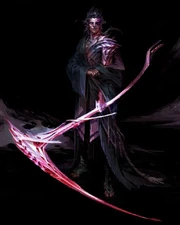
Zaahen adds the rarest angle: a Darkin who still fights against what the Darkin became. His role matters because it prevents the faction from becoming one-note. If Aatrox represents surrender to despair, Zaahen represents the brutal work of refusing it, even after corruption has already taken root.
Varus is the best place to feel the body-sharing tragedy of the Darkin at a human scale. The music video is not just about an archer with a cursed bow, but about love and vengeance being forced into the same body.
That is why Varus often feels quieter than Aatrox but just as important. His story turns the Darkin curse inward, where the battlefield is also the body.
The five central Darkin figures now give the faction more range than it used to have. Aatrox is annihilation, Rhaast is possession, Varus is fractured identity, Naafiri is pack purpose, and Zaahen is resistance from within corruption. Together, they explain why Darkin champions remain some of the most memorable in League lore.
Known Darkin beyond the main champions
Legends of Runeterra and related lore have named many more Darkin than the playable League roster. These names are useful because they show the size of the old Darkin threat, but they should be read carefully. Some appear most strongly through card-game material, where specific hosts and events may not carry the same canon weight as the main champion biographies.
| Darkin name | Known association | Why it matters |
|---|---|---|
| Xolaani | Bloodletters and bloodweaving | Xolaani represents the control-focused side of Darkin horror, where domination can become spiritual and bodily enslavement. |
| Joraal | Darkin aegis | Joraal adds a tragic defensive angle, showing that Darkin weapons are not limited to blades and bows. |
| Horazi | Darkin lodestone | Horazi connects the Darkin to Targonian imagery and the idea of celestial knowledge corrupted by imprisonment. |
| Taarosh | Darkin halberd | Taarosh reinforces the battlefield scale of the Darkin War and the many weapons left behind by it. |
| Ibaaros | Darkin harpoon | Ibaaros expands the Darkin threat into maritime and monster-like imagery tied to the Serpent Isles. |
| Anaakca | Darkin spear | Anaakca shows how far scattered Darkin prisons can reach from Shurima's original heartland. |
| Baalkux | Darkin staff | Baalkux is useful for showing that Darkin corruption can twist strange vessels beyond the usual humanoid host. |
| Naganeka | Darkin ballista | Naganeka makes the Darkin feel like living siege mythology, not only dueling weapons. |
| Styraatu | Darkin harp | Styraatu broadens the idea of a Darkin weapon into something artistic, eerie, and less expected. |
The safest way to use these names is as expanded Darkin context, not as replacements for the core League champions. They make the ancient war feel larger, but Aatrox, Naafiri, Rhaast, Varus, and Zaahen remain the most important starting points for most readers.
How the Darkin connect to other regions
The Darkin began in Shurima, but their story spreads across Runeterra because their weapons were scattered after the war. That makes the faction useful for understanding how ancient disasters still shape modern champions, kingdoms, and hidden conflicts.
| Region or faction | Darkin connection | Why it matters in lore |
|---|---|---|
| Runeterra | Scattered Darkin weapons | The Darkin are a global danger because their prisons can be found far from their Shuriman origin. |
| Shurima | Birthplace of the Ascended | Without Shurima's Ascended system, there would be no Darkin as they exist today. |
| The Void | Original war trauma | The Void War helped break the Ascended psychologically, setting up the fall into blood magic and tyranny. |
| Targon | Aspect intervention | Targon connects to the magic and knowledge used to seal the Darkin inside weapons. |
| Ionia | Varus, Rhaast, Xolaani, and spirit ties | Several Darkin stories touch Ionian lands, temples, and conflicts, especially through Varus and Kayn. |
| Noxus | Rhaast's discovery and Vladimir's blood magic legacy | Noxus shows how Darkin power can echo into modern empire, warfare, and hidden occult practice. |
| Freljord | Aatrox and Tryndamere | Aatrox's massacre gives the Darkin a personal link to northern survival stories. |
| Demacia | Darkin weapon implications | Demacia's anti-magic identity makes any Darkin artifact there especially dangerous and ironic. |
| Piltover | Artifact study comparison | Piltover's hunger for discovery offers a useful contrast to the danger of ancient weapons that should not be handled casually. |
| Zaun | Darkin Saga cave and host themes | Zaun's mines and experiments make it an easy place to imagine hidden relics becoming disasters. |
| Bilgewater | Darkin harpoon and sea routes | Bilgewater shows how dangerous artifacts can move through piracy, trade, and monster-hunting culture. |
| Shadow Isles | Shared themes of imprisonment and undeath | The Shadow Isles are not Darkin in origin, but both stories revolve around cursed survival after catastrophe. |
| Bandle City | Darkin Saga odd vessels | Bandle City adds a stranger, magical contrast to the usually grim tone of Darkin corruption. |
| Ixtal | Ancient magic comparison | Ixtal's control of elemental knowledge contrasts with the Darkin's loss of control through blood magic. |
| Camavor | Fallen-kingdom comparison | Camavor helps frame how royal obsession and cursed legacy can reshape the world long after a kingdom falls. |
| Icathia | The Void War's central wound | Icathia is the disaster that explains why the Ascended faced horrors capable of breaking even divine warriors. |
The Darkin also sit beside organizations like the Black Rose because forbidden blood magic, immortal schemes, and old Shuriman power all overlap in Noxian history. That does not make every blood mage a Darkin, but it does show how their influence survived outside their weapons.
Where to start with Darkin lore
A smart reading path starts with Aatrox, then moves to the Legend of the Darkin, Varus, Kayn and Rhaast, Naafiri, Zaahen, Vladimir, Nasus, Renekton, Azir, Pantheon, and the history of Shurima and Icathia. That order gives you the cleanest progression from Ascended glory to Void trauma, Darkin corruption, weapon imprisonment, and modern champion stories.
Use the Universe lore archive when you want official stories and champion bios. Then use RiftDaily's guides and broader lore hub to connect the Darkin to other factions, regions, and character arcs.
For a fast spoken overview, a focused lore recap can help before you jump into the official short stories and champion pages.
After that, a broader known-Darkin breakdown is useful if you want to understand the larger roster of named weapons from Legends of Runeterra and related lore discussions.
That broader view is best read with one caution: the main League champions and official stories should anchor your understanding, while card-game-only details should be treated as expanded context unless Riot folds them directly into mainline lore.
Frequently asked questions about Darkin
What are Darkin in League of Legends?
Darkin are corrupted Ascended warriors from ancient Shurima. After the Void War and the fall of Shurima, they became blood-magic tyrants and were eventually sealed inside their own weapons.
Who are the Darkin champions?
The main Darkin champions are Aatrox, Naafiri, Rhaast, Varus, and Zaahen. Rhaast is tied to Kayn rather than selected separately in champion select, but he is one of the most important Darkin characters in the lore.
Were the Darkin always evil?
No. The Darkin began as Ascended God-Warriors, created from mortal heroes to defend Shurima. Their corruption came later, after the trauma of ancient wars, Shurima's collapse, and their own use of blood magic.
Why are Darkin trapped in weapons?
The Darkin were too powerful to defeat cleanly, so the Aspects and mortal allies used magic to imprison them inside their own weapons. This ended the Great Darkin War, but it left the Darkin conscious and waiting for future hosts.
Is Aatrox the strongest Darkin?
Aatrox is usually treated as the most world-ending Darkin threat because his goal is not simple conquest. He wants to destroy existence itself if that is what it takes to end his suffering.
How is Varus different from other Darkin?
Varus is different because he shares one body with Kai and Valmar. Instead of completely erasing his hosts, he exists in a tense, unstable union with them, which gives his story a more emotional conflict.
How is the Void connected to the Darkin?
The Void War was one of the great traumas that damaged the Ascended who later became Darkin. The Darkin are not simply Voidborn, but the horrors they faced against the Void helped push them toward collapse.
Where can I get official League support?
For account help, technical issues, event questions, or live game support, use the official League of Legends support site rather than lore pages or community discussions.
Why the Darkin still feel dangerous
The Darkin remain memorable because they turn power into punishment. They were created to save the world, survived horrors that should have ended them, became monsters, and were then sealed into weapons where even silence could not give them peace. Every Darkin story starts with the same fear: someone is going to pick up the weapon.
The best way to read Darkin lore is not as a list of cursed swords. Read it as one of Runeterra's oldest tragedies, where divine champions became prisoners, and prisoners became predators. That is what makes Darkin champions worth revisiting, whether you continue through RiftDaily's guides or dig deeper into the site's wider lore coverage.