TFT Set 18 Enchanted Wilds is the 18th Teamfight Tactics set, released on August 26, 2026 with Patch 18.1. It introduces Wisps, 65 champions, 35 listed traits plus the hidden Eclipse interaction, the returning Carousel and TFT's transition to Unreal.
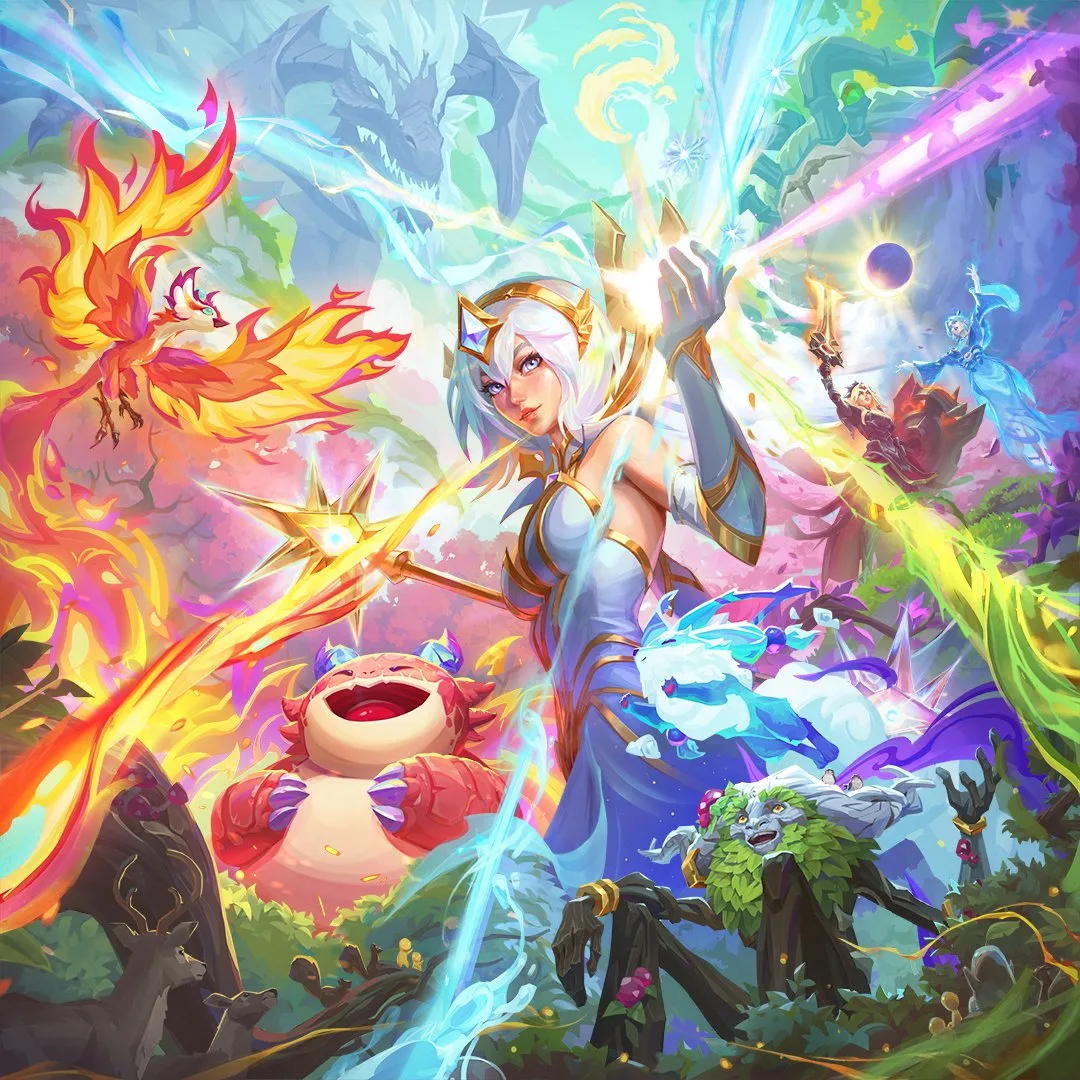
Enchanted Wilds sends TFT into a magical forest where economy, positioning and flexible team building matter as much as raw combat power. Wisps create new decisions inside the shop, Riftbeasts bring Summoner's Rift monsters onto your board, Elderwood grows placeable plants, Blossom turns the set mechanic into an entire vertical, and unusual 5-cost champions can reshape a late-game board.
TFT Set 18 Enchanted Wilds release date and key facts
TFT Set 18 Enchanted Wilds entered PBE testing on July 28, 2026 before going live on August 26, 2026. Riot's official Enchanted Wilds set page describes a forest that continually reshapes itself while rival factions compete for control and mysterious Wisps reward players willing to follow them.
| Set 18 detail | Enchanted Wilds information |
|---|---|
| Set | Teamfight Tactics Set 18 |
| Name | Enchanted Wilds |
| PBE start | July 28, 2026 |
| Live release | August 26, 2026 |
| Launch patch | Patch 18.1 |
| Champions | 65 |
| Listed traits | 35, plus the hidden Eclipse interaction |
| Main mechanic | Wisps |
| Returning system | Carousel |
| Major verticals | Blossom, Riftbeast, Coven, Elderwood, Sprykin, Blackthorn, Fae and Inferno |
| Technology | First live TFT set during the transition from Hextech technology to Unreal |
| Previous set | Space Gods remains playable alongside Set 18 for a limited number of patches |
The official trailer gives the fastest visual introduction to the champions, creatures and magical forest setting before getting into the systems that make Set 18 different to play.
The theme is more than presentation. Plants occupy meaningful board positions, jungle monsters become champions, celestial traits interact with one another and Wisps can change the value of the gold in your bank from one shop to the next.
What are Wisps in TFT Set 18 Enchanted Wilds?
Wisps are temporary, single-use shop purchases that can provide combat power, champions, gold, XP, items, shop manipulation or risk-reward effects. They are the defining mechanic of Enchanted Wilds and an updated version of Charms from Set 12, Magic N' Mayhem.
Riot's Enchanted Wilds overview lays out the core rules. A Wisp normally appears in every other shop, always occupies the rightmost slot and generally becomes stronger and more expensive as the game progresses.
- You can normally purchase one Wisp per round.
- Wisps appear in every other shop, not simply every other round.
- A Wisp always occupies the rightmost shop slot.
- Wisps can only be purchased during the planning phase.
- When planning ends, the Wisp disappears and reveals the champion hidden behind it.
- You still get to see that hidden champion even if you do not buy the Wisp.
- Most Wisps provide immediate or short-lived value instead of permanent power.
- Later stages generally offer stronger Wisps at higher prices.
- After Stage 5, every other Wisp is guaranteed to be a Combat Wisp, reducing late-game variance when searching for immediate strength.
- Traits such as Blossom can change the normal Wisp rules.
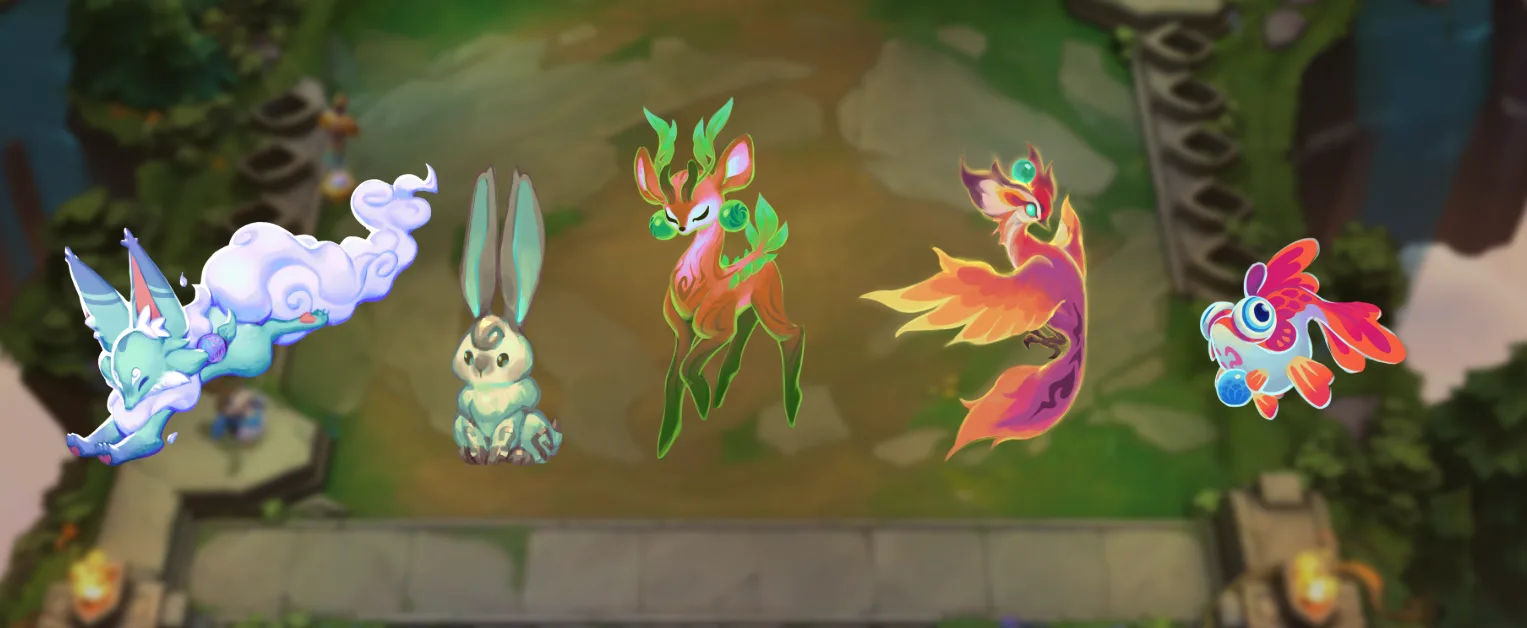
Riot's first Wisp demonstration shows how the mechanic occupies a normal shop slot without permanently hiding the champion behind it.
That rightmost-slot behavior is especially important during a fast roll-down. A Wisp is not just another purchase, it can change whether you should keep rolling, stop to preserve gold or temporarily strengthen an unfinished board.
The seven Wisp categories
Every Wisp belongs to one of seven color-coded categories. When a player buys one, its category icon also appears near that player's Tactician Health bar, giving opponents useful information while scouting.
| Wisp category | Patch 18.1 example | Example effect | Best use |
|---|---|---|---|
| Champion | Circle of Elders | Gain one of each 5-cost champion | Convert a large amount of gold into exceptional legendary access |
| Combat | Booster Shot | Temporarily upgrades eligible 1-star champions during combat | Stabilize an upcoming fight without permanently upgrading those units |
| Misc | Greater Chaos | Casts two random Wisps | Trade certainty for a chance at greater total value |
| Shop | All Fives | Rerolls the shop with 5-cost champions | Search for a legendary capstone or specific late-game unit |
| Gold/XP | Grow Up | Grants XP | Reach an important level without spending as much normal economy |
| Risky | Payday | Pays gold for allied champions that survive the next combat | Turn confidence in a strong board into additional economy |
| Item | Idle Craftsman | Transforms a bench component into a completed item it can build | Sacrifice component flexibility for immediate item tempo |
Some Wisps also have appearance conditions. A specialized option can depend on a trait, champion or item state, so the Wisp pool is not always completely detached from the board you are playing.
The visual language matters because a player may only have a few seconds to recognize the category while rerolling through a large amount of gold.
Once the category can be identified at a glance, it is easier to keep the roll-down moving and spend more attention on whether the Wisp is actually worth its price.
Riot also gave the Wisps distinct personalities and animations so the mechanic feels like part of the Enchanted Wilds rather than a hidden shop modifier.
The practical rule is simple: availability alone does not make a Wisp worth buying. Compare its value with interest, leveling, future rerolls and the possibility that you will need gold for a later Wisp.
How to decide whether a Wisp is worth buying
- Check your Health. Immediate Combat power becomes much more valuable when another loss could put you close to elimination.
- Check your next level. An XP Wisp can be worth more than its simple gold conversion if it reaches an important level without destroying your economy.
- Check your board state. Champion and Item Wisps are strongest when they solve a real upgrade or item problem.
- Scout likely opponents. A Combat Wisp has greater value when it can flip a close matchup.
- Keep spendable gold available. Rolling to zero can leave a powerful Wisp stranded in the shop.
- Account for Blossom. Blossom changes Wisp quality, frequency, economy and eventually the number you can buy in one round.
The Carousel returns in Enchanted Wilds
The Carousel returns in TFT Set 18 Enchanted Wilds after Set 17 moved away from the traditional shared draft. Players once again choose among visible champions carrying items, with pick order giving lower-Health players an opportunity to repair an item path or secure a valuable unit.
Patch 18.1 also gives Carousel rounds a chance to contain more champions or higher-cost champions than usual. That means the best pick is not always the component you planned to take. A rare champion that completes a major breakpoint can be worth changing direction for.
Our TFT Patch 18.1 guide covers the launch patch in more detail, while Riot's official Patch 18.1 notes document the system changes, Augment rotation, Unreal transition and post-launch fixes.
| System | What changed in Enchanted Wilds |
|---|---|
| Carousel | The shared draft returns, with some rounds able to offer more champions or higher-cost champions |
| Targeting | Champions no longer automatically forget their target after returning from crowd control |
| PvE loot | Missed loot from Stage 4-7 or later PvE rounds can overflow into the next PvE round |
| Opening Encounters | Several extreme openings were removed and replaced by more standard-style variants |
| Set variance | Wisps now supply a large part of the game-to-game decision variance |
New Opening Encounters in Patch 18.1
| Opening Encounter | Effect |
|---|---|
| Completed Item Anvil Start | All players begin with a Completed Item Anvil |
| Reroll Subscription | Gain rerolls at the start of each stage |
| Item Forge | All players begin with two Completed Item Anvils |
Loot Subscription, Artifact Anvil and Reroll Start were removed from the Opening Encounter pool for Set 18.
All 65 TFT Set 18 Enchanted Wilds champions
TFT Set 18 Enchanted Wilds contains 65 champions: 14 one-costs, 13 two-costs, 14 three-costs, 14 four-costs and 10 five-costs. The roster combines League champions with jungle creatures such as Gromp, Krug, Scuttlecrab, Brambleback and Elder Dragon.
For composition and strategy coverage as the meta develops, visit our TFT guides. The tables below focus on cost and trait connections so they remain useful even when individual ability numbers change in balance patches.
1-cost champions
| Champion | Cost | Traits |
|---|---|---|
| Akali | 1 | Inferno, Adaptor, Ravager |
| Camille | 1 | Coven, Ravager |
| Cinderling | 1 | Riftbeast, Hunter |
| Karma | 1 | Blossom, Spellweaver |
| Kobuko | 1 | Sprykin, Brawler |
| Leona | 1 | Solar, Defender |
| Ornn | 1 | Elderwood, Defender |
| Pebbles | 1 | Riftbeast, Invoker |
| Rakan | 1 | Fae, Juggernaut, Vanguard |
| Rek'Sai | 1 | Blackthorn, Brawler |
| Varus | 1 | Inferno, Rapidfire |
| Veigar | 1 | Blackthorn, Sprykin, Spellweaver |
| Xayah | 1 | Elderwood, Fae, Rapidfire |
| Yorick | 1 | Blossom, Juggernaut, Summoner |
2-cost champions
| Champion | Cost | Traits |
|---|---|---|
| Alistar | 2 | Elderwood, Brawler |
| Caitlyn | 2 | Coven, Hunter |
| Elise | 2 | Coven, Vanguard |
| Gromp | 2 | Riftbeast, Adaptor |
| Kayle | 2 | Solar, Rapidfire |
| LeBlanc | 2 | Elderwood, Spellweaver |
| Murkwolf | 2 | Riftbeast, Ravager |
| Scuttlecrab | 2 | Riftbeast, Juggernaut |
| Sejuani | 2 | Solar, Juggernaut |
| Shen | 2 | Inferno, Defender |
| Teemo | 2 | Sprykin, Invoker |
| Warwick | 2 | Blackthorn, Ravager |
| Yunara | 2 | Blossom, Executioner |
3-cost champions
| Champion | Cost | Traits |
|---|---|---|
| Azir | 3 | Blackthorn, Executioner, Summoner |
| Cassiopeia | 3 | Coven, Spellweaver |
| Diana | 3 | Lunar, Ravager, Vanguard |
| Fiddlesticks | 3 | Flora Fatalis, Defender, Spellweaver |
| Hecarim | 3 | Elderwood, Vanguard |
| Kha'Zix | 3 | Rival |
| Kog'Maw | 3 | Caustic, Invoker, Adaptor |
| Krug | 3 | Riftbeast, Brawler |
| Mama Beak | 3 | Riftbeast, Summoner, Rapidfire |
| Master Yi | 3 | Blossom, Adaptor |
| Rammus | 3 | Sprykin, Defender |
| Rengar | 3 | Rival |
| Tristana | 3 | Fae, Sprykin, Hunter |
| Vi | 3 | Primal, Juggernaut |
4-cost champions
| Champion | Cost | Traits |
|---|---|---|
| Ahri | 4 | Blossom, Spellweaver |
| Amumu | 4 | Inferno, Juggernaut |
| Aphelios | 4 | Lunar, Rapidfire |
| Brambleback | 4 | Riftbeast, Ravager |
| Ezreal | 4 | Elderwood, Executioner |
| Lillia | 4 | Fae, Defender |
| Malphite | 4 | Blackthorn, Monolith |
| Morgana | 4 | Coven, Invoker |
| Nidalee | 4 | Primal, Adaptor |
| Sentinel | 4 | Riftbeast, Vanguard, Invoker |
| Sett | 4 | Blossom, Brawler |
| Sivir | 4 | Primal, Hunter |
| Soraka | 4 | Flora Fatalis, Executioner |
| Zyra | 4 | Thornmaiden, Summoner |
5-cost champions
| Champion | Cost | Traits |
|---|---|---|
| Alune | 5 | Attuned, Lunar, Spellweaver |
| Ashe | 5 | Blossom, Hunter |
| Draven | 5 | Bounty Seeker |
| Elder Dragon | 5 | Apex Predator, Riftbeast |
| Gnar | 5 | Elderwood, Sprykin, Brawler |
| Ivern | 5 | Greenfather |
| Kennen | 5 | Inferno, Executioner |
| Lux | 5 | Avatar plus a chosen Origin |
| Maokai | 5 | Old Growth, Juggernaut |
| Taric | 5 | Emerald Aspect, Vanguard |
Seeing the roster in motion is useful because many Set 18 champions have mechanics that are not obvious from their trait labels alone.
The roster is deliberately interconnected. Low-cost champions open verticals, while expensive units often let you add a secondary class or complete a board without replacing its entire core.
All TFT Set 18 Enchanted Wilds traits
TFT Set 18 Enchanted Wilds has 35 listed traits: 23 Origins or champion-specific traits and 12 classes. There is also the hidden Eclipse interaction between Solar and Lunar, which is why some references effectively treat the set as having 36 trait mechanics.
Origins and unique traits
| Trait | Breakpoints | Champions | Core mechanic |
|---|---|---|---|
| Apex Predator | Unique | Elder Dragon | Elder Dragon uses two team slots and contributes +2 Riftbeast. |
| Attuned | Unique | Alune | Alune cycles through moon phases after casting, alternating team Durability and Damage Amp. |
| Avatar | Unique | Lux | Lux carries one of nine Origins and counts that Origin twice. |
| Blackthorn | 2 / 4 / 6 | Rek'Sai, Veigar, Warwick, Azir, Malphite, Lux via Avatar | Uses a special hex to turn one ally into the trait's sacrifice and stat engine. |
| Blossom | 3 / 5 / 7 / 9 / 11 | Karma, Yorick, Yunara, Master Yi, Ahri, Sett, Ashe, Lux | Empowers Wisps while also strengthening Blossom champions. |
| Bounty Seeker | Unique | Draven | Choose bounties for Draven to complete in exchange for rewards. |
| Caustic | Unique | Kog'Maw | Kog'Maw's damage Shreds Magic Resist and Sunders Armor. |
| Coven | 3 / 4 / 5 / 7 | Camille, Caitlyn, Elise, Cassiopeia, Morgana, Lux | Collect Essence from takedowns and losses, then cash it out for increasingly valuable rewards. |
| Elderwood | 3 / 5 / 7 / 9 / 11 | Ornn, Xayah, Alistar, LeBlanc, Hecarim, Ezreal, Gnar, Lux | Places increasingly powerful Elderwood plants on your board. |
| Emerald Aspect | Unique | Taric | Pairs Taric with an ally so both positions benefit from his defensive mechanic. |
| Fae | 2 / 4 | Rakan, Xayah, Tristana, Lillia, Lux | Damage, healing and shielding attract Pixies that strengthen and heal Fae champions. |
| Flora Fatalis | 1 / 2 | Fiddlesticks, Soraka | Takedowns grant Mana, with the second breakpoint adding team healing. |
| Greenfather | Unique | Ivern | Ivern gathers seeds and grows empowered terrain hexes across the board. |
| Inferno | 2 / 3 / 5 / 7 | Akali, Varus, Shen, Amumu, Kennen, Lux | Adds Burn and Wound while higher tiers ignite shop slots to roll higher-tier champions. |
| Lunar | 2 / 3 / 4 / 5 | Diana, Aphelios, Alune, Lux via Avatar | Lunar champions and adjacent allies gain Attack Speed and Ability Power. |
| Monolith | Unique | Malphite | Malphite gains Armor and Magic Resistance for enemies targeting him. |
| Old Growth | Unique | Maokai | Maokai permanently gains maximum Health when nearby enemies die. |
| Primal | 2 / 4 | Vi, Nidalee, Sivir, Lux via Avatar | Lets you choose from Primal Blessings that alter how the board plays. |
| Riftbeast | 3 / 5 / 7 / 10 | Cinderling, Pebbles, Murkwolf, Gromp, Scuttlecrab, Mama Beak, Krug, Brambleback, Sentinel, Elder Dragon | Uses an Alpha Mark, Riftbeast-heavy shops, in-combat growth and extra maximum team size. |
| Rival | 1 / 2 | Kha'Zix, Rengar | Rivals progress through takedowns while played separately and gain linked ability bonuses together. |
| Solar | 3 plus 3-star milestones | Leona, Kayle, Sejuani, Lux via Avatar | Grants shielding and bonus magic damage, with additional rewards for unique 3-star champions. |
| Sprykin | 3 / 5 / 7 | Kobuko, Veigar, Teemo, Tristana, Rammus, Gnar | Creates the Big Furry Friend and lets a chosen Rider gain major combat bonuses. |
| Thornmaiden | Unique | Zyra | Zyra's plants contribute additional team Durability. |
Classes
| Class | Breakpoints | Champions | Main benefit |
|---|---|---|---|
| Adaptor | 2 / 3 / 4 | Akali, Gromp, Kog'Maw, Master Yi, Nidalee | Changes abilities according to whether AD or AP is higher and amplifies the stronger stat. |
| Brawler | 2 / 4 / 6 | Kobuko, Rek'Sai, Alistar, Krug, Sett, Gnar | Provides Health, with a larger bonus for Brawlers. |
| Defender | 2 / 4 / 6 | Leona, Ornn, Shen, Rammus, Fiddlesticks, Lillia | Provides Armor and Magic Resistance, with more for Defenders. |
| Executioner | 2 / 3 / 4 | Yunara, Azir, Ezreal, Soraka, Kennen | Provides Precision and Critical Strike Chance, with deeper tiers adding offensive pressure. |
| Hunter | 2 / 3 / 4 / 5 | Cinderling, Caitlyn, Tristana, Sivir, Ashe | Grants Attack Damage and rewards Hunters for focusing the same target. |
| Invoker | 2 / 3 / 4 / 5 | Pebbles, Teemo, Kog'Maw, Morgana, Sentinel | Improves team Mana regeneration, with a stronger bonus for Invokers. |
| Juggernaut | 2 / 4 / 6 | Rakan, Yorick, Scuttlecrab, Sejuani, Vi, Amumu, Maokai | Provides team Durability, with a much larger benefit for Juggernauts. |
| Rapidfire | 2 / 3 / 4 / 5 | Varus, Xayah, Kayle, Mama Beak, Aphelios | Builds Attack Speed through repeated attacks. |
| Ravager | 2 / 4 / 6 | Akali, Camille, Murkwolf, Warwick, Diana, Brambleback | Provides Omnivamp and bonus damage, including stronger finishing pressure. |
| Spellweaver | 2 / 4 / 6 | Karma, Veigar, LeBlanc, Cassiopeia, Fiddlesticks, Ahri, Alune | Provides Ability Power and builds additional AP as Spellweavers cast. |
| Summoner | 2 / 3 | Yorick, Azir, Mama Beak, Zyra | Enhances the summoned units or summon mechanics of its champions. |
| Vanguard | 2 / 4 / 6 | Rakan, Elise, Diana, Hecarim, Sentinel, Taric | Creates substantial defensive shielding during combat. |
How the hidden Eclipse trait works
Eclipse activates when you field three Solar and three Lunar champions. In Patch 18.1, after 10 seconds of combat, Eclipse kills the lowest-Health enemy. The execution then repeats every 3.5 seconds.
That hidden interaction makes Solar and Lunar more than two unrelated support packages. Lunar rewards careful adjacency, while Solar scales with unique 3-star champions. Avatar Lux can represent either Origin, giving late-game boards another route to the Eclipse requirement.
Other unique traits worth knowing
- Attuned: Alune changes the moon phase after each cast. At or below half full, the team gains Durability. Above half full, the team gains Damage Amp.
- Caustic: Kog'Maw's damage applies Armor Sunder and Magic Resist Shred, making him useful beyond his own damage output.
- Flora Fatalis: Fiddlesticks and Soraka gain Mana from takedowns, while the deeper breakpoint also supports the lowest-Health ally.
- Monolith: Malphite becomes tougher as more enemies target him, rewarding positioning that draws attention toward him.
- Rival: Kha'Zix and Rengar develop separate takedown-based rewards when only one Rival is active. Fielding both changes the mechanic and links their abilities instead.
- Solar: the team gains shielding and bonus magic damage, with additional milestones for unique 3-star champions.
- Thornmaiden: Zyra's plants add team Durability, with greater value when she has enough plants alive.
How the major Enchanted Wilds traits actually play
The full trait list is useful for planning, but the largest TFT Set 18 Enchanted Wilds verticals create their own decision systems. Understanding those mechanics is more valuable than memorizing every balance number, since exact percentages can move between patches.
Blossom turns Wisps into an economy and combat engine
Blossom is the trait most closely tied to Wisps. Blossom champions gain combat stats, while each breakpoint progressively improves or rewrites the normal Wisp rules.
- 3 Blossom: Wisps are upgraded.
- 5 Blossom: Wisps appear in every shop.
- 7 Blossom: buying a Wisp grants 4 gold in Patch 18.1.
- 9 Blossom: you can buy two Wisps in one round.
- 11 Blossom: Wisps reach the trait's extreme Prismatic payoff.
Blossom 7 is an important decision point because the vertical becomes an economy engine as well as a combat trait. If reaching 9 or 11 would weaken the rest of your board, using the extra Wisp value to add premium units can be the better choice.
Riot's Blossom showcase demonstrates why the trait plays differently from a normal vertical that only grants more stats.
Ahri supplies the big caster payoff, while Sett gives Blossom a durable 4-cost frontline option. Riot's reveal highlighted Ahri's large Spirit Bomb-style cast and Sett's ability to recover before delivering physical damage, giving the Wisp-focused trait substantial combat power of its own.
Riftbeast makes one jungle monster your Alpha
Riftbeast brings Summoner's Rift jungle monsters directly into the Convergence. At three Riftbeasts, the Alpha Mark lets you choose a Riftbeast for its unique enhancement.
- 3 Riftbeast: unlock the Alpha Mark.
- 5 Riftbeast: every three combats, your next shop is overrun with Riftbeasts.
- 7 Riftbeast: Riftbeasts grow at combat start and every five seconds, gaining additional stats.
- 10 Riftbeast: gain +2 maximum team size in the live Patch 18.1 version.
The live Riftbeast 10 value is important because Riot's July reveal originally showed +1 maximum team size. The launch version is stronger, so older previews can display an outdated number.
An Alpha Mark is not automatically best on the unit dealing the most damage. Riot's examples include Mama Beak applying Armor Sunder and Scuttlecrab offering team utility. Marking a carry can create a super-carry, while marking a tank can improve the whole board.
The Riftbeast showcase makes the trait's scale clear once several monsters begin growing during the same fight.
The vertical has a high late-game ceiling, but the Alpha Mark gives Riftbeast immediate value well before Elder Dragon appears.
Coven converts dangerous losses into Essence
Coven is the high-risk economy line of Enchanted Wilds. It gathers Essence when enemy champions die and grants additional Essence when you lose player combat. In Patch 18.1, cashout decisions begin once you reach 40 Essence.
The best Coven loss is therefore not a complete wipeout. Killing several enemy units while narrowly losing creates kill-based Essence, preserves more Tactician Health and still advances the loss-based economy plan. The real skill is deciding whether the next cashout is worth the Health needed to reach it.
Elderwood turns positioning into part of the trait
Elderwood grants placeable plants instead of hiding all of its power inside stat bonuses. Those summons occupy meaningful locations, so positioning becomes part of the vertical's power budget.
- 3 Elderwood: gain a Stonebark Tree and Lifebloom.
- 5 Elderwood: gain a second Stonebark Tree, with the Stonebark Trees also gaining additional Health.
- 7 Elderwood: add the Deepwood Protector.
- 9 Elderwood: plants star up to 2-star.
- 11 Elderwood: plants reach 3-star and the forest reaches its Prismatic payoff.
Plants also gain maximum Health and Ability Power with their Elderwood star level. A good Elderwood player therefore has to consider enemy targeting, area damage and which plant placement best protects the real carries.
Riot's Elderwood demonstration shows how much extra board presence the vertical creates at its deeper breakpoints.
Elderwood can support reroll directions through Alistar and LeBlanc, mixed boards involving Ezreal or higher-level setups built around Gnar. That variety keeps the trait from demanding exactly the same final board every game.
Sprykin lets a champion ride the Big Furry Friend
Sprykin summons the Big Furry Friend. A Sprykin champion can become its Rider and receive significant Health and Attack Speed, while deeper breakpoints spread more of the BFF's value to the rest of the composition.
A Sprykin Emblem creates unusual possibilities because another champion can qualify for the Rider interaction. That turns the Rider into a real build-around choice rather than a fixed unit you select every game.
Riot's Sprykin showcase illustrates how dramatically the Big Furry Friend can change both the board and the champion riding it.
Teemo adds an economy angle through Fungus Among Us. His special mushrooms can provide benefits such as rerolls, Tactician Health or XP, giving Sprykin another source of flexible value.
Blackthorn asks what you are willing to sacrifice
Blackthorn creates a special hex and uses its occupant as the center of the trait. The unit on that hex feeds power into the Blackthorn mechanic, with the payoff depending on factors such as combat role, star level and cost.
This creates a meaningful opportunity cost. A cheap unit may be easy to give up but contribute less value, while committing an expensive or upgraded champion can produce a larger payoff at the cost of combat power you might otherwise have fielded normally.
Riot's original Blackthorn showcase explains the sacrifice concept clearly, although its July numerical values should not be treated as current Patch 18.1 balance data.
Azir is particularly interesting because one 3-cost connects Blackthorn, Executioner and Summoner. That gives reroll Azir boards several ways to convert the trait's special hex into offensive scaling.
Fae grows Pixies into late-game value
Your team's damage, healing and shielding attract Pixies. Those Pixies increase the offensive stats of Fae champions and help heal them once they fall below half Health.
At Fae 4, attracting seven normal Pixies causes the trait to begin producing Golden Pixies, which grant gold. That gives an early Fae board time to turn normal combat output into a late-game economy advantage.
The stacking mechanic is easiest to understand once the Pixies are visible during a fight.
A Fae Avatar Lux can also make the four-unit breakpoint easier to reach without sacrificing as many slots on a premium late-game board.
Inferno combines Burn, Wound and better shop access
Inferno damage Burns and Wounds enemies. Burn deals a percentage of the target's maximum Health as true damage over time, while Wound reduces healing received.
The unusual part begins at Inferno 3. After combat, a non-Inferno shop slot can ignite and roll a champion one cost tier higher. Deeper breakpoints ignite additional slots while increasing the Burn.
Inferno Burn can stack with another Burn source, so activating the trait does not automatically make Sunfire Cape, Morellonomicon or another burn effect irrelevant.
That combination gives Inferno two jobs. It pressures healing-heavy opponents during combat while also giving the player earlier access to expensive champions through ignited shop slots.
Adaptor changes abilities according to your items
Adaptor champions have different ability behavior depending on whether Attack Damage or Ability Power is higher. The trait also amplifies whichever offensive stat is already dominant.
Nidalee is the clearest example. AP itemization keeps her at range and turns attacks into damaging javelins, while AD itemization transforms her into a melee cougar that swipes through enemies and leaps toward new targets after securing kills.
That makes the opponent's Nidalee items as important to scout as her trait list.
Adaptor rewards flexible item slams because a unit is less likely to become useless when the game gives you the opposite offensive components from the ones you originally expected.
The 5-cost champions that can reshape a game
Teamfight Tactics Set 18 Enchanted Wilds has a mechanics-heavy legendary roster. Several 5-cost champions introduce their own trait, terrain, bounty, transformation or board-building rule instead of functioning as simple upgrades over cheaper units.
| 5-cost | What makes the champion unusual |
|---|---|
| Alune | Cycles moon phases through Attuned while also providing Lunar and Spellweaver |
| Ashe | Caps Blossom and Hunter as a premium ranged physical carry |
| Draven | Creates a repeating bounty mini-game with combat objectives and rewards |
| Elder Dragon | Occupies two team slots, contributes +2 Riftbeast and brings major crowd control |
| Gnar | Transforms into Mega Gnar and links Elderwood, Sprykin and Brawler |
| Ivern | Grows an entire biome of empowered hexes through Greenfather |
| Kennen | Connects Inferno and Executioner with a powerful late-game damage package |
| Lux | Can appear with one of nine Avatar Origins and counts the selected Origin twice |
| Maokai | Builds permanent maximum Health from nearby enemy deaths |
| Taric | Pairs with another champion and protects both positions through Emerald Aspect |
Elder Dragon is a two-slot Riftbeast
Elder Dragon takes two team slots but contributes +2 Riftbeast through Apex Predator. Its power budget includes a durable body, cleaving attacks, a board-wide stun and continued damage after its major cast.
Alpha Marking Elder Dragon adds an execution effect when it damages an enemy below 12% Health in Patch 18.1, turning an already expensive commitment into one of the strongest Riftbeast capstones.
Riot's Elder Dragon showcase makes the tradeoff easier to see, particularly once the unit begins controlling a large part of the battlefield by itself.
Adding Elder Dragon is not the same as casually splashing another legendary because every board slot it consumes has an opportunity cost. Riftbeast 10's extra team size helps offset that cost on the deepest vertical boards.
Ivern and Greenfather grow a biome across your board
Ivern's Greenfather mechanic gathers seeds and turns them into empowered terrain. In Patch 18.1, the strongest Ivern gains a seed when he casts plus additional seeds each combat, then spends five seeds to grow another enhanced hex.
| Ivern hex | Bonus | Biomes containing the hex |
|---|---|---|
| Tree | Maximum Health | Forest, Bog, Mountainside |
| Rock | Armor and Magic Resistance | Waterfall, Creek, Mountainside |
| Water | Mana regeneration | Bog, Waterfall, Creek |
| Flower | Attack Speed | Forest, Creek, Mountainside |
| Mushroom | Damage amplification | Forest, Bog, Waterfall |
The God-Willow is the final hex planted and appears in the center of the board. Ivern's own spell shields allies, adds Damage Amp and becomes more threatening after repeated casts.
Riot's reveal specifically highlighted cast-heavy Ivern setups, including combinations such as double Spear of Shojin with Guinsoo's Rageblade or other Mana-focused builds with Adaptive Helm. Because his shields can critically strike with Precision, Jeweled Gauntlet can also interact with his kit rather than being a completely wasted AP item.
Ivern is one example of how Enchanted Wilds lets a legendary solve a board problem without needing to share several traits with the rest of the composition.
That flexibility is one reason fast 8 and fast 9 boards have so many possible endpoints in TFT Set 18 Enchanted Wilds.
Maokai and Taric provide premium frontline
Maokai is a Health-focused legendary tank. Old Growth permanently increases the strongest Maokai's maximum Health when enemies die nearby, while his ability lets him restore Health and continue generating sapling pressure as he absorbs damage.
Taric is more positional. Emerald Aspect pairs him with an ally. The first time Taric or that partner falls below half Health, emerald energy erupts from both positions and shields nearby allies. His active ability also restores Health and empowers the next attacks of the pair.
Riot introduced the two as flexible legendary frontline options for boards that reach the late game with plenty of damage but not enough time for their carries to work.
Taric is strongest when the paired ally makes good use of protection from a second location, while Maokai is easier to splash when you simply need a durable tank that becomes harder to remove as the fight progresses.
Draven turns combat into a bounty hunt
Draven's only trait is Bounty Seeker because the trait is effectively a mini-game of its own. Fielding Draven lets you choose a bounty, and completing it pays the reward before allowing another bounty to be selected.
His attacks apply Bleed, while his cast targets the enemy carrying the most Bleed and converts the remaining damage into an immediate burst. That finishing power is especially useful when the active bounty asks for kills or damage.
The gameplay showcase demonstrates how the bounty system runs alongside normal combat rather than becoming a separate economy screen.
Easy bounties are safer but pay less. Harder objectives can be worth selecting when Draven is already positioned and itemized to complete them naturally.
Draven bounty examples from Riot's reveal
Riot showed the following Bounty Seeker examples before PBE. They remain useful for understanding the range of objectives the mechanic can create, but individual rewards should be treated as reveal examples rather than guaranteed live balance values.
| Bounty shown by Riot | Reveal reward |
|---|---|
| 50 attacks | 5-cost champion |
| 8,000 damage in one combat | B.F. Sword |
| 5 casts | Two 4-cost champions |
| 8 casts | 10 rerolls |
| 40,000 damage | 30 gold |
| 12,000 damage | 12 gold |
| Deal the most damage | 2 rerolls |
| 6 kills | 7 gold |
| 15 kills | 1 item |
| Survive 3 combats | 2 components |
| 14 takedowns | 10 XP |
Lux returns as the Avatar
Lux is one of the most flexible champions in TFT Set 18 Enchanted Wilds. Avatar Lux can represent one of nine Origins, and the selected Origin counts twice toward its trait breakpoint.
In the live version, having an Avatar Lux on your bench or board transforms other Avatar copies in your shop to the same Origin. That means changing to a different Avatar aspect requires more planning than simply buying whichever Lux appears next.
Lux also grants Mana to allies that share a trait with her when she casts, while Final Spark gains an additional effect based on the Avatar Origin.
| Patch 18.1 Lux Origin | Live Final Spark bonus |
|---|---|
| Blackthorn | Stuns targets hit for 1 second |
| Blossom | The first target hit takes 10% bonus damage |
| Coven | Reduces Armor and Magic Resist of targets hit by 8 for the rest of combat |
| Elderwood | Each cast grants all allies 2.5% increased maximum Health for the rest of combat |
| Fae | Heals the lowest-percentage-Health ally for 18% of ability damage dealt |
| Inferno | Restores 10 Mana per takedown |
| Lunar | Applies 10% Vulnerable to enemies hit for 4 seconds |
| Primal | Grants Lux 60% Attack Speed for 6 seconds after casting |
| Solar | Deals 12% bonus damage for each unique 3-star champion fielded |
The correct Lux is usually the one that changes a meaningful breakpoint, not simply the first 5-cost version you see.
That flexibility is particularly valuable for large verticals such as Blossom, Elderwood and Inferno. Solar or Lunar Lux can also help a board reach the hidden Eclipse condition.
Alune, Ashe, Gnar and Kennen complete the legendary roster
- Alune: combines Attuned, Lunar and Spellweaver. Her moon phase changes after each cast, alternating the team's Durability and Damage Amp bonuses.
- Ashe: caps Blossom and Hunter, giving Wisp-focused boards a premium ranged physical carry.
- Gnar: links Elderwood, Sprykin and Brawler. Mega Gnar brings Health, resistance reduction and major disruption to the frontline.
- Kennen: connects Inferno and Executioner, gaining power from Burning enemies before diving through a group and creating a damaging firestorm.
Enchanted Wilds Augments to know in Patch 18.1
The Set 18 Augment pool includes options built directly around Wisps alongside returning and reworked Augments. These are especially useful to learn because they can change the value of the set mechanic or alter a normal economy plan.
| Augment | Patch 18.1 effect | Why it matters |
|---|---|---|
| Wisp Rebate | Gain 2 gold each time you purchase a Wisp, plus 4 gold immediately | Reduces the effective long-term cost of buying Wisps |
| Residual Magic | Your team gains 60 Health, then another 10 Health for each Wisp purchased | Converts repeated interaction with the set mechanic into permanent combat strength |
| Blossom's Call | Buying a Wisp grants a random Blossom champion based on the Wisp's cost, and the Augment starts you with Yunara, Yorick and Karma | Links the Wisp economy directly to building the Blossom vertical |
| Birthday Reunion | Gain a random 2-star 2-cost champion, a component at Level 6 and a random 2-star 5-cost at Level 9 | Rewards a leveling plan with staged power spikes |
| Young and Wild and Free | Move freely on Carousel rounds and gain 5 gold | Becomes relevant again because Carousel has returned |
| Max Build | Gain 10 free shop rerolls, then 3 more rerolls and a Champion Duplicator at Level 9 | Provides immediate search power plus another late-game payoff |
| Pandora's Bench | The three rightmost bench slots reroll into random champions of the same cost each round, and you gain 4 gold | Creates an alternative way to hunt upgrades without repeatedly buying shop rerolls |
Residual Magic also has stronger variants, while Wisp Rebate can appear in an upgraded form with more immediate gold. Riot can adjust the Augment pool independently of the set's core traits, so exact Augment values are more patch-sensitive than the basic Wisp rules.
Enchanted Wilds starts TFT's live transition to Unreal
There is a major technical change underneath TFT Set 18 Enchanted Wilds. Patch 18.1 is the first live set released during Teamfight Tactics' transition from Riot's previous Hextech technology to Unreal.
For players returning after a long break, Teamfight Tactics remains the same core auto-battler: buy champions from a shared pool, manage economy, combine traits and items, position the board and adapt to opponents. The engine transition changes the technology supporting that loop rather than replacing the fundamentals.
| Launch difference | What it means |
|---|---|
| Loading times | Riot warned that Enchanted Wilds could take longer than normal to load while optimization work continues |
| Minimap and pings | The minimap is absent at launch, with pings being reworked into a social tool that does not depend on it |
| Friend spectating | Friend spectating was not ready for launch and is planned as a longer-term spectator improvement |
| Finishers | Some Finishers use a temporary video-based implementation while they are rebuilt for Unreal |
| Cosmetic migration | Riot is bringing the existing TFT cosmetic catalogue into Unreal progressively |
| Patch size | The initial transition requires a large download, while later patches are expected to be smaller |
Minimum PC requirements for the Unreal transition
- Windows 10, version 19041 or newer
- DirectX 11, Feature Level 4.3
- Shader Model 5
Riot says minimum mobile requirements remain broadly similar, with older 2 GB iOS devices and 2 GB or 3 GB Android devices among the exceptions affected by the transition.
Post-launch fixes are already part of Patch 18.1
Riot shipped multiple fixes on August 27 and August 28 for memory leaks, loading behavior, mobile performance, settings, sound and several gameplay bugs. Double Up was temporarily disabled during one fix cycle and was subsequently re-enabled.
Follow our latest game updates and TFT and gaming news as the live build develops. Riot also posts fast-moving notices through the official TFT account on X, while account, installation and technical issues can be handled through Riot's Teamfight Tactics support.
Enchanted Wilds cosmetics and forest presentation
The official TFT Set 18 Enchanted Wilds page highlights new Chibi Champions, Unbound Champions and Little Legends. Its three featured Tacticians are Prestige Chibi Immortal Journey Shyvana, Chibi Soul Fighter Jinx and Chibi Office Aatrox.
- Prestige Chibi Immortal Journey Shyvana: built around Shyvana's human and dragon forms.
- Chibi Soul Fighter Jinx: brings the Soul Fighter tournament aesthetic into TFT.
- Chibi Office Aatrox: puts Aatrox into a corporate office theme, complete with a cubicle-inspired presentation.
Patch 18.1 also begins migrating a much larger catalogue of Arenas, Booms, Tacticians and other cosmetics to Unreal, with additional content arriving over subsequent patches. More official showcases can be found on the Teamfight Tactics YouTube channel.
The Heart of the Forest cinematic focuses on the personality and characters of the Wilds rather than teaching its competitive systems.
It captures the set's central contrast: the forest can look playful and welcoming one moment, then put enormous monsters, rival factions and ancient magic on the same battlefield the next.
The official soundtrack carries the same identity into the audio design, moving between adventurous woodland themes and calmer magical passages.
That cohesive presentation helps Enchanted Wilds retain a clear identity even after players have finished learning the initial roster and trait list.
How to play TFT Set 18 Enchanted Wilds better
The biggest mistake in a new TFT set is memorizing one final board before understanding the systems that create it. TFT Set 18 Enchanted Wilds rewards players who know when to spend, when to pivot and which special mechanic is actually carrying their board.
- Build the strongest opener you can actually upgrade. Two-star champions and functional early traits are more reliable than holding several units for a theoretical final composition.
- Learn Wisp economy before forcing comps. The decision to buy or skip a Wisp affects every game, regardless of the composition you eventually play.
- Leave gold for a Wisp after rolling. Spending the final coins on rerolls can be a mistake if a combat-changing Wisp is still available.
- Know whether a trait is an engine or the destination. Blossom 7, Riftbeast 5 and other intermediate breakpoints can generate enough value to justify adding premium standalone units instead of chasing the deepest vertical.
- Scout mechanics, not only positions. Check Wisp icons, Alpha Marks, Blackthorn hexes, Elderwood plants, Ivern terrain, Lux Origins and Sprykin Riders.
- Reassess the board when legendary shops become available. Ivern, Maokai, Taric, Gnar, Lux and Elder Dragon solve very different problems.
- Use the returning Carousel to repair your plan. The best pick may be a missing component, contested champion or high-cost unit that changes the next transition.
- Respect hidden Eclipse boards. Three Solar plus three Lunar activates an execution mechanic after 10 seconds, so those boards become increasingly dangerous in long fights.
Common Enchanted Wilds mistakes
- Buying every Wisp without comparing its value with interest, leveling or rerolls.
- Rolling to zero and being unable to afford the Wisp that could save the next combat.
- Using the same Alpha Mark target in every Riftbeast game.
- Ignoring Elderwood plant placement or Ivern's empowered terrain.
- Giving Blackthorn an expensive unit without considering how much combat value the special hex is costing you.
- Greeding Coven Essence until too little Health remains to convert the cashout into wins.
- Buying Avatar Lux without checking whether her Origin changes a useful breakpoint.
- Forgetting that Elder Dragon consumes two team slots.
- Itemizing Nidalee without considering which Adaptor form those items create.
- Chasing a Prismatic vertical when a smaller breakpoint plus premium 5-costs would create a stronger board.
New players can play Teamfight Tactics for free through Riot on supported platforms.
Frequently asked questions about TFT Set 18 Enchanted Wilds
When did TFT Set 18 Enchanted Wilds release?
TFT Set 18 Enchanted Wilds released on August 26, 2026 with Patch 18.1. PBE testing began on July 28, 2026.
How many champions are in Enchanted Wilds?
Enchanted Wilds has 65 champions: 14 one-costs, 13 two-costs, 14 three-costs, 14 four-costs and 10 five-costs.
How many traits are in TFT Set 18?
TFT Set 18 has 35 listed traits, consisting of 23 Origins or unique traits and 12 classes. Solar and Lunar can also activate the hidden Eclipse interaction, which is why some references effectively count 36 trait mechanics.
What are Wisps in Enchanted Wilds?
Wisps are single-use shop purchases that can provide combat power, champions, items, XP, gold, shop effects or risky rewards. They are an updated version of the Charms mechanic from Set 12, Magic N' Mayhem.
How often do Wisps appear?
Wisps normally appear in every other shop and always occupy the rightmost slot. You can normally purchase one Wisp per round. Blossom can change both their frequency and the number you are allowed to buy.
Is the Carousel back in Enchanted Wilds?
Yes. The Carousel returns in TFT Set 18 Enchanted Wilds. Some Carousel rounds can also contain additional champions or higher-cost champions than normal.
How do you activate Eclipse in TFT Set 18?
Field three Solar and three Lunar champions to activate Eclipse. After 10 seconds of combat, Eclipse kills the lowest-Health enemy and then repeats the execution every 3.5 seconds.
How does Lux Avatar work in Enchanted Wilds?
Lux can represent Blackthorn, Blossom, Coven, Elderwood, Fae, Inferno, Lunar, Primal or Solar. Her chosen Origin counts twice toward that trait, and Final Spark receives a different bonus based on the selected Avatar aspect.
Master the Wilds one decision at a time
TFT Set 18 Enchanted Wilds rewards players who can separate permanent strength from temporary opportunity. Wisps change the value of gold from shop to shop, the Carousel can repair an item path, traits such as Blossom, Coven and Riftbeast create their own mini-games, and the legendary roster gives late-game boards several completely different ways to cap out.
Start by mastering Wisp timing, then learn the major trait breakpoints and unusual 5-cost mechanics. Keep our TFT hub nearby for strategy guides, use the Patch 18.1 guide for launch-specific changes, and follow our latest updates and news coverage as balance patches reshape Enchanted Wilds.