Freljord is the harsh northern region of League of Legends, known for brutal winters, ancient demi-gods, True Ice, and tribes fighting over the future of the frozen lands. It looks simple at first, snow, raiders, monsters, and survival, but Freljord lore becomes much deeper once you see the struggle between Ashe, Sejuani, Lissandra, and the forgotten horrors beneath the ice.
At its best, Freljord stands for endurance, loyalty, family, and the will to survive impossible conditions. At its worst, it turns strength into domination, secrecy into control, and old myths into weapons. That tension is why the region works so well in Runeterra. Every major Freljord story asks the same question in a different way: what does survival cost?
If you want the short version, Freljord is a frozen land shaped by ancient magic, tribal politics, and a three-way conflict between the Avarosans, the Winter's Claw, and the Frostguard. That one conflict connects almost everything important in the region, from Ashe and Tryndamere to Sejuani, Lissandra, Ornn, Volibear, Anivia, Nunu, Willump, and the Watchers.
Freljord at a glance
- What Freljord is: an icy northern region of Valoran built around survival, tribal loyalty, and ancient magic.
- What Freljord is known for: True Ice, warmothers, demi-gods, yetis, trolls, raiding culture, and the Howling Abyss.
- What drives Freljord lore: the clash between unity, conquest, secrecy, and old powers waiting beneath the ice.
- Why Freljord matters: it turns a frozen survival region into one of Runeterra's biggest mythic and political pressure points.
Freljord champions
The fastest way to understand Freljord is through its champions. Each one shows a different side of the north, from tribal leadership and old gods to survival, myth, isolation, and the power hidden in True Ice. For official champion bios and profiles, the League of Legends site is the cleanest place to start.
| Champion | Role in Freljord | Why the champion matters |
|---|---|---|
 Ashe | Avarosan warmother and unifier | Ashe is the clearest hope for a united Freljord, because she tries to turn survival into peace instead of endless raiding. |
 Anivia | Ancient demi-god of ice and rebirth | Anivia gives Freljord its mythic cycle of destruction and renewal, making the land feel alive rather than merely cold. |
 Aurora | Spirit-seeing mage from the north | Aurora adds a quieter spiritual angle to Freljord, showing how strange the boundary between people, spirits, and magic can be. |
 Braum | Legendary hero and protector | Braum represents the generous side of Freljord strength, where courage is measured by how many people you protect. |
 Gnar | Ancient yordle displaced by time | Gnar turns Freljord into a living fossil record, connecting the present to a prehistoric age of beasts and survival. |
 Gragas | Wandering brewer chasing the perfect drink | Gragas shows the rowdier everyday side of the north, where hard living, strong drink, and stubborn independence all fit naturally. |
 Lissandra | Frostguard ruler and keeper of buried truth | Lissandra is central to Freljord lore because she hides the region's oldest disaster beneath religion, myth, and ice. |
 Nunu & Willump | Child dreamer and ancient yeti companion | Nunu and Willump reveal the wonder still left in Freljord, especially through lost yeti magic, friendship, and imagination. |
 Olaf | Warrior obsessed with a glorious death | Olaf captures Freljord fatalism, where survival is brutal but death without honor can feel even worse. |
 Ornn | Demi-god of forge, craft, and solitude | Ornn gives Freljord its deeper craft tradition and shows that strength can mean patience, making, and endurance. |
 Sejuani | Winter's Claw warmother and raider queen | Sejuani is Ashe's sharpest political opposite, proving that many Freljordians see mercy as weakness and conquest as survival. |
 Trundle | Troll king with a True Ice club | Trundle brings the troll lands into Freljord politics and shows how cunning can matter as much as size. |
 Tryndamere | Barbarian king and Ashe's oathbound ally | Tryndamere ties personal vengeance, tribal politics, and alliance-building into one of the region's most important marriages. |
 Udyr | Spirit walker shaped by primal forces | Udyr makes Freljord's spirit world feel immediate, dangerous, and deeply tied to the instincts of the land. |
 Volibear | Demi-god of storm, savagery, and old ways | Volibear embodies the terrifying side of ancient Freljord, where civilization itself can look like betrayal. |
Other champions related to Freljord
Not every important Freljord connection comes from belonging to one of its tribes. Some champions scarred the north, trained there, searched its ruins, or crossed its borders because the region holds power that outsiders cannot ignore.
| Champion | Connection to Freljord |
|---|---|
| Aatrox | Murdered Tryndamere's clan, turning personal revenge into a major part of Tryndamere's story. |
| Brand | Was once Kegan Rodhe, a Freljordian apprentice whose hunger for a World Rune transformed him into something far worse. |
| Darius | Fought campaigns in the north, lost his son Decius there, and learned that Freljord is not easily broken. |
| Ezreal | Visited Freljord during his expeditions, linking the region to exploration and ancient artifact hunting. |
| Ivern | Began as a Freljordian warrior before the God-Willow in Ionia transformed him into the Green Father. |
| Lee Sin | Helped Udyr seek peace beyond the north, tying Freljord's spirit struggle to Ionian discipline. |
| Ryze | Searches the Freljord for World Runes, which makes the frozen north part of Runeterra's largest magical stakes. |
| Sylas | Roams Freljord looking for allies and power that could help his revolution against Demacia. |
| Taliyah | Traveled to Freljord to finish her training before returning toward Shurima. |
| Vayne | Went to Freljord during her training, showing the north as a place where harsh conditions sharpen dangerous people. |
| Vel'Koz | Has watched the Howling Abyss, connecting Freljord to the terrifying curiosity of the Void. |
| Yuumi | Helped Braum during her travels, adding a lighter Bandle City connection to the frozen north. |
Freljord champions often feel like extensions of the land itself, built around endurance, control, ice, and the ability to survive long fights.
That shared identity is why the region’s roster feels so cohesive, even when the champions themselves follow very different tribes, myths, and personal goals.
Freljord lore, True Ice, and the three-way struggle for the north
Freljord lore starts with survival, but it does not stay small for long. The land is brutal enough to shape every part of daily life, yet it is also full of old magic, buried gods, strange creatures, and memories that most people only understand as myth. That combination makes Freljord feel physical and legendary at the same time.
The most important modern conflict is the struggle between the Avarosans, the Winter's Claw, and the Frostguard. Ashe wants unity and a less violent future. Sejuani believes strength and raiding are the only honest answers to the north. Lissandra controls the Frostguard through secrecy, religion, and fear of what lies beneath the Howling Abyss.
True Ice is the perfect symbol of that conflict. It is rare, powerful, dangerous to ordinary people, and impossible to separate from the region's identity. Ashe's bow, Trundle's club, Lissandra's power, and the Watchers' prison all make True Ice more than a material. It is history frozen into weapon form.
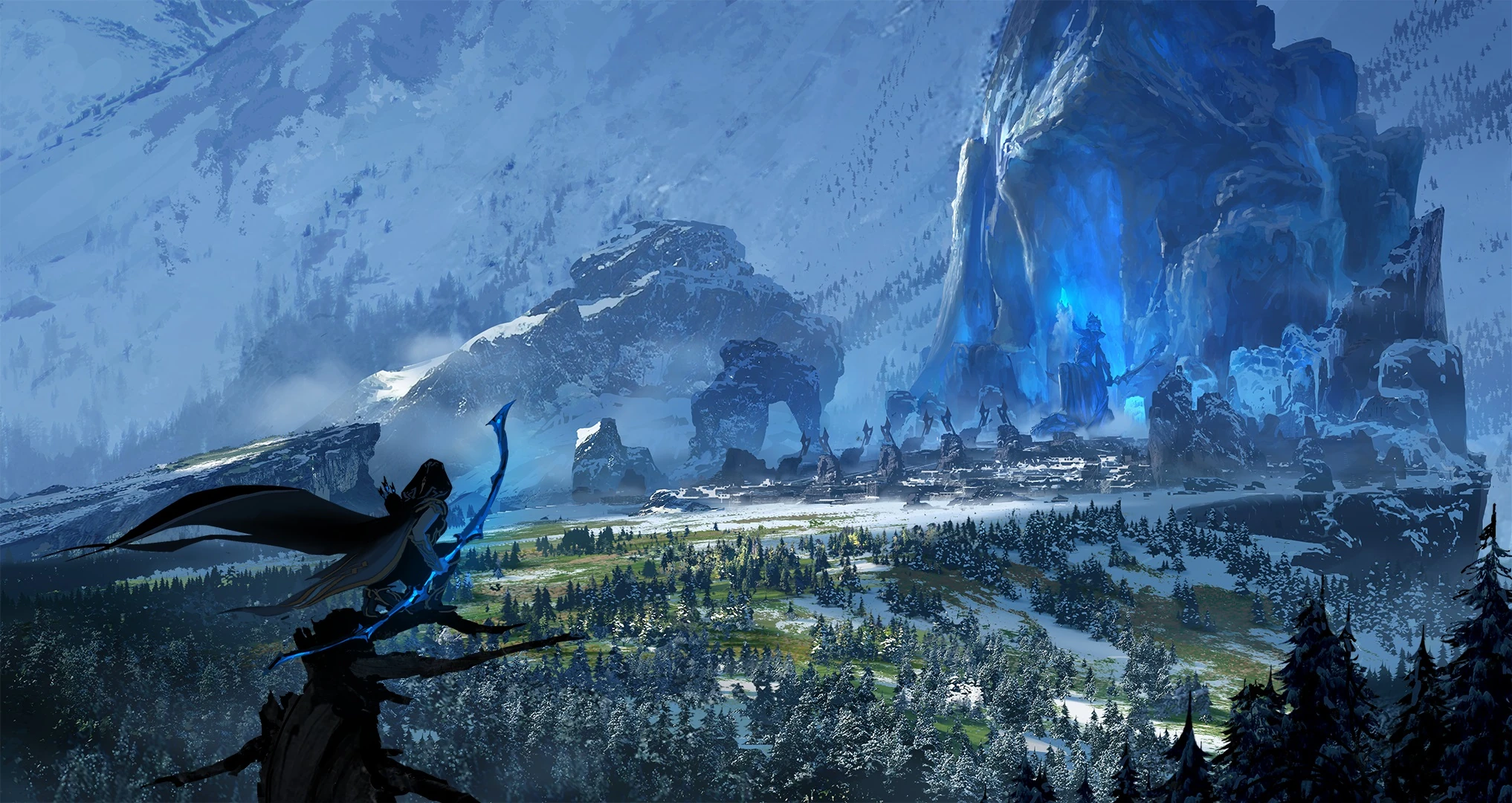
The north is not just a backdrop in Freljord lore. Its silence, scale, and danger shape every choice people make there.
That sense of place matters, because Freljord is one of the clearest regions where environment and identity are inseparable.
Freljord history, from demi-gods to the Watchers
Freljord history begins before the modern tribes. In the oldest stories, demi-gods like Ornn, Volibear, and Anivia shaped the land, fought one another, and became the foundation for later beliefs. These myths still matter because the gods are not simply distant symbols. In Freljord, ancient powers can return, speak, fight, and pull entire cultures back toward old ways.
The next major layer is the story of the Three Sisters: Avarosa, Serylda, and Lissandra. They rose during an age when magic was vast and dangerous, and their attempt to master power reshaped the entire north. Each sister became tied to a different legacy. Avarosa became a symbol of unity. Serylda's influence lingers more faintly through conquest and lost memory. Lissandra survived as the most active, most secretive, and most frightening of the three.
The deepest horror in Freljord lore is the Watchers. Lissandra's bargain with them promised power, but it also opened the door to something far beyond ordinary war. The Howling Abyss became their prison, and the Frostguard became the institution built around hiding, guarding, and controlling the truth of that prison.
Modern Freljord history is shaped by the return of tribal conflict. Ashe's rise as warmother gives the Avarosans a vision of shared survival. Sejuani's Winter's Claw keeps raiding and refuses comfort. Lissandra's Frostguard watches from the coldest shadows. Around them, demi-god cults, trolls, yetis, shamans, and outsiders all make the north feel unstable again.
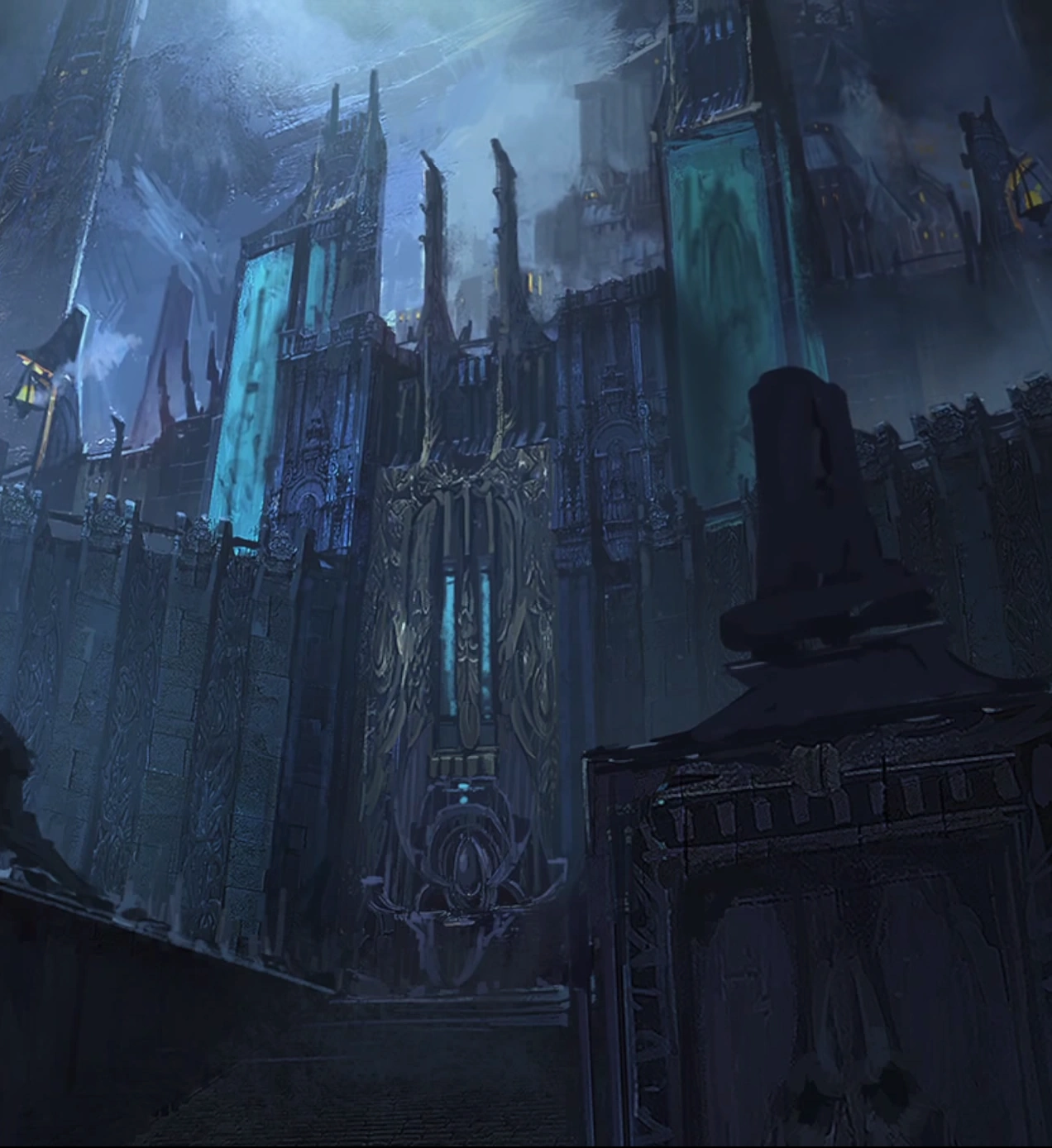
Even in gameplay, Freljord often carries the same identity: resilience, lockdown, and pressure that feels slow, heavy, and difficult to escape.
That design language matches the lore well, because Freljord rarely rewards speed or elegance as much as endurance, timing, and collective survival.
Major locations in Freljord
Freljord is not only open tundra. It includes ruined fortresses, sacred cliffs, frozen caverns, troll lands, seasonal villages, old pilgrimage sites, glacial harbors, and the terrifying Howling Abyss. Each location adds a different kind of pressure to the region.
North Freljord
North Freljord is where the region feels most raw. The Ridgeback Mountains, Frost-Troll Village, Ghulfrost, Vathcaer, Yadulsk, Ornnkaal Rocks, and Yeti's Vigil all show how much of the north is shaped by migration, hunting, old ruins, and the need to move when winter becomes impossible. This is where Ashe and Sejuani's early lives make the most sense, because both were shaped by harsh landscapes before they became symbols.
East Freljord and the Howling Abyss
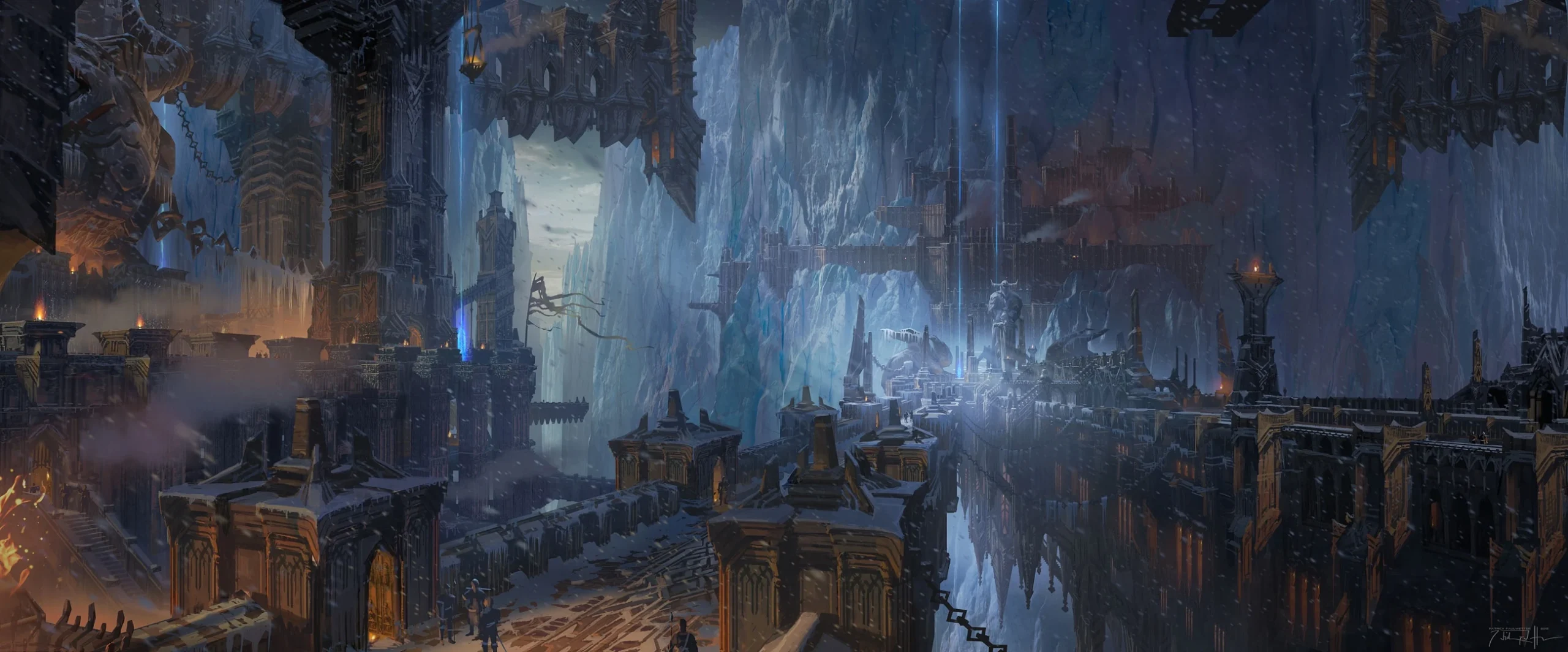
East Freljord is dominated by the Frostguard and the Howling Abyss. The Warded Gateway, Frozen Caverns, Bridge of Sorrows, Bridge of the Lost, Frostguard Citadel, and Hall of the Nine all point toward the same buried truth: Freljord is guarding something that could end far more than the north.
The Howling Abyss is especially important because it is not just a dramatic chasm. It is the place where the Watchers were sealed, where True Ice takes on world-ending importance, and where Lissandra's public role as religious ruler hides a much older responsibility.
South and west Freljord
South Freljord is important because it contains Rakelstake, a former village that became an Avarosan pilgrimage site. It is also where Ashe and Tryndamere were oathbound, making the location central to the political future of the region. The south also borders lands connected to Noxian pressure, which keeps Freljord tied to wider conflict.
West Freljord adds places like Da'arvong, Glaserport, Rygann's Reach, Valar's Hollow, and Frostheld. These locations remind you that Freljord is not one frozen culture with one lifestyle. It is a spread of harbors, villages, ruins, ports, and clan territories that survive in different ways.
Freljord culture, warmothers, and why survival shapes everything
Freljord culture is built around the reality that the land does not forgive weakness for long. Food, shelter, family, strength, and magical inheritance all matter because one bad season can destroy a tribe. That is why social bonds in Freljord are not ornamental. They are survival systems.
Warmothers are central because Freljordian society is strongly shaped by maternal leadership, clan obligation, and the protection of children. Oaths, marriages, and alliances are practical tools as much as emotional bonds. A tribe survives by building enough trust and obligation that people will fight for one another when the snow, hunger, or enemies close in.
That is also why Freljord stories rarely treat individual strength as enough. Even the strongest champions are defined by who they protect, follow, betray, marry, lead, or outlive. Ashe needs people to believe in her. Sejuani needs raiders loyal enough to endure with her. Lissandra needs institutions that keep secrets across generations.
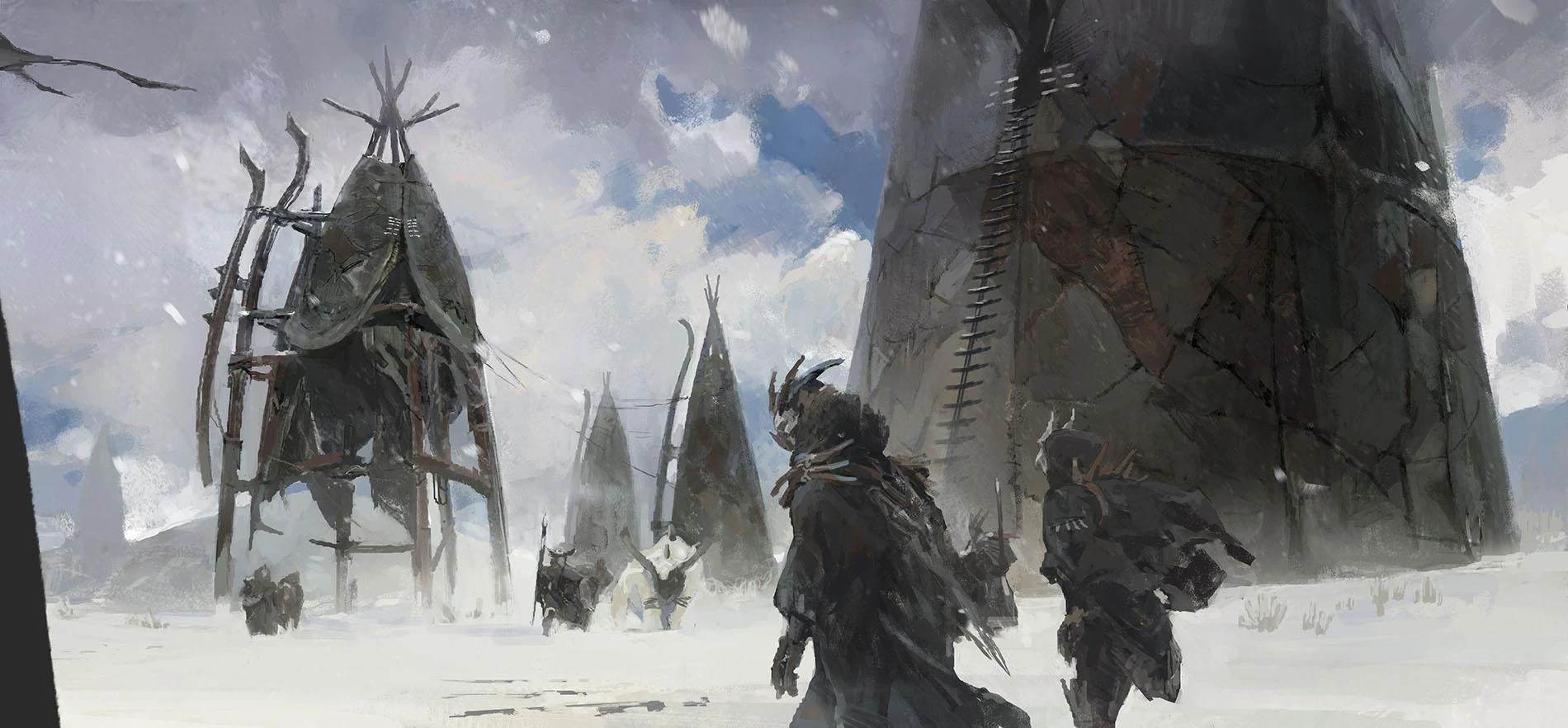
Freljord culture also leaves room for monsters, myths, and practical wildlife. Elnüks provide food, wool, trade value, and mounts. Mammoths become battle mounts and cargo animals. Poros are tied to the Howling Abyss. Trolls, yetis, spirit walkers, and demi-god cults make the north feel much older than its current politics.
Freljord culture is easiest to understand when you see how quickly hunger, pride, and loyalty can turn into violence.
That tension is central to the region: what one tribe calls survival, another may experience as terror.
Freljord's relations with other regions
Freljord becomes easier to understand when you compare it with the rest of the setting. The north is isolated by climate, but it is not disconnected. Its borders, myths, raids, wars, and ancient secrets keep pulling other regions into its orbit.
| Region | Freljord's relationship | Why it matters in lore |
|---|---|---|
| Runeterra | Ancient pressure point in the wider world | The Watchers, True Ice, World Runes, and demi-god stories make Freljord important far beyond local tribal politics. |
| Noxus | Invader, rival, and frontier threat | Noxian campaigns show that even a massive empire struggles to force the north into submission. |
| Demacia | Southern neighbor and uneasy contrast | Demacia values order and law, while Freljord values survival and clan strength. Sylas also makes the connection sharper. |
| Ionia | Spiritual contrast with personal ties | Udyr and Lee Sin connect the north to Ionian discipline, while Ivern's origin links an ancient Freljordian warrior to Ionian magic. |
| Piltover | Distant technological contrast | Piltover's invention and trade highlight how low-tech and tradition-driven Freljord remains by comparison. |
| Zaun | Near-opposite survival model | Zaun and Freljord both produce hardened survivors, but one is shaped by industrial desperation while the other is shaped by climate and tribe. |
| Bilgewater | Travel, trade, and wandering connections | Freljordian sailors, warriors, and wanderers can cross into Bilgewater stories, especially through champions who leave home seeking fate. |
| Shadow Isles | Supernatural contrast | Freljord fears ancient things beneath the ice, while the Shadow Isles fearlessly export undeath through the Black Mist. Both regions make old curses feel alive. |
| Bandle City | Light but meaningful champion links | Gnar and Yuumi give Freljord a yordle connection, showing that even the harsh north touches stranger corners of the world. |
| Targon | Mythic comparison | Targon looks upward to celestial power, while Freljord looks into storm, ice, spirits, and the buried dark beneath the world. |
| Shurima | Ancient contrast in environment and history | Shurima and Freljord are opposites in climate, but both are shaped by old empires, buried power, and legends that return. |
| Ixtal | Contrast in magic and isolation | Ixtal hides behind controlled elemental mastery, while Freljord survives through open hardship, oral tradition, and dangerous inherited magic. |
| Void | Existential danger through the Watchers | The Watchers make Freljord one of the most important regions connected to Void-level threat. |
| Black Rose | Distant parallel in secrecy | The Frostguard and the Black Rose both show how hidden institutions can shape entire regions while most people only see the surface story. |
| Camavor | Distant royal contrast | Camavor's ruined monarchy contrasts with Freljord's tribal matriarchies, showing very different ways power can break a people. |
| Icathia | Historical warning about ancient power | Icathia reminds readers what can happen when desperate people unleash forces they cannot truly control, a warning that fits Freljord's Watcher history. |
The shortest version is this: Noxus and Demacia shape Freljord's borders, Ionia and Bandle City add personal champion links, Shurima, Targon, Ixtal, and Camavor work as mythic contrasts, and the Void makes Freljord one of Runeterra's most dangerous hidden fault lines.
Where to start with Freljord lore
A smart reading path starts with the official region overview, then moves to Ashe, Sejuani, Lissandra, Ornn, Volibear, Anivia, Nunu, Braum, Tryndamere, and Udyr. That route gives you the main political conflict, the old mythic layer, and the personal stories that make the region feel human.
For first-party reading, start with the official Freljord region page. Then use RiftDaily's guides and broader lore hub to connect the frozen north to the rest of League's world.
Frequently asked questions about Freljord
What is Freljord in League of Legends?
Freljord is a frozen northern region known for harsh survival, ancient demi-gods, True Ice, tribal politics, and the conflict between Ashe's Avarosans, Sejuani's Winter's Claw, and Lissandra's Frostguard.
Who are the main Freljord champions?
The best starting points are Ashe, Sejuani, Lissandra, Ornn, Volibear, Anivia, Nunu and Willump, Braum, Tryndamere, Udyr, Trundle, Olaf, Gnar, Gragas, and Aurora. Together they cover the region's tribes, gods, magic, monsters, and survival stories.
What is True Ice?
True Ice is a rare and powerful material found in Freljord. It is deadly to most people, but Iceborn figures can wield it, which is why it matters so much to Ashe, Lissandra, Trundle, and the hidden history of the Watchers.
What is the main conflict in Freljord lore?
The main modern conflict is the three-way struggle between Ashe, Sejuani, and Lissandra. Ashe wants unity, Sejuani wants strength through conquest, and Lissandra wants control while hiding the threat beneath the Howling Abyss.
Why is the Howling Abyss important?
The Howling Abyss is important because it is tied to the Watchers, True Ice, and Lissandra's oldest secret. It is not just a battlefield or chasm, but one of the most dangerous places in Freljord lore.
What are the main Freljord tribes?
The three most important groups are the Avarosans, the Winter's Claw, and the Frostguard. The Avarosans follow Ashe's dream of unity, the Winter's Claw follow Sejuani's brutal survival code, and the Frostguard follow Lissandra's hidden agenda.
Where can I check official support information related to League content?
For account help, event questions, and live game support, use the official Riot support site. That is the right source for game-side issues rather than lore reading.
Why Freljord keeps feeling larger than the map
Freljord lasts because it combines simple survival appeal with huge mythic stakes. It gives you raiders, snow, hunger, and tribe politics, but also demi-gods, True Ice, the Watchers, and one of the clearest examples of a region where the land itself feels like a character.
The best way to read Freljord is not as a frozen wasteland or a single barbarian culture. Read it as a region where every alliance, oath, weapon, and myth exists because survival was never guaranteed. That is what makes Freljord lore and Freljord champions worth revisiting, whether you continue through RiftDaily's guides or dig deeper into its wider lore coverage.