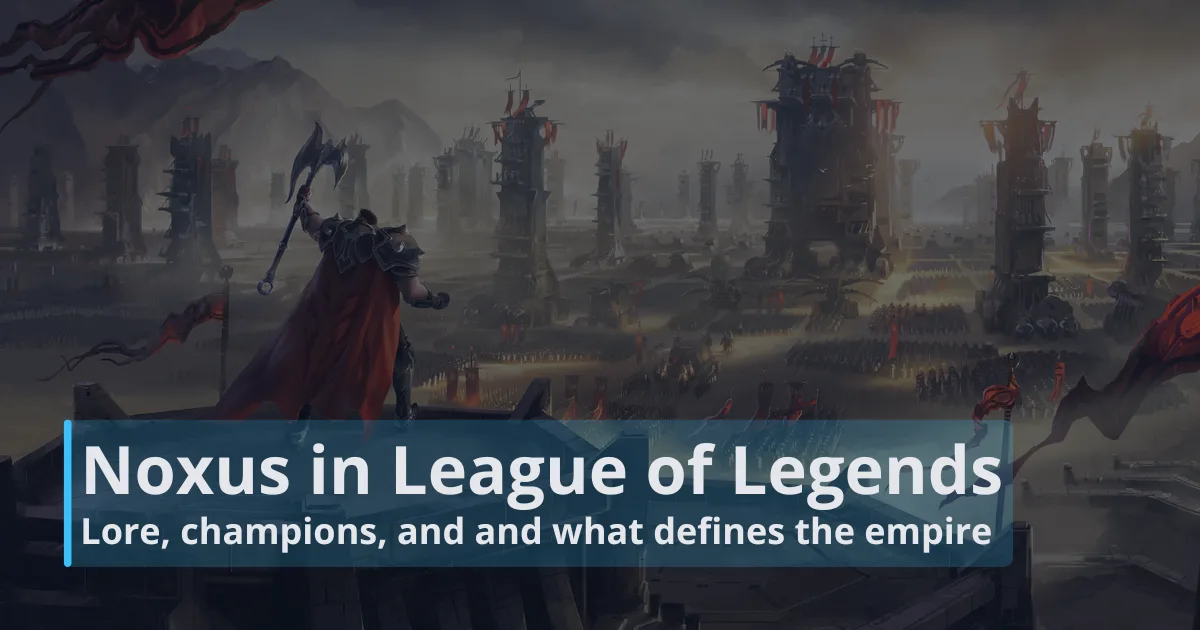
Noxus is a powerful empire in League of Legends, known for conquest, ambition, and the belief that strength should decide who rises. It looks like a brutal military state from the outside, but Noxus becomes much more interesting once you see how merit, fear, propaganda, and internal rivalry all compete inside the same empire.
At its best, Noxus rewards talent regardless of birth and pushes its people to prove themselves. At its worst, it crushes weaker neighbors, weaponizes everything it can reach, and turns survival into a permanent excuse for expansion. That contradiction is why Noxus lore remains one of the strongest political stories in Runeterra.
If you want the short version, Noxus is a massive expansionist empire built on the idea that strength can take many forms, martial, political, magical, and strategic. That one idea connects almost everything important in the region, from Darius and Swain to LeBlanc, Mordekaiser, Katarina, Rell, Sion, and the Black Rose.
Noxus at a glance
- What Noxus is: a vast empire that values strength, expansion, and the testing of every citizen's worth.
- What Noxus is known for: the Immortal Bastion, the Trifarix, conquest, noble intrigue, assassins, warhosts, and cultural assimilation.
- What drives Noxus lore: the clash between meritocratic ideals, imperial violence, and the hidden influence of darker powers.
- Why Noxus matters: it turns a classic evil empire setup into something broader, smarter, and politically messier than it first appears.
Noxus champions
The fastest way to understand Noxus is through its champions. Together they show the empire as soldiers, nobles, spymasters, monsters, survivors, and living weapons. For official champion bios and profiles, the League of Legends site is the cleanest place to start.
| Champion | Role in Noxus | Why the champion matters |
|---|---|---|
 Ambessa | Noxian warlord and aristocratic power player | Ambessa represents the empire at its most calculating, where conquest, bloodline, and political leverage all work together. |
 Briar | Failed Black Rose weapon | Briar shows the empire's habit of treating blood magic, experimentation, and human life as tools. |
 Cassiopeia | Noble schemer twisted by ancient power | Cassiopeia ties Noxian ambition to cursed treasure hunting and the empire's hunger for power beyond its borders. |
 Darius | Hand of Noxus and symbol of Might | Darius is the clearest face of the empire's martial ideal, ruthless, disciplined, and loyal to Noxus over any ruler. |
 Elise | Black Rose noble tied to dark worship | Elise shows how far Noxian elites will go for power, beauty, and survival when hidden cults are involved. |
 Draven | Showman executioner and symbol of spectacle | Draven proves that Noxus is not only about battlefield discipline, but also public glory, ego, and violent entertainment. |
 Katarina | Elite assassin of House Du Couteau | Katarina embodies Noxian precision, loyalty, and the empire's willingness to solve politics with steel. |
 Kled | Violent frontier legend of Noxian expansion | Kled captures the empire's rough settler mentality, where every border exists to be pushed farther outward. |
 LeBlanc | Master manipulator of the Black Rose | LeBlanc is essential to Noxus lore because she turns the empire's public story into something far less trustworthy. |
 Mel | Noxian-born political force with elite lineage | Mel broadens modern Noxus beyond generals and assassins, showing how diplomacy and legacy can matter as much as open war. |
 Mordekaiser | Ancient tyrant tied to the empire's dark foundations | Mordekaiser explains why the Immortal Bastion feels older and more cursed than the modern empire ruling above it. |
 Rell | Magical superweapon created by Noxian institutions | Rell exposes the cruelty hidden inside Noxus's search for military advantage. |
 Riven | Disillusioned soldier shaped by the Ionian war | Riven matters because she shows how Noxian ideology can break when citizens finally see its cost up close. |
 Samira | Daredevil operative thriving in Noxian culture | Samira shows the empire's attraction for people who treat danger as opportunity and identity as something earned. |
 Sion | Undead war hero and living national myth | Sion makes Noxus feel ancient, sacrificial, and terrifyingly willing to turn even its dead into weapons. |
 Smolder | Young dragon tied to the Noxian frontier | Smolder adds a stranger edge to Noxian territory, where imperial expansion runs into creatures the empire cannot fully control. |
 Swain | Grand General and symbol of Vision | Swain is the most important modern Noxian because he remade the empire after Darkwill and anchored it around the Trifarix. |
 Talon | Assassin forged by Noxian power struggles | Talon reveals the empire's harsher underside, where survival, loyalty, and utility are valued over comfort or sentiment. |
 Vladimir | Ancient blood mage embedded in Noxian high society | Vladimir reminds you that Noxus is not only a military machine, but also a court of secrets, excess, and very old monsters. |
Other champions related to Noxus
Not every major Noxian connection comes from citizenship. Some champions fought the empire, survived its prisons, worked for its armies, or were reshaped by its wars and secret networks.
| Champion | Connection to Noxus |
|---|---|
| Alistar | Survived Noxian captivity and the brutality of its arena culture. |
| Annie | Her family history is tied to exiles from Noxian lands. |
| Caitlyn | Investigates Noxian spy networks operating around Piltover. |
| Camille | Also intersects with the same Noxian intelligence concerns around Piltover's upper class. |
| Diana | Her broader celestial search gives Noxian stories a loose but real link to Targon. |
| Gangplank | Raided Noxian ships and stole Swain's flagship, tying the empire to the chaos of Bilgewater. |
| Irelia | Cut off Swain's arm during the invasion of Ionia, one of Noxus's defining defeats. |
| Kayn | Was born Noxian before his life turned inside Ionian shadow warfare. |
| Ryze | Was born in the lands of the old Noxii and connects the empire's territory to wider threats across Runeterra. |
| Singed | Worked with Noxus during the Ionian war, bringing the horrors of Zaun into imperial conquest. |
| Sivir | Was employed by Cassiopeia on a doomed mission into Shurima. |
| Thresh | Later attacked a Noxian inn, giving the empire a grim tie to the undead horrors of the Shadow Isles. |
| Udyr | Fought against Noxian forces and ties their campaigns to the harsher politics of the Freljord. |
| Veigar | Went mad after imprisonment in the Immortal Bastion, creating a dark link to Bandle City. |
| Viego | His Ruination touched Noxian stories too, carrying the legacy of fallen Camavor into the empire's orbit. |
| Xin Zhao | Was captured by Noxians and forced through the Fleshing before his life changed completely. |
That range of champions points to the bigger truth about Noxus. The empire is not defined by one kind of power, but by its ability to turn generals, nobles, assassins, and schemers into parts of the same machine.
That is exactly the mood the modern Noxian image leans into, confident, theatrical, and openly dangerous. From there, the real question is not whether Noxus is strong, but what kind of strength it rewards and what that strength costs.
What Noxus is in lore
Noxus is one of the largest powers in Runeterra, but size is only part of what defines it. The empire is built on a simple promise: if you are strong enough, useful enough, or ruthless enough, Noxus will make room for you. That idea gives the empire its energy, its reach, and its danger.
This is what makes Noxus lore more interesting than a simple evil empire story. Noxus is brutal, but it is not only brutal. It can be inclusive in ways more aristocratic regions are not. It values soldiers, spies, mages, craftsmen, and politicians. It tells conquered peoples they can rise too, as long as they submit and prove their worth.
The problem is obvious. Opportunity under Noxus is real, but it comes with conquest, coercion, and the constant threat of being discarded if you fail. That tension between merit and domination is the core of Noxus lore.
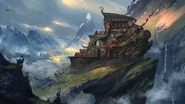
That imperial mindset comes through especially clearly in ‘After Victory,’ where Noxus presents itself not as chaotic or cruel for its own sake, but as disciplined, certain, and entitled to rule through strength.
It works because it shows Noxus from the inside, where loyalty, strength, and ideology are always being tested.
Noxus history, from Mordekaiser to the Trifarix
Noxian history starts long before the modern empire. The lands that would become Noxus were shaped by older tribal struggles, ancient tyrants, and a world already scarred by catastrophes tied to places like Icathia and forces like the Void. Survival in that kind of world rewarded aggression, and the Noxii learned early that hesitation could mean extinction.
The darkest early chapter belongs to Mordekaiser. He did not merely rule the region that would become Noxus, he marked it permanently. The Immortal Bastion rose as the center of his tyranny, and even after his fall the stronghold remained the beating heart of later Noxian power. That is why Noxus never feels fully modern. Its capital is built on a grave of unfinished ambitions.
Mordekaiser's downfall also mattered because it exposed the long game of the Black Rose. LeBlanc and her allies helped sever him from his power, but they did not create a cleaner future. They created one where hidden manipulation could survive inside every later regime.
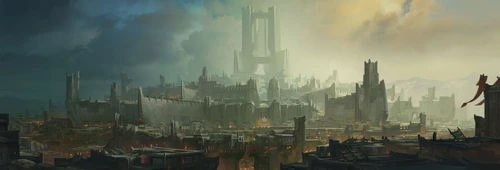
The deeper roots of that story matter because Noxus did not begin as a polished empire. ‘The Root of Empire’ helps show how the region’s rise is tied to myth, fear, and the older powers buried under its public history.
That older layer is what keeps Noxian history from ever feeling stable. The empire likes to present itself as practical and forward-looking, but its capital and its founding story are both haunted by what came before.
The next major arc is the rise of Sion, the western wars against Demacia, and the long culture of heroic violence that made dying gloriously feel like state service. Noxus turned military sacrifice into national memory, and Sion became one of its most disturbing symbols. His story is not only about battle, it is about how the empire uses legend to train future citizens into obedience.
Then came the invasion of Ionia, one of the most important disasters in Noxian history. Under Boram Darkwill, the empire pushed east for conquest, magic, and immortality. What looked like another expansion campaign instead exposed Darkwill's failures, strengthened Irelia's resistance, and ended with Swain losing his arm at the Placidium.
Noxus did not leave Ionia unchanged, but Ionia also did not leave Noxus unchanged. The war damaged the empire's confidence, revealed how much Darkwill's rule was decaying, and opened the path to revolution at home. Zaunite chemical weapons made the occupation even worse, leaving scars that still define both regions.
Swain's return from defeat led to the Trifarix Revolution. With allies like Darius and Draven, and with darker power from the Immortal Bastion, he overthrew Darkwill and reorganized the empire around three principles of strength: Vision, Might, and Guile. That change is why modern Noxus feels different from older Noxus. It is still expansionist, but now it tells itself a more intelligent story about why it deserves to rule.
Noxus also turns violence into public culture, not just military necessity. ‘The Reckoners’ makes that visible by showing how challenge, spectacle, and survival become part of the empire’s social language.
That is why Noxus can feel theatrical without ever feeling unserious. It teaches its people that being watched, judged, and tested is normal, and that public brutality can be part of civic identity.
Mordekaiser’s shadow still hangs over all of this. His story matters here not just because he is tied to Noxus, but because the empire still rules from foundations shaped by his tyranny and by the fear of what may return.
That older dread gives Noxus a different texture from regions built only on politics or war. Even at its most modern, the empire still feels ruled from a place that is cursed, unfinished, and older than its official story.
Major locations in Noxus
Noxus is not just one capital city with armies around it. It is a sprawling imperial network of fortified heartlands, frontier settlements, occupied coasts, foreign ports, mining cities, and annexed territories that all feed the same machine. That scale is part of what makes Noxus so intimidating in lore.
The Immortal Bastion and Noxus Prime
The Immortal Bastion is the empire's center of gravity. Built atop older tyranny, then captured and reused by the Noxii, it became the capital core of Noxus Prime. The Bastion's tight streets, heavy stone, memorial architecture, and political chambers all reinforce the same message: Noxus is built to endure, intimidate, and absorb whatever tries to outlive it.
Inside and around the Bastion, you get places like Mortoraa, the Tri-Towers, the Audience Chamber, the Shrine of the Wolf, the slums beyond the walls, Sion's memorial, and the memory of the Fleshing arenas. Together they show the full empire in miniature, noble luxury, military discipline, occult secrecy, and brutal public culture.
Frontiers, provinces, and occupied territories
North Noxus includes harsh places like the Dalamor Plain, Urtis, Delverhold, Kimir, and the Ironspike Mountains. These lands show how the empire survives on extraction, harsh weather, and local submission. In the east, cities like Bloodcliffs and Drakkengate help anchor trade and regional control near the capital.
South Noxus feels closer to active expansion. Basilich, Vindor, Trevale, the Gates of Mourning, and the Argent Mountains connect directly to old wars with Demacia and to later rebellions inside imperial territory. Trevale also matters because it is part of Riven's background, which gives the region a more personal face than fortress names alone would suggest.
Noxus also extends beyond its heartlands. It still holds parts of Ionian territory, and it maintains occupied or aligned cities in northern Shurima, such as Bel'Zhun, Tereshni, and Urzeris. This is important for Noxus lore because the empire does not feel complete until you see how much of it is built on stewardship, occupation, and the choice it gives conquered peoples: join or be crushed.
Noxian culture, government, and what strength really means
Noxian culture revolves around testing. A citizen should prove themselves. A leader should justify power. A city should contribute. A conquered people should either adapt or be eliminated. That is the empire's dogma in its cleanest form, and it explains why Noxus can sound admirable to some people and monstrous to others.
The empire claims anyone can prosper there, and to a point that is true. Noxus respects martial power, but also craft, intelligence, magic, trade, and political skill. That is why the region can hold figures as different as Darius, Swain, Vladimir, Samira, and LeBlanc without breaking its own logic.
The Trifarix formalized that logic. Swain stands for Vision, Darius for Might, and the Faceless for Guile. In theory, the system prevents the empire from being ruined by one incompetent ruler. In practice, it turns Noxus into a permanent argument about what kind of strength should dominate.
Noble houses still matter too. Noxus may present itself as a meritocracy, but the Du Couteaus, Swains, Darkwills, and other houses prove that blood, networks, and secret loyalties still shape the empire. Provincial stewards reinforce that control beyond the capital, making local government part of imperial machinery rather than true self-rule.
Even everyday symbols reinforce Noxian authority. Noxtoraa gateways mark conquered roads. Warbeasts like drake-hounds, basilisks, and tuskbeasts project intimidation. Public festivals, military memorials, and arena traditions teach people that glory and violence belong together. It is a culture that constantly rehearses its own right to rule.
Noxus's relations with other regions
Noxus becomes much easier to understand once you compare it with other regions. The empire defines itself through conflict and pressure. Some places are targets, some are trade partners, and some are useful contrasts that reveal what Noxus respects, fears, or wants to absorb.
| Region | Noxus's relationship | Why it matters in lore |
|---|---|---|
| Demacia | Main ideological and military rival | This is Noxus's cleanest long-term rivalry. Demacia stands for inherited order and guarded purity, while Noxus believes strength should be proven and power should expand. |
| Ionia | Lasting wound and unfinished conquest | The invasion of Ionia is one of the defining failures in modern Noxian history. It exposed Darkwill's rot, empowered Swain's rise, and left Noxian occupation as a permanent source of tension. |
| Freljord | Grinding frontier war | Noxian campaigns in the Freljord show the limits of imperial force. Survival there is never simple, and even Darius could not turn northern war into easy victory. |
| Piltover | Strategic trade partner and future target | Noxus needs access, commerce, and intelligence, which makes Piltover both useful and suspicious from the empire's point of view. |
| Zaun | Practical partner in weapons and mercenary logic | Noxus has been willing to work with Zaunite expertise when it serves conquest, even when the results are horrifying. |
| Bilgewater | Uneasy relationship shaped by piracy and profit | Noxian fleets, smugglers, and pirates often collide, which makes Bilgewater dangerous but never irrelevant to imperial shipping. |
| Ixtal | Useful contrast in controlled power | Ixtal hides and contains its power. Noxus projects and exploits it. The contrast helps explain how differently strong regions can think about magic and borders. |
| Shurima | Expansion zone and contested future | Noxus has already absorbed northern Shuriman ports and territories, but Shurima's reawakening means the empire cannot assume the desert will stay fragmented forever. |
Some links are quieter but still revealing. Noxus has no simple relationship with Targon, yet it is drawn toward celestial power whenever that power looks useful. The empire also has reasons to fear regions it cannot easily assimilate, whether that means the ancient legacies of the Shadow Isles or the hidden mastery of distant magical powers.
Where to start with Noxus lore
A good reading path starts with the region overview, then moves to Swain, Darius, LeBlanc, Katarina, Riven, Sion, Mordekaiser, and Rell. That sequence gives you the cleanest look at state power, propaganda, noble intrigue, military culture, and the empire's oldest secrets.
Start with the official Noxus region page on Universe. Then use our guides and broader lore hub to connect Noxus to the rest of the setting. For broader official news and media around the franchise, Riot Games is the right place to track major announcements. After the official reading, the League of Legends subreddit is useful for follow-up discussion and theory threads.
Once you have the official version in place, a broad recap can still be useful for seeing how the biggest threads connect across Swain, the Trifarix, the Black Rose, and the empire’s older foundations.
Used that way, it works best as a refresher rather than a substitute. The strongest reading path is still to start with the official region and champion pages, then use summaries like this to reconnect the dots.
Frequently asked questions about Noxus
What is Noxus in League of Legends?
Noxus is a powerful expansionist empire that values strength above all, but defines strength broadly. It respects soldiers, mages, strategists, assassins, craftsmen, and anyone else who can help the empire grow and survive.
Why is Noxus more than just an evil empire?
Noxus is more complicated because it mixes brutality with real opportunity. It is violent and imperial, but it also claims that talent matters more than noble birth alone. That combination makes the region politically richer than a simple villain faction.
Who are the main Noxus champions?
Swain, Darius, LeBlanc, Mordekaiser, Katarina, Riven, Rell, Sion, Draven, Cassiopeia, Talon, Vladimir, and Ambessa are some of the best starting points. Together they cover the empire's government, military, noble houses, hidden cabals, and long history.
What is the Trifarix in Noxus lore?
The Trifarix is the three-part ruling doctrine established after Swain's coup. It is built around Vision, Might, and Guile, represented by Swain, Darius, and the Faceless.
What is the Immortal Bastion?
The Immortal Bastion is the ancient stronghold at the heart of Noxus. It predates the modern empire, is deeply tied to Mordekaiser, and remains the political and symbolic center of Noxian power.
What is the biggest conflict in Noxus lore?
The biggest long-term conflicts are with Demacia and Ionia, but the most important internal conflict is between Noxus's public ideals and the hidden manipulation of forces like the Black Rose.
Where can I check official support information related to League content?
For account help, event questions, and live game support, use the official Riot support channels rather than lore archives or fan discussions.
Why Noxus keeps commanding attention
Noxus lasts as a region because it combines military ambition with political complexity. It gives you empire, but also ideology. It gives you conquest, but also social mobility. It gives you terrifying enemies, but also enough internal logic that people inside the empire can believe they are building something necessary.
The best way to read Noxus is not as a cartoon villain state or a misunderstood meritocracy. Read it as an empire that rewards strength while constantly redefining what strength means. That is what makes Noxus champions and Noxus lore worth revisiting, whether you continue through RiftDaily's guides or dig deeper into its wider lore coverage.