The Worlds Format 2026 gives 19 teams one goal: lifting the Summoner's Cup. The tournament kicks off on October 15 and runs until November 14, with teams battling through Play-Ins, the Swiss Stage and Knockouts before a world champion is crowned.
There are a few things worth keeping an eye on this year. The Play-In Stage uses a double-elimination bracket, the Swiss Stage gives teams a chance to recover from early losses, and Full Fearless Draft returns for every best-of-three and best-of-five series. That last rule could make a real difference, especially in longer matches where teams have to dig deeper into their champion pools.
How does the Worlds Format 2026 work?
Worlds 2026 is split into three stages, and each one brings a different challenge. Four teams start in Play-Ins, where only one can earn a place in the Swiss Stage. That team joins 15 others who have already qualified, making it a 16-team field.
From there, teams need three wins to reach the Knockout Stage. Three losses mean they're out. The eight teams that make it through then enter a single-elimination bracket, where one bad series can end an entire Worlds run.
| Stage | Dates | Teams | Match format | Qualification rule |
|---|---|---|---|---|
| Play-Ins | October 15-18 | 4 | Best of five | One team advances |
| Swiss Stage | October 23-31 | 16 | Best of one and best of three | Three wins to advance, three losses to be eliminated |
| Knockout Stage | November 3-14 | 8 | Best of five | Win each series to stay alive |
The tournament also moves across three US locations. Play-Ins take place in Los Angeles, the Swiss Stage and early knockout rounds are held in Allen, Texas, and the final takes place in Brooklyn, New York.
Worlds 2026 Play-In Stage format
The Play-In Stage runs from October 15 to 18, with four teams fighting over the last spot in the Swiss Stage. The lineup includes the third seeds from the LCS, LEC and LCP, along with the CBLOL's second seed.
The good news for these teams is that losing once doesn't mean going home. Worlds 2026 uses a double-elimination bracket for Play-Ins, so a team that drops its opening series still has a route back into contention through the lower bracket. There's very little room for error, though, because only one team will make it through.
Every Play-In match is a best of five, so teams will need to win three games to take a series. With the opening matchups decided by a random draw, preparation won't be as simple as focusing on one expected opponent.
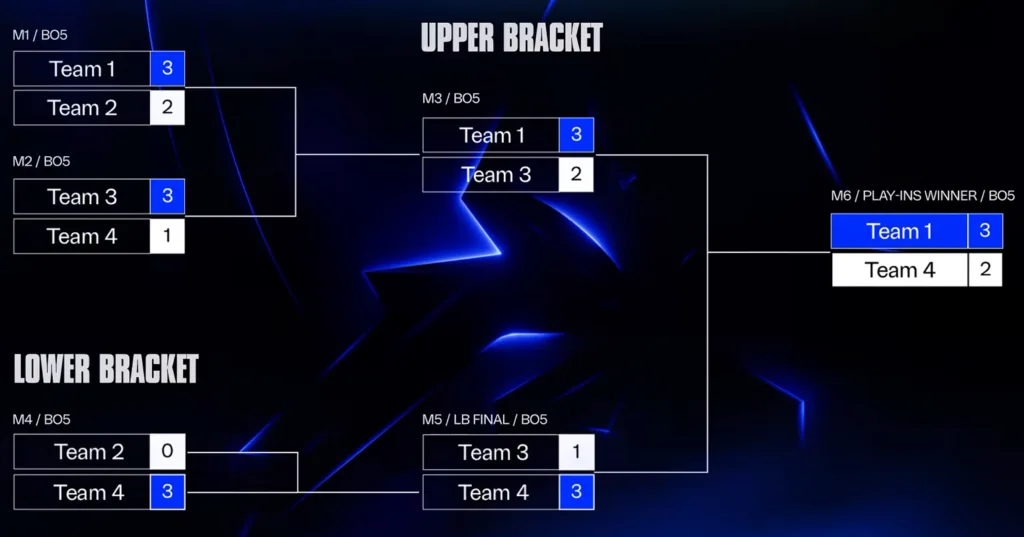
How the Play-In bracket works
- Four participating teams: The third seeds from the LCS, LEC and LCP, plus the CBLOL runner-up.
- Random opening draw: Any team can be matched against any of the other three teams.
- Double elimination: Teams have a second chance after their first series loss.
- Best-of-five matches: Every series is played until one team wins three games.
- One qualifying team: Only the Play-In winner moves into the Swiss Stage.
The opening matchups are determined by a random draw following the CBLOL Finals on October 10. This means teams cannot rely on a predictable bracket, and preparation must account for several possible opponents.
For teams coming through Play-Ins, reaching the Swiss Stage is only the first hurdle. The real test is keeping up with the world's best teams over several rounds, where one win can put a team in a strong position and one loss can make the road ahead much harder.
Worlds 2026 Swiss Stage format
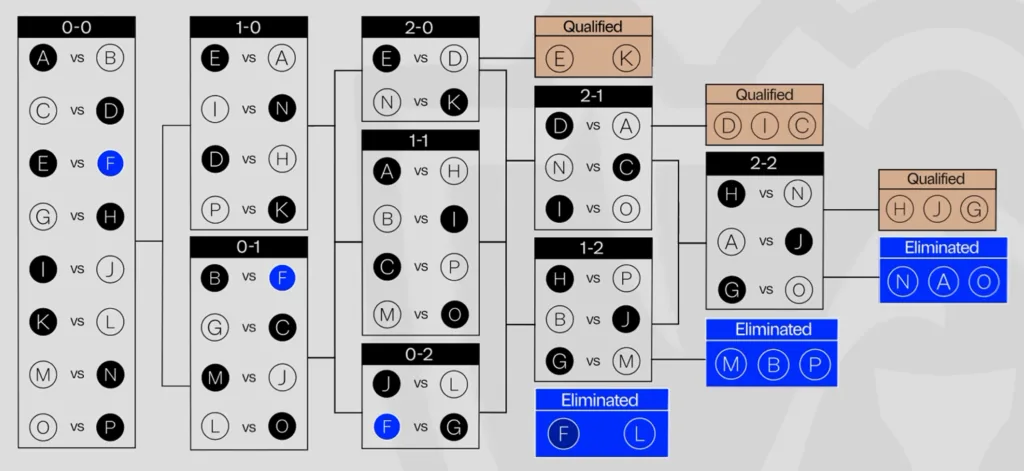
The Swiss Stage runs from October 23 to 31 in Allen, Texas. Sixteen teams take part, including the 15 teams that qualified directly and the winner of Play-Ins. By the end of the stage, only eight will remain in the race for the title.
The rules are simple enough: win three matches and you're through to Knockouts. Lose three and your Worlds run is over. That means a team can qualify without winning every match, but there's not much room to recover once losses start piling up.
A team that goes 3-0 will qualify early, while a 3-2 record is also enough to make it through. On the other side, teams can be eliminated at 0-3, 1-3 or 2-3.
How Swiss Stage matchups are decided
The opening round uses four seeding tiers to set up the initial matchups. Teams in Tier 1 face teams in Tier 4, while Tier 2 teams play against Tier 3 teams. There's also one restriction for the first round: teams from the same region can't be drawn against each other.
After that, things work a little differently. Teams are matched with others who have the same record, so a team coming off a win will face another 1-0 team in Round 2. Teams that lose their opening match will instead be drawn against other teams sitting at 0-1.
There are a few other rules to keep in mind:
- Teams won't face the same opponent twice during the Swiss Stage.
- Regional matchups become possible from Round 2 onward.
- Three wins are enough to qualify for Knockouts.
- Three losses mean elimination.
This setup keeps the pressure on throughout the stage. Teams can't rely on an easy draw to carry them through, and even a strong opening doesn't guarantee a place in the playoffs.
Best-of-one versus best-of-three matches
Playing multiple games gives teams more room to adjust if things aren't going their way. A poor draft in the first game doesn't necessarily mean the series is lost. Teams still have a chance to switch things up and come back with a different approach in Game 2. At this point in the tournament, those adjustments can be what separates a win from elimination.
Worlds 2026 Knockout Stage format
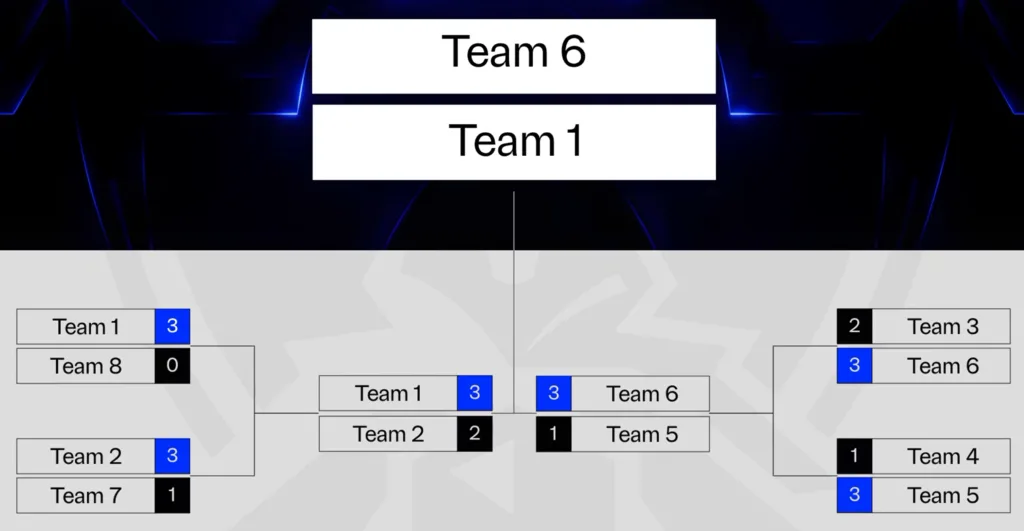
Once the Swiss Stage is over, the remaining eight teams move into the Knockout Stage, which runs from November 3 to 14. From here on, it's a straightforward elimination bracket, with every match played as a best of five.
There's no safety net this time. Lose a quarterfinal and you're out. Lose a semifinal and your Worlds campaign ends one step short of the final. Even the two teams that make it all the way to the championship match have only one series left to decide who takes home the Summoner's Cup.
Winning a best-of-five means taking three games, and teams will need to keep adapting as the series goes on. A strong start helps, but it won't count for much if the opposition figures out how to shut it down. With elimination on the line, draft choices and composure can be just as important as individual performances.
Quarterfinals and semifinals
The quarterfinals begin on November 3, with all eight teams looking to keep their Worlds run alive. The four winners move on to the semifinals on November 7 and 8, where a place in the final is up for grabs.
The quarterfinal draw takes place after the Swiss Stage wraps up. Teams that finish with a 3-0 record are drawn against teams that went 3-2, while the other four qualifiers are drawn against each other. Finishing the Swiss Stage unbeaten therefore comes with a different potential matchup than scraping through on the final round.
Worlds 2026 Final
The Worlds Final is scheduled for November 14 in Brooklyn, New York. It's the last match of the tournament, with the winner claiming the Summoner's Cup and the title of 2026 League of Legends World Champion.
Getting there is a challenge in itself. Teams have to make it through Swiss, win their quarterfinal and semifinal, and then come out on top in one final best-of-five. By that point, there's no room to make up for a bad series. One team gets the trophy, and the other's Worlds run ends just short of the biggest prize.
Full Fearless Draft at Worlds 2026
Full Fearless Draft is back at Worlds 2026, and it changes how teams approach a series. Once a champion has been picked by either team, neither side can select that champion again for the rest of the series.
Take Ahri as an example. If either team picks her in Game 1, she's off the table for both sides in every game that follows. The same rule applies to every champion picked during the series, so the available pool gets smaller as the match goes on.
That puts more pressure on players to have alternatives ready. A team can't keep going back to the same comfort picks, and coaches need to think beyond the opening draft. The longer a series lasts, the more important it becomes to have other champions and strategies ready to go.
Why Fearless Draft matters
- Deeper champion pools: Players need viable alternatives beyond their signature picks.
- More strategic variety: Teams must consider different win conditions and team compositions.
- Greater adaptation pressure: Coaches need to react to earlier picks and bans as a series progresses.
- More opportunities for specialists: Flexible players can create draft advantages when opponents run short of comfortable options.
Fearless Draft does not change the number of wins required to take a series, but it changes how teams approach each successive game. In the Play-In and Knockout stages, a strong opening draft is only part of the challenge. Teams must also maintain enough flexibility to compete when their preferred champions are no longer available.
Watch Riot Games' official breakdown for a visual explanation of the Worlds 2026 format and its three stages.
There's more to winning Worlds than individual skill. Teams need to come prepared, have enough champions to work with under Fearless Draft and be able to adjust when an opponent throws something unexpected at them. The further they get, the less room there is to make mistakes.
Worlds 2026 schedule and key dates
Worlds 2026 runs from October 15 to November 14, with the Play-In Stage opening the tournament and the final bringing it to a close. The Swiss and Knockout stages are spread across several days, with breaks between some rounds.
| Date | Event | Location |
|---|---|---|
| October 15-18 | Play-In Stage | Los Angeles, California |
| October 23-31 | Swiss Stage | Allen, Texas |
| November 3-6 | Quarterfinals | Allen, Texas |
| November 7-8 | Semifinals | Allen, Texas |
| November 12-14 | Worlds Fan Fest | Pier 36, Manhattan, New York |
| November 14 | Worlds Final | Brooklyn, New York |
If you're watching from Europe, Play-In matches are scheduled to start at 8 PM CEST. The first two Swiss days, October 23 and 24, begin at 7 PM CEST, although start times change later in the stage. The quarterfinals and semifinals are scheduled for the evening in Europe, while the final starts at 8 PM CET on November 14.
It's worth checking the official Worlds 2026 primer before match day, as start times vary throughout the tournament.
Which teams qualify for Worlds 2026?
A total of 19 teams will compete at Worlds 2026, representing six regions: China, Korea, EMEA, North America, Asia-Pacific and Brazil. Most regions have three spots, while Brazil has two. International results also affect qualification, with MSI success playing a role in the allocation of places.
| Region | League | Teams |
|---|---|---|
| China | LPL | 4 |
| Korea | LCK | 4 |
| EMEA | LEC | 3 |
| North America | LCS | 3 |
| Asia-Pacific | LCP | 3 |
| Brazil | CBLOL | 2 |
The total allocation includes the additional place awarded through MSI-related qualification rules. This brings the tournament field to 19 teams, with four entering the Play-In Stage and 15 qualifying directly for the Swiss Stage.
Fans can follow the latest team news, tournament updates and competitive storylines in our League of Legends esports coverage and dedicated Worlds coverage.
Frequently asked questions about Worlds Format 2026
How many teams compete at Worlds 2026?
A total of 19 teams compete at Worlds 2026. Four teams enter the Play-In Stage, and the winner joins 15 directly qualified teams in the 16-team Swiss Stage.
How many stages are there at Worlds 2026?
Worlds 2026 has three stages: Play-Ins, Swiss and Knockouts. The Play-In winner advances to Swiss, the Swiss Stage determines the top eight teams, and the Knockout Stage decides the world champion.
How does the Worlds 2026 Swiss Stage work?
The Swiss Stage features 16 teams across five rounds. Teams are paired with opponents holding the same match record, cannot face the same opponent twice, and qualify for the Knockout Stage after winning three matches. Three losses mean elimination.
Are Worlds 2026 matches best of three or best of five?
All Play-In matches and Knockout Stage matches are best of five. The first two Swiss rounds are best of one, while Swiss matches that determine advancement or elimination from Round 3 onward are best of three.
What is Full Fearless Draft at Worlds 2026?
Full Fearless Draft prevents either team from selecting a champion that has already been picked by either side earlier in the same series. The rule applies to best-of-three and best-of-five series, encouraging wider champion pools and more varied strategies.
When does Worlds 2026 start and end?
The tournament starts with Play-Ins on October 15, before moving into the Swiss Stage from October 23 to 31. Everything comes down to the final on November 14 in Brooklyn, New York.
Where can I watch Worlds 2026?
The official LoL Esports website is the place to go for match broadcasts and the latest schedule. Remember to log in with your Riot account if you want to be eligible for watch rewards or in-game drops. Availability varies by region.
What to look forward to at Worlds 2026
With 19 teams competing for the Summoner's Cup, Worlds 2026 should have plenty of storylines to follow. The Swiss Stage will put teams under pressure to secure three wins, while Full Fearless Draft means players will need more than a handful of familiar champions to get through longer series. Once the Knockout Stage starts, there's no room for a comeback after a series loss.
Mark October 15 for the opening matches, October 23 for the start of Swiss and November 14 for the final. Those dates are a good starting point if you want to follow the tournament from the first Play-In series through to the championship.
We'll be covering the latest results and storylines at RiftDaily's esports news, with more tournament updates in our Worlds coverage as the competition unfolds.