2XKO playtests shaped some of the biggest decisions behind Riot Games’ League of Legends fighting game, from duo play and high-level balance testing to spectator features and the next patch roadmap.
Riot’s latest Weekend Warmup, published September 3, 2026 by Ben “Draggles” Forbes, looks back at several playtests that changed the direction of 2XKO. The post also arrives days before Patch 1.3.1, which brings Lux to the roster on September 8, 2026.
What changed because of 2XKO playtests? Riot says testing validated duo play, led to the Gameplay Analysis Team, exposed pacing and tag-system problems, confirmed spectator needs, and helped guide the final 2026 update schedule for Lux, Samira and remaining bug fixes.
Why Riot’s 2XKO playtests matter now
2XKO is Riot’s free-to-play 2v2 tag-team fighting game built around League of Legends and Arcane champions. Players can control both champions alone or team up with another player, which makes duo play one of the game’s most important design challenges.
That is why Riot’s new development retrospective is more than a behind-the-scenes story. It explains how the team tested whether 2XKO could work as a solo game, a duo game, a competitive title, a watchable tournament game and a social fighting game space.
Forbes said Riot’s research team has run dozens of controlled playtests on 2XKO, including sessions focused on champion kits, core rules, onboarding, skins and avatars. Those tests were weighed alongside designer intent and match data, giving Riot a wider view of what players understood, abused, enjoyed or avoided.
The official breakdown is available through Riot’s 2XKO playtests post, with more videos and trailers on the official 2XKO YouTube channel.
The first duo playtest proved the core idea could work
The first major example Riot shared was the earliest developer playtest built around duo play. It happened after Riot’s teams had been sent to work from home during lockdown, and the session was messy in ways that early fighting game prototypes often are.
Riot described high latency, overlapping voice comms, champions staying on screen too long and immediate “sandwich infinite” problems. Even with all of that noise, the test gave the team a clear signal: two players controlling one team had real potential.
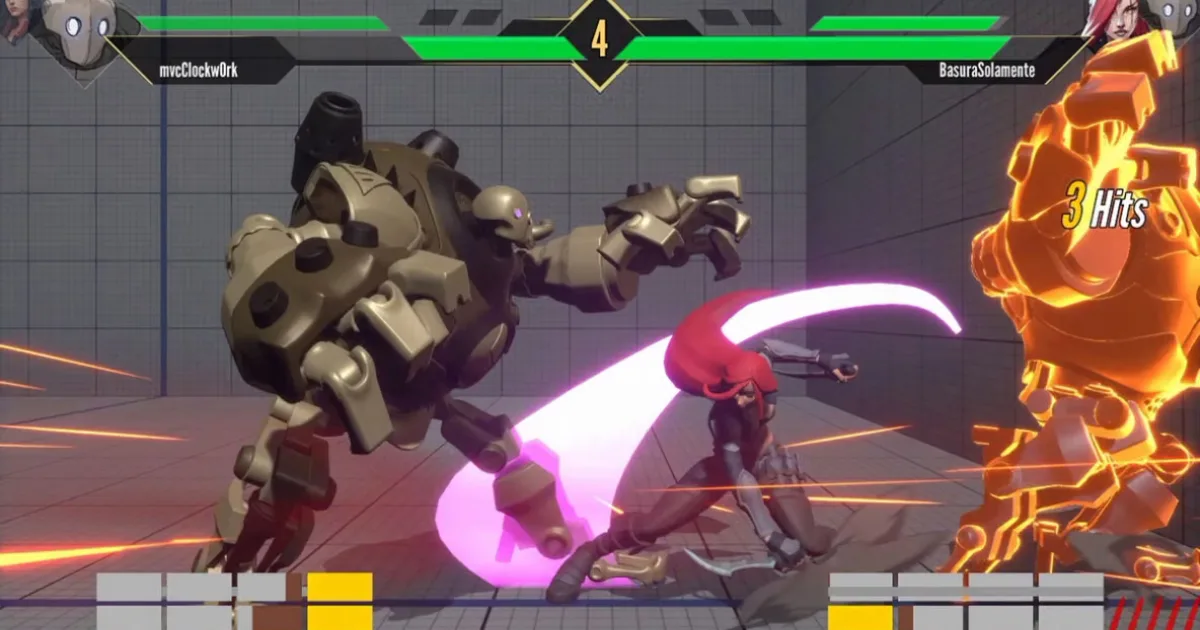
The archived clip shows a rough version of 2XKO duo play before the mode had been polished into a public-facing feature.
That early result helps explain why Riot continued testing 2XKO as both a solo and duo fighter. The rough build showed problems, but it also showed a kind of match flow and player chemistry the team wanted to chase.
GAT came from a four-day high-skill 2XKO test
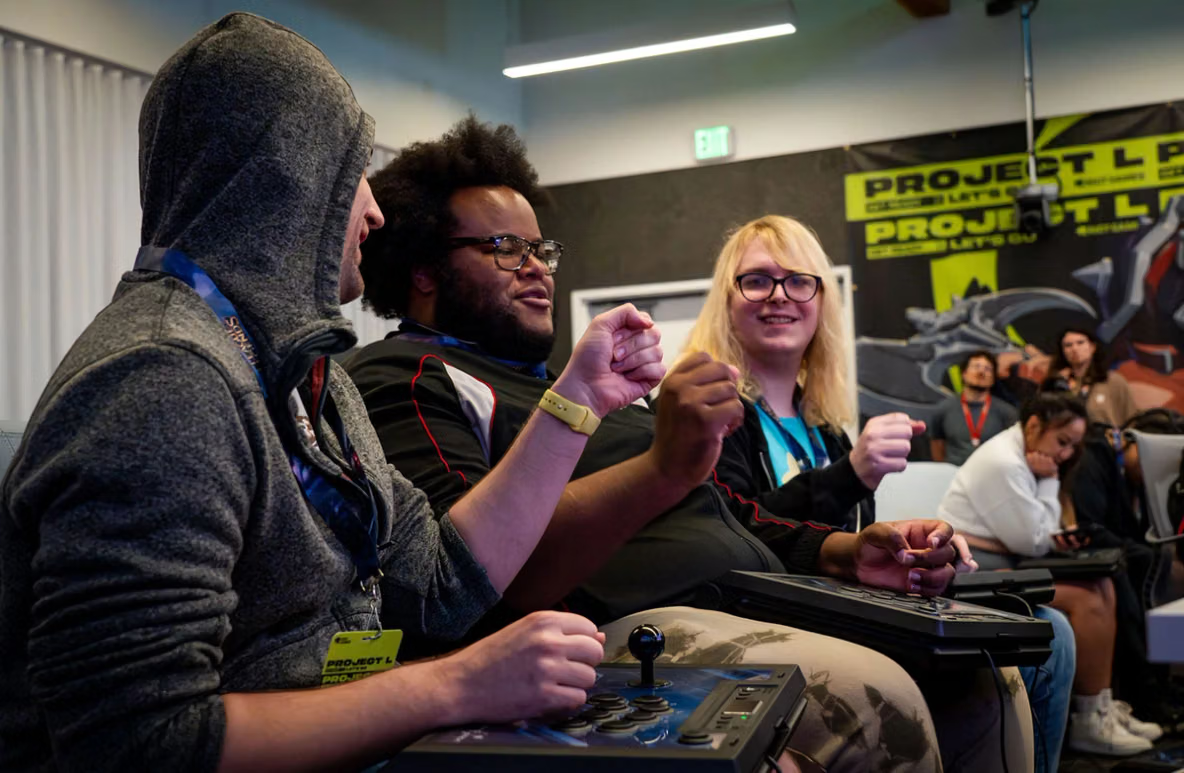
Riot’s next example focused on a four-day test with players experienced in tag fighters and anime fighting games. The goal was simple: let highly skilled players push 2XKO until something broke.
That kind of test is different from first-time onboarding. New players can reveal whether controls, tutorials and basic rules make sense. Strong fighting game players reveal whether the system survives real pressure, including infinites, strange tag interactions, routing issues and high-damage setups.
Riot said the session exposed rough edges the team may not have caught in shorter or less specialized tests. One shared clip features game director Unconkable on commentary as players dig into the game’s early grime.
The same test also helped Riot validate how 2v2 could work with advanced players. Day two focused on duo play, while day four ended with an impromptu tournament that split evenly between solo and duo entrants.
The tournament even produced a duo versus solo grand finals. For a game built to support both formats, that mattered. It gave Riot a practical look at how teams and solo players could share the same competitive space.
Many players from that test later became part of Riot’s Gameplay Analysis Team, or GAT. For anyone tracking 2XKO news, that detail is important because it shows Riot’s feedback loop was not only based on broad testing. It also relied on people skilled enough to find the sharpest edges in a tag fighter.
Pre-Evo FGC feedback put pacing under the microscope
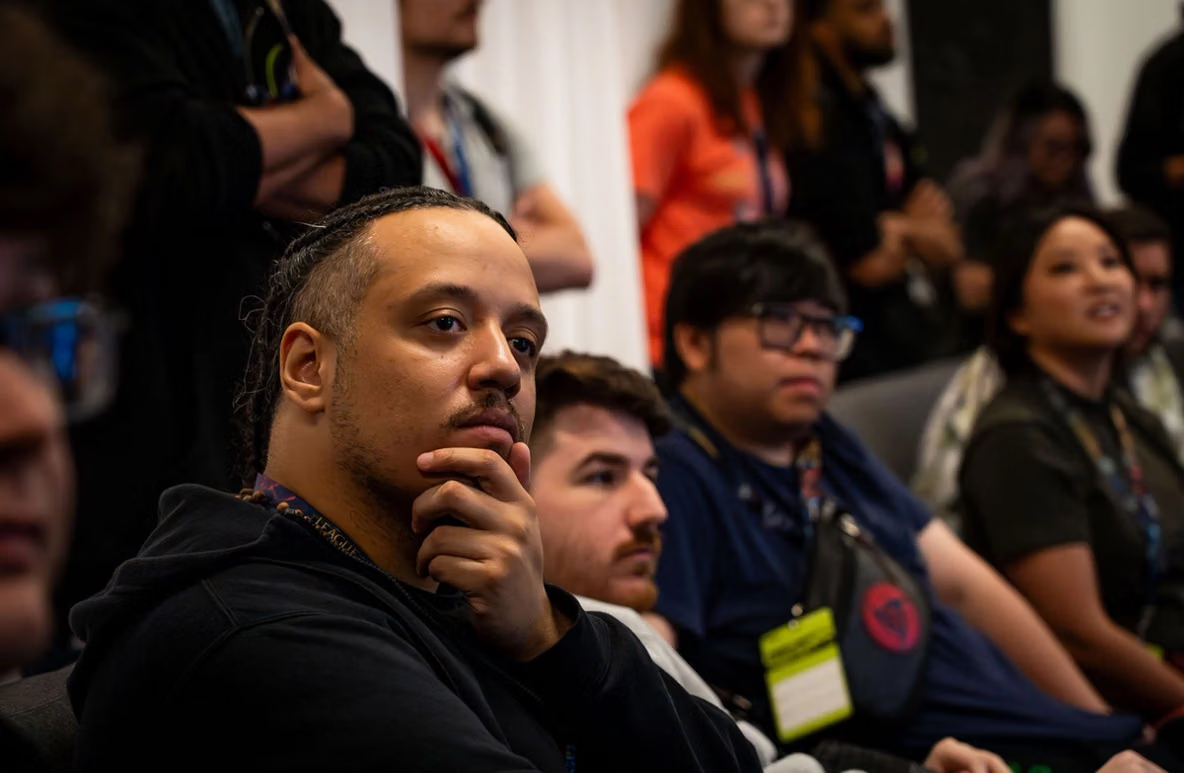
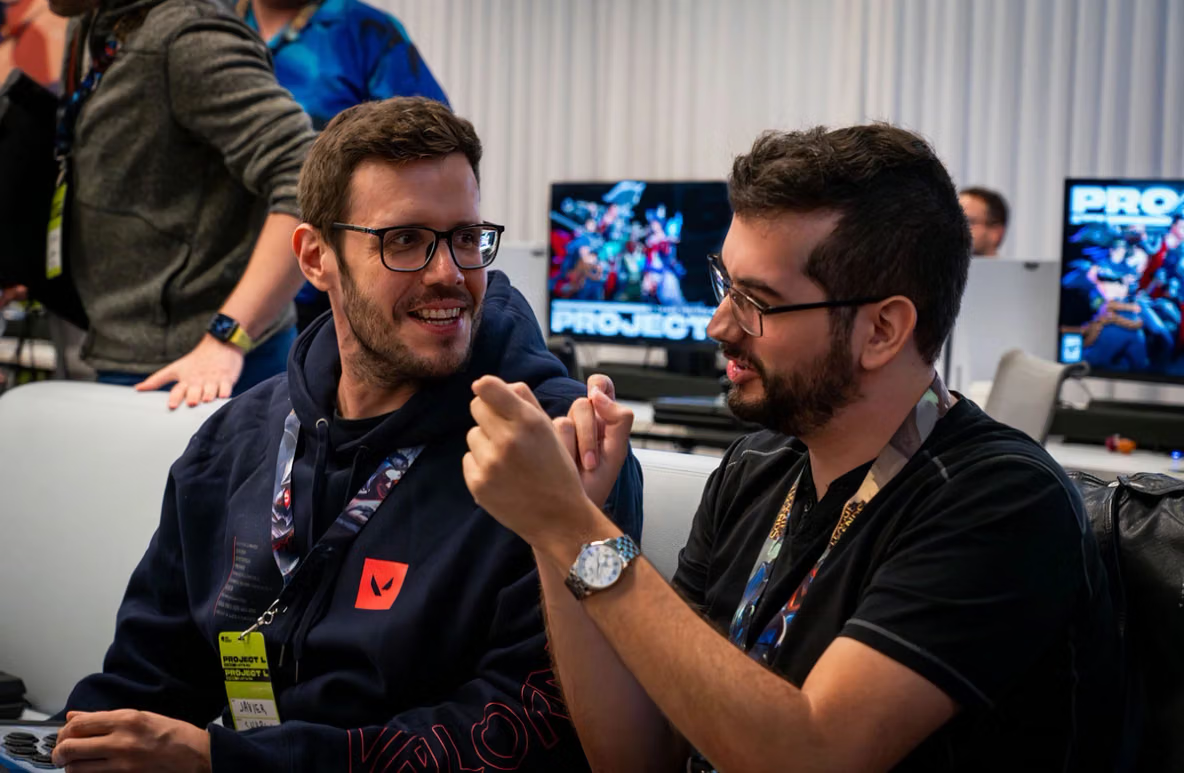
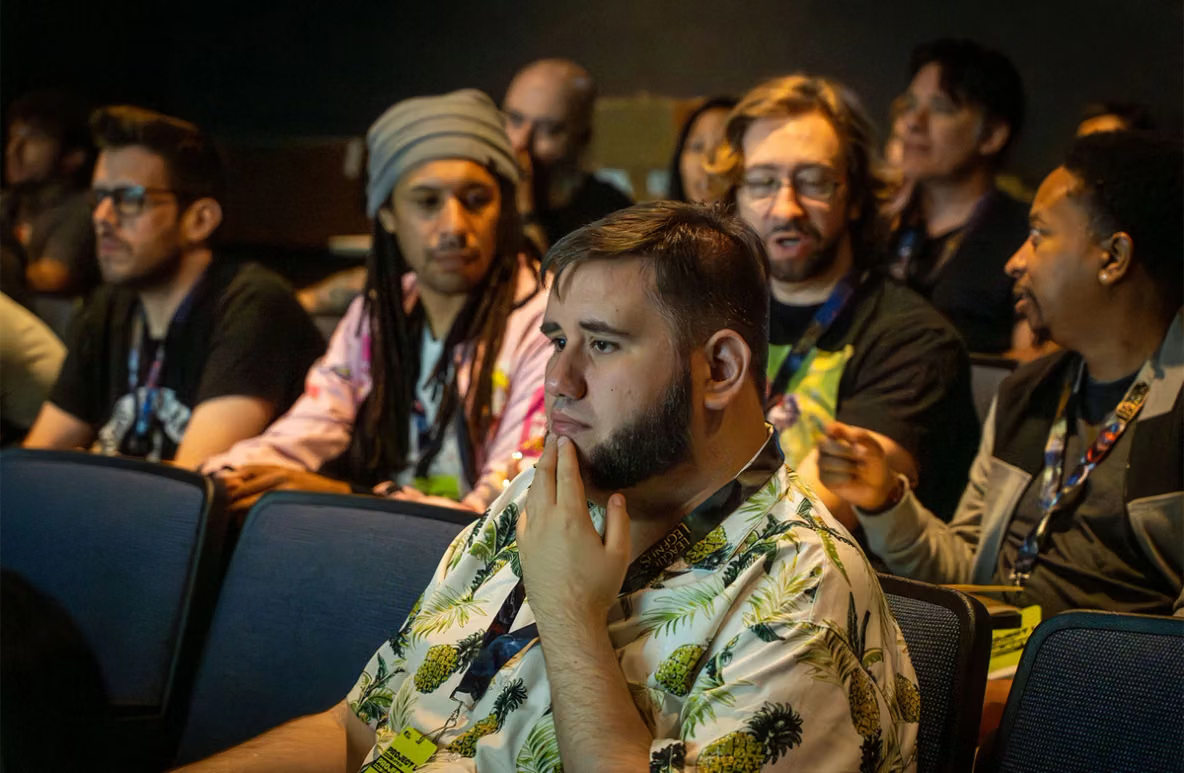
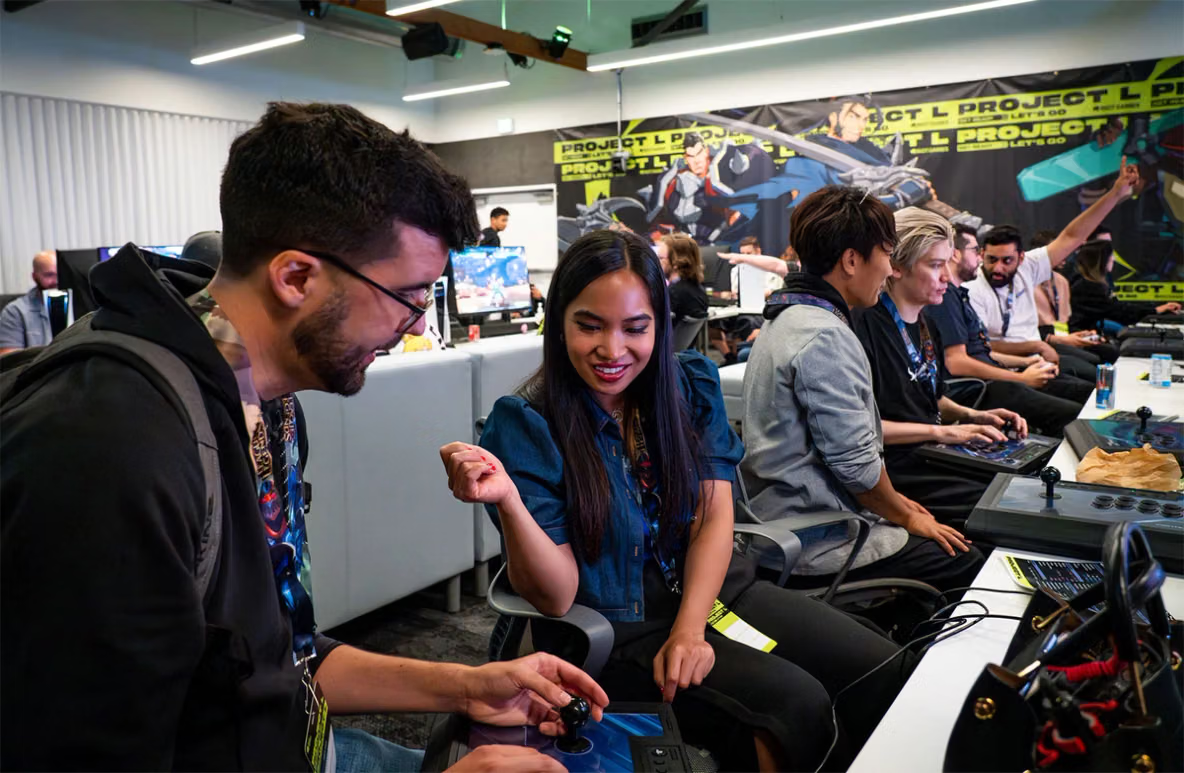
Riot also revisited a two-day fighting game community summit at Riot LAX before 2XKO’s first Evo showing. The goal was to give community players hands-on time, build interest in duos and get a more honest read on where the game felt strong or weak.
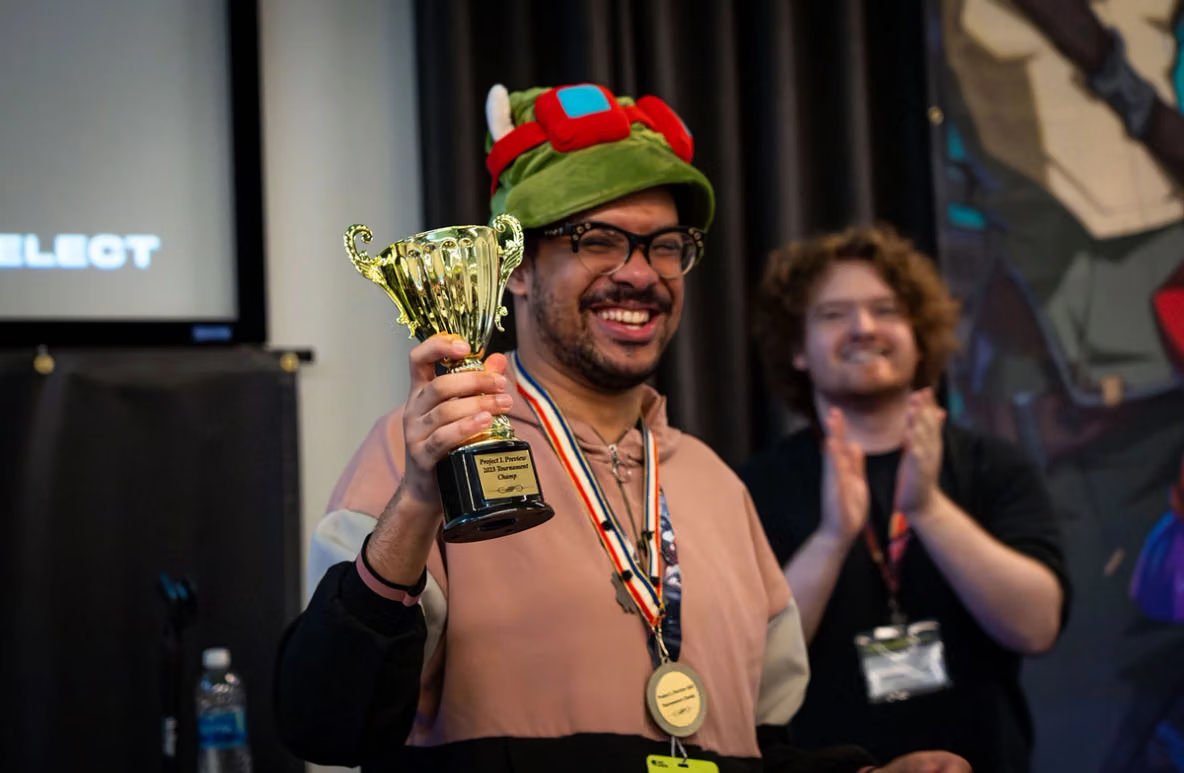
The summit ended with a mini tournament won by SonicFox. Riot said the event provided useful feedback on duo gameplay, but it also exposed a pacing issue when the grand finals reportedly ran for about an hour with improvised Yipes commentary.
That single note says a lot about fighting game development. A match can be exciting, technically deep and still too slow for the format Riot wants. Playtests like this gave the team a chance to see not just whether 2XKO worked, but whether it worked for competitors, commentators and the crowd.
The Riot local tested lobbies, spectating and stability
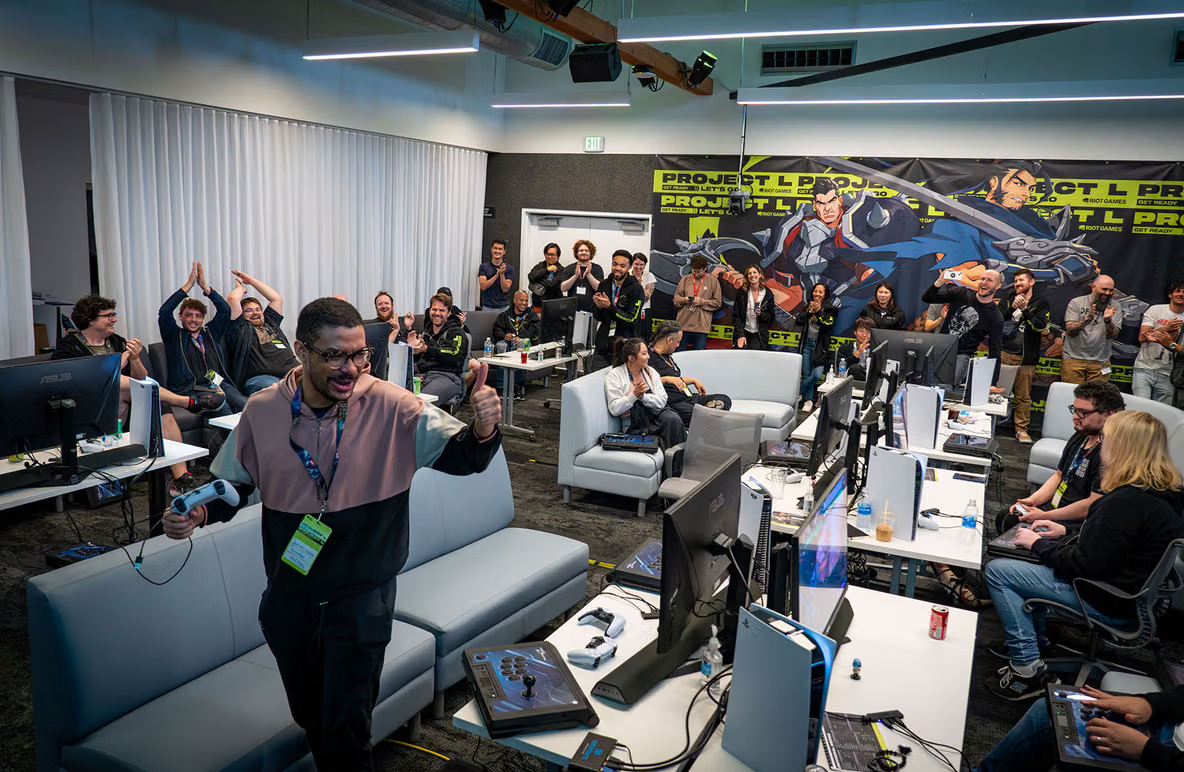
As 2XKO moved closer to launch, Riot’s tests became more specific. One internal FGC session simulated a local tournament before Alpha Lab, with the team using the event to test build stability and social features in a realistic setting.
Riot said playtest operator Riot CostcoLover won the event against a coordinated duo from League and Enterprise Engineering. The bigger takeaway was not the bracket result, though. The test showed that 2XKO was fun to watch in a crowd and that fullscreen spectate needed to be part of the next release.
The Riot local clip shows 2XKO being tested less like a lab build and more like a game meant for locals, friends and tournament organizers.
That spectator lesson connects directly to Riot’s broader 2XKO strategy. The game has to feel good on the controller, but it also has to make sense on stream, in a room and inside shared online lobby spaces.
2XKO playtest lessons at a glance
The most useful part of Riot’s update is how each playtest answered a different development question. Some sessions tested raw fun. Others tested balance, event flow, player behavior or long-term community use.
| Playtest | What Riot tested | Main lesson |
|---|---|---|
| First duo playtest | Early 2v2 control, team coordination and tag chaos | Duo play had enough promise to keep building around it |
| Four-day expert test | High-skill tag fighter pressure, infinites and edge-case interactions | Advanced players exposed problems that shorter tests could miss |
| GAT origins tournament | Solo and duo players sharing one competitive bracket | Both formats could create real storylines and useful balance data |
| Pre-Evo FGC summit | Community interest, duos and tournament pacing | Riot saw strong feedback, but long sets made pacing a priority |
| Internal Riot local | Build stability, social features, lobbies and spectating | Fullscreen spectate and crowd watchability became clearer needs |
How Patch 1.3.1 connects to the playtest story
The playtest retrospective landed just before a major 2XKO update. Riot’s Patch 1.3.1 is scheduled for September 8, 2026, with Lux joining the roster that day. The timing makes the post feel like a look backward before one of the game’s last major 2026 beats.
Riot’s recent Patch 1.3.1 pre-preview said the update is designed to set 2XKO up for the long term. It includes defensive system changes, champion balance work, new cosmetic content, large Private lobbies, Private lobby voice chat and broader stability work.
Riot has also said Patch 1.3.1 will unlock all champions for players, remove Ranked lobbies, remove several live-service systems and shift matchmaking into Casual lobbies while keeping Private lobbies unaffected. Official account, purchase and service questions should go through Riot’s 2XKO support hub.
For more on the next roster addition, see RiftDaily’s Lux release guide. For the broader update, see the 2XKO Patch 1.3.1 preview.
Lux, Samira and the 2026 2XKO roadmap
Riot’s latest schedule confirms several important 2XKO dates through late 2026. Lux is the immediate focus, but the roadmap also names Samira, multiple competitive stops and an optional bug-fix patch in early December.
| Date | 2XKO update or event | What it means |
|---|---|---|
| September 3, 2026 | Lux gameplay reveal | Riot revealed Lux gameplay before her live release |
| September 8, 2026 | Patch 1.3.1 live with Lux | Lux joins 2XKO, with major balance, lobby and systems changes |
| October 3-4, 2026 | First Attack, 2XKO Challenger event | Competitive Series stop for players and tournament organizers |
| October 9-11, 2026 | Evo France, 2XKO Major event | One of the final listed Major events on the 2026 calendar |
| Late October 2026 | Patch 1.3.3 live with Samira | Samira is Riot’s next named champion after Lux |
| November 21-22, 2026 | Battle Coliseum, 2XKO Major event | Late-year Major competition in the 2026 series |
| November 27-29, 2026 | MINDSET 2026, 2XKO Challenger event | Final listed Challenger event in Riot’s schedule |
| Early December 2026, optional | Patch 1.3.5 | Bug fixes only, if Riot decides the patch is needed |
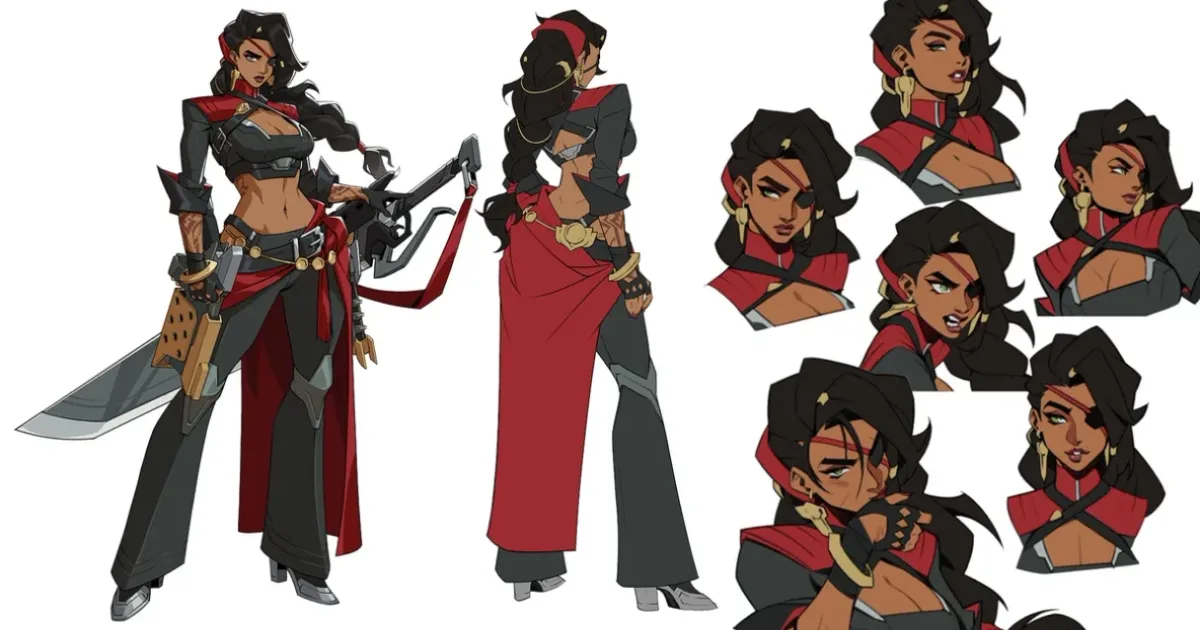
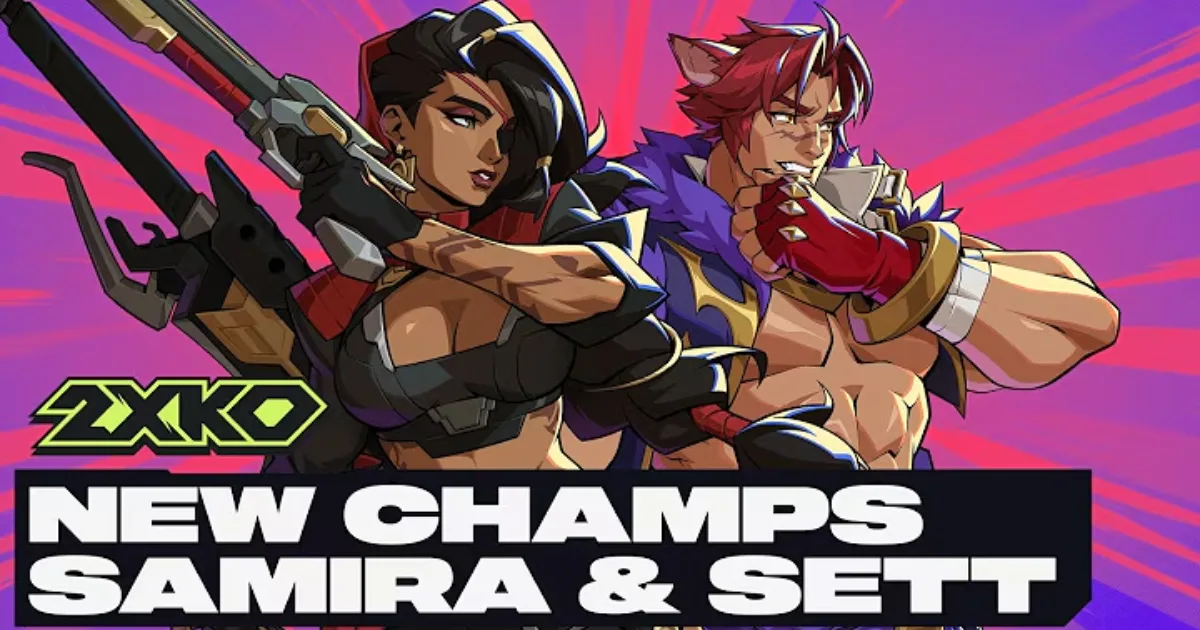
Samira is expected in Patch 1.3.3 in late October. Riot has described her design goal as giving players freedom and creativity through open-ended offense, positioning her as very different from a zoner.
The late-2026 context is also important. Riot has already said active development on 2XKO will conclude at the end of 2026, although servers are planned to remain online beyond that point. That makes each remaining patch more meaningful, especially for players who want the final version to feel stable, readable and worth playing long term.
What the 2XKO tests say about Riot’s design priorities
The clearest lesson from Riot’s post is that 2XKO was not shaped by one kind of feedback. A new player sitting down for the first time, a tournament veteran hunting infinites, a duo trying to coordinate in real time and a room full of spectators all reveal different problems.
Riot’s examples point to four design priorities: keep duo play exciting, make high-level interactions less brittle, support community spaces and make the game easier to watch. Those priorities show up again in Patch 1.3.1 through defensive changes, lobby updates and the earlier push for fullscreen spectate.
The regional detail at the end of Forbes’ post may be the most revealing small note. Riot said many Korean 2XKO players rebind their keyboard layouts to feel more like a MOBA. That is exactly the kind of behavior global testing can catch, and it matters for a fighting game connected to League’s much larger audience.
In other words, 2XKO’s testing was not only about asking whether a move was too strong. It was about watching how different communities tried to make the game their own.
Frequently asked questions about 2XKO playtests
What did Riot reveal about 2XKO playtests?
Riot revealed that 2XKO has gone through dozens of playtests covering champion kits, core rules, onboarding, skins, avatars, duo play, social features, spectator tools and tournament-style environments.
Why were 2XKO playtests important for duo play?
The first duo playtest showed Riot that two-player teams had real potential, even in an unstable early build. Later tests helped the team study how solo players and duos could compete in the same game.
What is GAT in 2XKO?
GAT stands for Gameplay Analysis Team. Riot said many GAT members came from a four-day test where experienced tag fighter and anime fighting game players pushed 2XKO’s systems to their limits.
What did the pre-Evo 2XKO test reveal?
The pre-Evo FGC summit helped Riot gather community feedback on duo gameplay and exposed pacing concerns after a long grand finals set.
When does Lux join 2XKO?
Lux joins 2XKO with Patch 1.3.1 on September 8, 2026.
What changes are coming in 2XKO Patch 1.3.1?
Patch 1.3.1 is set to add Lux, improve defensive systems, adjust balance, update lobbies, add Private lobby voice chat, unlock all champions and remove several live-service systems including Ranked lobbies.
When is Samira coming to 2XKO?
Riot’s schedule lists Samira for Patch 1.3.3 in late October 2026.
Will 2XKO still be playable after 2026?
Riot has said active development will conclude at the end of 2026, but servers are planned to remain online beyond 2026 and offline play is unaffected.
The big takeaway before Lux arrives
Riot’s 2XKO playtest retrospective shows how much of the game’s identity came from repeated stress tests. Duo play, GAT, spectator features, pacing changes and regional control habits all came from watching players do things that a design document could not fully predict.
The next major checkpoint is September 8, 2026, when Patch 1.3.1 brings Lux and several long-term changes to the game. After that, attention shifts to First Attack, Evo France, Samira in late October and the last competitive events on Riot’s 2026 calendar.